
——访《在野党》杂志副总编辑冯仍
采访记者:贾嘉
在中国民主运动漫长而曲折的历史中,有些人站在聚光灯下,有些人则选择默默承担那些并不引人注目的工作:整理资料、编辑文字、校对史料、采访亲历者,将一个个容易被遗忘的名字、一段段可能湮没的历史重新记录下来。
冯仍,现任《在野党》杂志副总编辑。从主动加入编辑团队,到承担校对工作,再到进入编辑部、担任轮值总编辑,他与《在野党》的关系,也从最初“希望能够帮一点忙”,逐渐变成了一份希望长期坚持下去的责任。
对于为什么加入中国民主党、为什么投身《在野党》杂志的编辑工作,以及如何看待一本海外民主刊物的使命和未来,冯仍有着自己的思考。
在接受采访时,他多次提到一个关键词——真实。
“我们可以有明确的政治立场,但事实必须真实。只有建立在事实基础上的批评,才真正有力量。”
从个人思考到走进中国民主党
谈及自己与中国民主党的渊源,冯仍表示,自己真正开始接触中国民主党,是在来到美国之后。
在中国生活期间,他一直对许多社会问题有自己的思考和看法,也曾因为公开表达个人意见而受到公安机关的打压。
来到美国后,他开始接触更多民主人士,并参加与民主、人权相关的活动。
随着接触和思考的不断深入,他越来越意识到,中国社会所面临的许多问题,最终仍然指向制度问题。
“我越来越认识到,中国很多问题最终还是制度问题。”冯仍说。
基于这样的认识,2024年10月17日,他正式加入中国民主党,希望能够真正参与推动中国的民主、自由、人权与法治进程。
对他而言,这并不是一次简单的身份选择,而是个人长期思考之后作出的行动。
从主动自荐到参与《在野党》复刊
冯仍参与《在野党》杂志,也有着一段颇为直接的经历。
贾嘉-rId6-1280X853.jpeg)
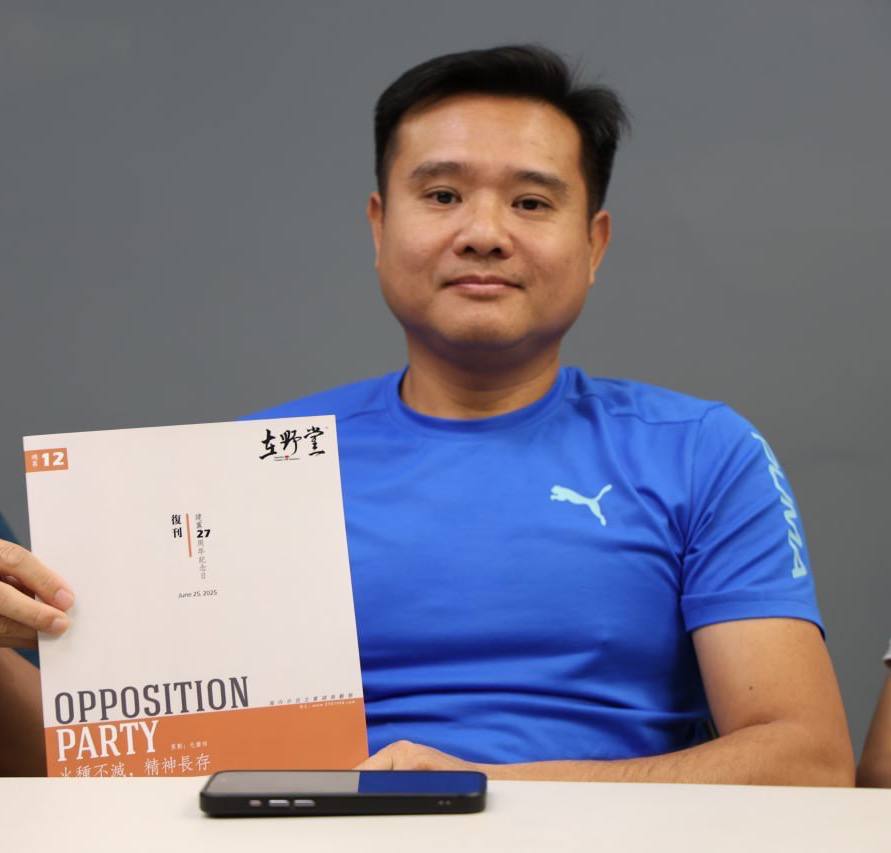
2025年6月11日,他主动向朱虞夫先生自荐,希望能够加入《在野党》编辑团队。当时,杂志正处于复刊后的发展阶段,他也恰好参与了第12期杂志的编辑工作
最初,冯仍主要负责编辑和校对工作。随着参与程度不断加深,他后来开始负责校对部门,并进入编辑部。从第26期开始,他担任《在野党》轮值总编辑。
从最初“帮一点忙”的想法,到后来逐渐承担更多责任,冯仍对这份工作的理解也发生了变化。
“刚开始只是觉得自己能够帮一点忙,但做久以后,我越来越觉得,这本杂志最大的意义,就是把很多容易被遗忘的人、事件和声音保存下来。”
这也是他希望将这项工作长期坚持下去的重要原因。
一本杂志或许无法立刻改变现实,但它可以留下记录。
而对于一个经历过政治压制、社会变迁和无数个人命运起伏的时代而言,记录本身或许就是一种责任。
《在野党》最需要传承的精神:不沉默
《在野党》创刊于1998年,与中国民主党公开组党的历史有着密切联系。
在冯仍看来,今天重新复刊《在野党》,最需要传承的精神,首先就是——不沉默。
“1998年中国民主党公开组党,本身就是在一个非常压抑的环境中,公开表达不同政治主张。”
而今天重新复刊《在野党》,在他看来,也不仅仅意味着恢复一本杂志。
“更重要的是继续坚持民主、自由表达和独立思考。”
不过,冯仍特别强调,拥有明确的政治立场,并不意味着可以忽视事实。
“我们可以有明确的政治立场,但事实必须真实。只有建立在事实上的批评,才真正有力量。”
对于一份具有政治立场的媒体而言,如何在价值立场与新闻真实性之间保持原则,是一个长期存在的问题。
冯仍认为,立场可以鲜明,但不能以牺牲事实为代价。
因为只有真实,才能使记录经得起时间的检验。
记录真实,是《在野党》的核心使命
如果用几句话概括《在野党》的办刊宗旨,冯仍给出了这样的答案:
记录真实、坚持民主、关注人权、保存历史、传播思想。
在这几个关键词中,他最为看重的仍然是“真实”。
《在野党》希望关注和记录中国民主运动的发展,也关注政治犯、人权问题、宗教自由、司法不公,以及普通中国人的真实生活。
冯仍特别希望,《在野党》不仅仅成为海外人士讨论中国问题的平台,也能够让更多来自中国国内的人,通过自己的亲身经历讲述真实的故事。
“别人可以写很多评论,但真正亲历者的声音,是很难替代的。”
因此,在内容选择方面,他越来越重视第一手资料和亲历者的讲述。
无论是政治犯家属、人权人士、宗教人士、民主人士,还是普通中国人,他们亲身经历的故事,都可能成为理解中国社会的重要历史材料。
“这些内容非常有价值。”
在冯仍看来,评论可以提供观点,而亲历者的讲述则能够保存一个时代最直接的记忆。
一本杂志,如何建立自己的真实标准?
对于涉及历史事件和重要新闻的内容,真实性如何保证?
冯仍认为,最基本的原则就是:不能只依靠单一来源。
“有原始文件,就尽量寻找原始文件;能够联系当事人,就尽量向当事人核实;新闻事件则尽量通过多个来源进行交叉确认。”
除此之外,采访录音、文字记录以及相关资料,也应该尽可能完整保存。
如果一件事情暂时无法得到完全确认,也不应该为了追求新闻效果而将未经证实的信息直接写成既定事实。
“我们应该告诉读者,我们的信息来源是什么,而不能把未经证实的信息直接写成事实。”
对于一家希望长期存在的媒体来说,这样的原则或许并不惊人,却至关重要。
因为新闻可能很快被遗忘,但记录会留下来。
而今天的报道,也可能成为未来研究历史的重要资料。
从个人热情走向制度化运作
目前,《在野党》杂志已经形成了相对完整的组织架构,包括社长、副社长、总编辑、副总编辑、轮值总编辑,以及编辑、采访、校对、美编、翻译和宣传等不同部门。
一篇稿件从进入杂志社开始,大致需要经过收稿、编辑、校对、美编排版,最终出版和发布等多个环节。
在冯仍看来,未来一个重要的发展方向,就是进一步明确各个环节的责任。
“谁编辑、谁校对、谁审核、谁推广,都应该清楚。只有这样,杂志才能长期稳定运行。”
这也反映出他对于《在野党》未来发展的一个基本判断:一家媒体不能永远仅仅依靠个人热情维持。
目前,杂志面临的现实困难之一,就是许多参与者都是义务工作者。大家都有自己的工作和家庭,能够投入杂志的时间有限,专业人才也相对不足。
与此同时,稳定的稿源和宣传推广,也是未来需要进一步解决的问题。
因此,冯仍希望推动《在野党》逐渐从主要依靠个人热情,走向更加稳定的制度化运作。
“未来也希望有更多专业记者、编辑、翻译、新媒体和国际传播方面的人才加入。”
不只是一个人的声音,也不只是一个小圈子的刊物
对于《在野党》在海外中国民主运动中的定位,冯仍有一个十分明确的期待。
“我希望《在野党》不要只成为某一个人的声音,也不要成为某一个小圈子的刊物。”
《在野党》有着中国民主党的历史背景,也有明确的价值立场,但在冯仍看来,这并不意味着它应该成为一个封闭的平台。
相反,他希望《在野党》能够成为一个相对开放的公共平台。
它可以传播民主思想,记录中国民主运动,也可以关注和记录中国社会真实发生的事情。
“我一直觉得,我们今天做的不只是一本杂志,也是在给未来保存历史资料。”
这句话或许也揭示了《在野党》存在的另一层意义。
许多当下看似普通的采访、文章和个人经历,在时间的沉淀之后,都可能成为理解一个时代的重要线索。
而那些曾经被忽视的人,也许会因为一次采访、一篇文章而留下自己的名字和声音。
从中文杂志走向国际传播
谈及《在野党》的未来,冯仍认为,现阶段它仍然主要是一份中文杂志。
但从长期发展来看,他希望《在野党》能够逐渐走出海外中文圈,成为一个具有国际影响力的民主、人权媒体平台。
实现这一目标,首先需要提高自身的专业标准。
英文翻译、事实核查、资料引用、图片版权和专业编辑,都需要逐步建立更加严格的规范。
但在冯仍看来,国际传播并不只是简单地把中文文章翻译成英文,再发布到网站上。
真正的国际化,需要主动走出去。
“我们不能只是把中文翻译成英文放到网站上,而是要主动把有价值的内容传播给国际媒体、人权组织、学者和研究机构。”
未来,他希望《在野党》不仅能够成为海外华人关注中国问题的一个窗口,也能够成为国际社会了解中国民主、人权与社会现实的参考平台。
“我希望未来有一天,别人研究中国民主、人权和社会问题的时候,也会把《在野党》作为一个重要的参考来源。”
这是一个长期的目标,也是一项需要时间积累的工作。
但对于一本希望记录历史的杂志而言,或许最重要的从来都不是短时间内获得多少关注,而是在时间的洪流中,能够留下多少真实的声音。
结语:不沉默,也不遗忘
从加入中国民主党,到主动加入《在野党》编辑团队;从最初参与编辑和校对,到承担更多编辑工作,冯仍所经历的,并不仅仅是个人身份和职务的变化。
更重要的是,他对于“记录”的理解越来越深刻。
在采访中,他反复强调真实、第一手资料、历史保存以及制度化运作。
这或许也是一位媒体工作者最朴素的坚持:可以有自己的价值判断,但不能放弃对事实的尊重;可以面对现实的困难,但不能因此停止记录。
“不沉默”,是《在野党》希望传承的精神。
而“不遗忘”,或许正是记录者的另一种责任。
那些曾经被压制的声音,那些容易被忽略的人物,那些正在发生或已经远去的事件,都需要有人去倾听、去整理、去保存。
一本杂志能够走多远,也许取决于很多现实条件。
但只要仍然有人愿意记录,有人愿意说出真相,有人愿意为那些可能被历史遗忘的声音留下位置,那么,这份坚持本身,就已经具有意义。
编辑:韩立华 校对:毛一炜 翻译:戈冰
Not Being Silent Is a Choice
— An Interview with Feng Reng, Associate Editor-in-Chief of The Opposition Party Magazine
Interviewer: Jia Jia
In the long and tortuous history of the Chinese democracy movement, some individuals stand in the spotlight, while others choose to quietly take on the unglamorous, less visible work: compiling source materials, editing text, proofreading historical records, and interviewing eyewitnesses—thereby re-recording names that are easily forgotten and segments of history that risk being buried in oblivion.
Feng Reng currently serves as the Associate Editor-in-Chief of The Opposition Party magazine. From proactively joining the editorial team, to taking charge of proofreading, and eventually entering the editorial board to serve as rotating editor-in-chief, his relationship with The Opposition Party has gradually transformed from an initial hope of “being able to help out a little” into a commitment he hopes to sustain over the long term.
Regarding why he joined the China Democracy Party, why he devoted himself to the editorial work of The Opposition Party magazine, and how he views the mission and future of an overseas democratic publication, Feng Reng has his own reflections.
During the interview, he repeatedly emphasized a key concept—truthfulness.
“We may hold explicit political stances, but the facts must be true. Only criticism grounded in factual foundations possesses genuine power.”
From Personal Reflection to Joining the China Democracy Party
When speaking of his origins with the China Democracy Party, Feng Reng stated that he only truly began coming into contact with the China Democracy Party after arriving in the United States.
While living in China, he consistently held his own thoughts and views on numerous social issues, and had suffered suppression by public security organs for publicly expressing his personal opinions.
After arriving in the United States, he began interacting with more pro-democracy figures and participating in activities related to democracy and human rights.
As his interactions and reflections continuously deepened, he realized with increasing clarity that many of the problems confronting Chinese society ultimately point back to institutional issues.
“I came to recognize more and more that many problems in China are, in the final analysis, institutional problems,” Feng Reng said.
Based on this understanding, on October 17, 2024, he officially joined the China Democracy Party, hoping to genuinely participate in advancing the cause of democracy, freedom, human rights, and the rule of law in China.
For him, this was not a simple choice of identity, but an act taken after long-term personal reflection.
From Proactive Self-Recommendation to Participating in the Relaunch of The Opposition Party
Feng Reng’s involvement with The Opposition Party magazine also stemmed from quite a direct experience.
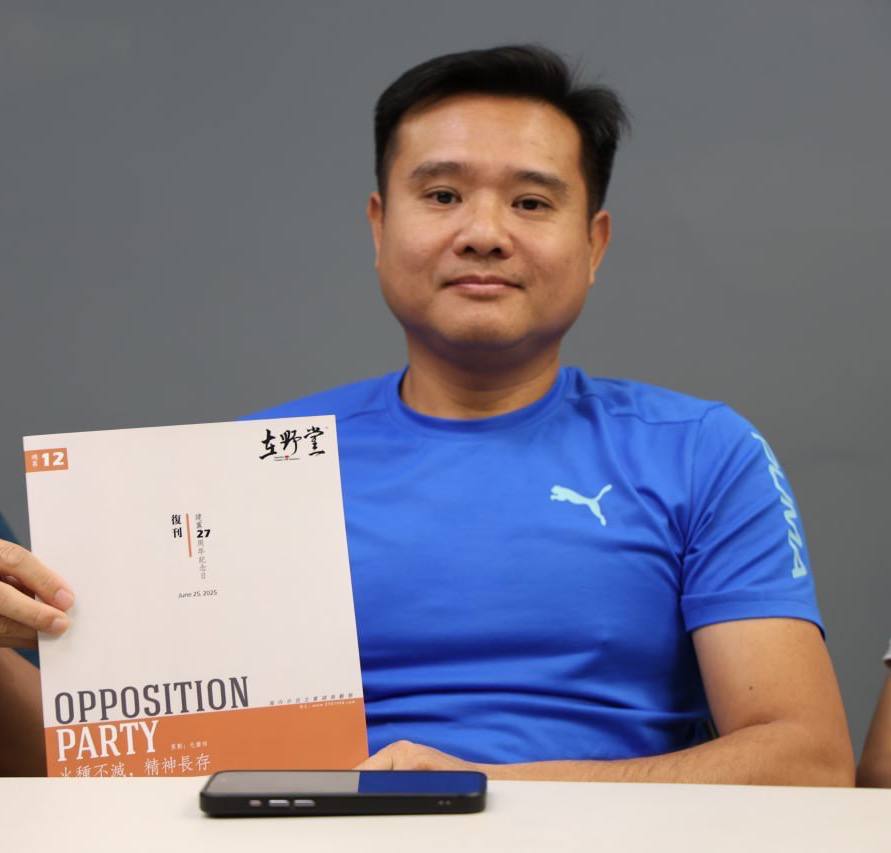
On June 11, 2025, he proactively recommended himself to Mr. Zhu Yufu, hoping to join the editorial team of The Opposition Party. At that time, the magazine was in a development phase following its relaunch, and he happened to participate in the editorial work for Issue 12.
Initially, Feng Reng was primarily responsible for editing and proofreading work. As his degree of involvement deepened, he later took charge of the proofreading department and entered the editorial board. Starting from Issue 26, he served as the rotating editor-in-chief of The Opposition Party.
From his initial thought of “helping out a little” to gradually assuming greater responsibilities later on, Feng Reng’s understanding of this work also underwent a change.
“At the very beginning, I simply felt that I could help out a little, but after doing it for a long time, I came to feel more and more that the greatest significance of this magazine is to preserve many people, events, and voices that are easily forgotten.”
This is also an important reason why he hopes to sustain this work over the long term.
A magazine may not be able to immediately change reality, but it can leave a record behind.
And for an era that has experienced political suppression, social transformation, and the ups and downs of countless individual destinies, recording itself may perhaps be a form of responsibility.
The Spirit The Opposition Party Most Needs to Carry Forward: Not Being Silent
The Opposition Party was founded in 1998 and is closely connected to the history of the China Democracy Party’s open party formation.
In Feng Reng’s view, the spirit that most needs to be carried forward in relaunching The Opposition Party today is, first and foremost—not being silent.
“The open party formation of the China Democracy Party in 1998 was itself an act of publicly expressing dissenting political views within a highly oppressive environment.”
And today, relaunching The Opposition Party, in his view, does not merely signify restoring a magazine.
“What is more important is to continue adhering to democracy, free expression, and independent thinking.”
However, Feng Reng particularly emphasized that holding explicit political stances does not mean that facts can be ignored.
“We may hold explicit political stances, but the facts must be true. Only criticism built upon facts possesses genuine power.”
For a media outlet with political stances, how to maintain principle between value stances and news truthfulness is a long-standing issue.
Feng Reng believes that while a stance can be distinct, it cannot come at the expense of facts.
Because only truthfulness allows records to withstand the test of time.
“Recording the truth is the core mission of The Opposition Party.”
When asked to summarize the founding principles of The Opposition Party in a few sentences, Feng Reng gave this answer:
“Recording the truth, upholding democracy, focusing on human rights, preserving history, and disseminating ideas.”
Among these keywords, the one he values most is still “truth.”
The Opposition Party seeks to pay attention to and record the development of China’s democracy movement, while also focusing on political prisoners, human rights issues, religious freedom, judicial injustice, and the everyday reality of ordinary Chinese people.
Feng Reng particularly hopes that The Opposition Party will not only serve as a platform for people overseas to discuss Chinese affairs, but also enable more people from within mainland China to tell authentic stories through their own personal experiences.
“Others can write many commentary pieces, but the voices of those who have actually lived through it are difficult to replace.”
Consequently, in selecting content, he has placed increasing emphasis on first-hand source materials and first-person accounts from eyewitnesses and participants.
Whether they are family members of political prisoners, human rights advocates, religious figures, pro-democracy activists, or ordinary Chinese citizens, the stories of their personal experiences can all become vital historical material for understanding Chinese society.
“This content is extremely valuable.”
In Feng Reng’s view, while commentary can offer perspectives, first-person accounts can preserve the most direct memories of an era.
How does a magazine establish its own standards of truth?
For content involving historical events and major news stories, how is authenticity guaranteed?
Feng Reng believes that the most basic principle is simply this: one must not rely on a single source alone.
“Where primary documents exist, we make every effort to find them; where we can reach the parties involved, we do our utmost to verify directly with them; for news events, we cross-check through multiple sources whenever possible.”
Beyond this, interview audio recordings, transcripts, and relevant documentation should also be preserved as completely as possible.
If a matter cannot be fully verified for the time being, unconfirmed information should not be stated directly as established fact merely for journalistic effect.
“We ought to tell our readers what our sources of information are, rather than writing unconfirmed claims directly as facts.”
For a media outlet that hopes to endure long-term, such principles may not sound extraordinary, yet they are vital.
Because news may soon be forgotten, but the record remains.
And today’s reporting may well become essential material for studying history tomorrow.
From Personal Passion to Institutionalized Operation
Currently, The Opposition Party magazine has established a relatively complete organizational structure, comprising a publisher, deputy publisher, editor-in-chief, deputy editor-in-chief, rotating editor-in-chief, as well as distinct departments for editing, reporting, proofreading, art design, translation, and publicity.
From the moment an article enters the publication office, it generally passes through multiple stages: manuscript submission, editing, proofreading, art layout and page formatting, and finally publication and distribution.
In Feng Reng’s view, an important direction for future development is to further clarify the responsibilities of each stage.
“Who edits, who proofreads, who reviews, and who promotes—all should be clear. Only in this way can the magazine operate stably over the long term.”
This also reflects his fundamental judgment regarding the future path of The Opposition Party: a media outlet cannot forever rely solely on personal enthusiasm to sustain itself.
At present, one of the real difficulties facing the magazine is that many participants are volunteers. Everyone has their own work and family commitments, with limited time to devote to the publication, and professional talent remains relatively scarce.
At the same time, a stable supply of submissions as well as promotion and publicity are also issues that need to be further addressed in the future.
Therefore, Feng Reng hopes to push The Opposition Party away from relying primarily on personal enthusiasm and toward a more stable, institutionalized operation.
“In the future, we also hope that more professional talent in journalism, editing, translation, new media, and international communication will join us.”
Not Just the Voice of One Person, Nor Just a Publication for a Small Circle
Regarding the positioning of The Opposition Party within the overseas Chinese democracy movement, Feng Reng holds a very clear expectation.
“I hope The Opposition Party will not become merely the voice of a single individual, nor a publication reserved for a small circle.”
While The Opposition Party carries the historical background of the China Democracy Party and holds clear value commitments, in Feng Reng’s view, this does not mean it should become a closed platform.
On the contrary, he hopes The Opposition Party can serve as a relatively open public platform.
It can disseminate democratic ideas, record the Chinese democracy movement, and also pay attention to and record what is truly happening in Chinese society.
“I have always felt that what we are doing today is not just publishing a magazine, but also preserving historical materials for the future.”
This statement perhaps reveals another layer of meaning behind the existence of The Opposition Party.
Many interviews, articles, and personal experiences that seem ordinary in the present may, after the settling of time, become vital clues for understanding an era.
And those who were once overlooked may leave behind their names and voices precisely because of an interview or an article.
From a Chinese Magazine to International Communication
Speaking of the future of The Opposition Party, Feng Reng believes that at this stage it remains primarily a Chinese-language magazine.
However, from the perspective of long-term development, he hopes that The Opposition Party can gradually reach beyond the overseas Chinese-speaking community to become a media platform for democracy and human rights with international influence.
Achieving this goal requires, first and foremost, raising its own professional standards.
English translation, fact-checking, citation of sources, image copyright, and professional editing all need to gradually establish more rigorous standards.
Yet in Feng Reng’s view, international communication is not simply translating Chinese articles into English and publishing them on a website.
True internationalization requires actively reaching out.
“We cannot simply translate Chinese into English and post it on a website; rather, we must actively disseminate valuable content to international media, human rights organizations, scholars, and research institutions.”
In the future, he hopes The Opposition Party will not only serve as a window for overseas Chinese to focus on China issues, but also become a reference platform for the international community to understand China’s democracy, human rights, and social reality.
“I hope that one day in the future, when others study issues regarding Chinese democracy, human rights, and society, they will also treat The Opposition Party as an important source of reference.”
This is a long-term goal and a work that requires accumulation over time.
Yet for a magazine that aims to record history, perhaps what matters most has never been how much attention it garners in a short period, but rather how many genuine voices it can preserve within the torrent of time.
Conclusion: Neither Remaining Silent, Nor Forgetting
From joining the China Democracy Party to voluntarily taking part in the editorial team of The Opposition Party; from initially assisting with editing and proofreading to undertaking a greater share of editorial responsibilities, what Feng Reng has experienced is not merely a change in personal identity and duties.
More importantly, his understanding of “recording” has grown increasingly profound.
In the interview, he repeatedly emphasized truth, first-hand material, historical preservation, and institutionalized operation.
This is perhaps the most simple and unpretentious persistence of a media worker: one may hold individual value judgments, but must not abandon respect for facts; one may face real difficulties, but must not cease recording because of them.
“Not remaining silent” is the spirit The Opposition Party hopes to pass down.
And “not forgetting” is perhaps another layer of responsibility for a recorder.
Those voices that were once suppressed, those figures that are easily overlooked, and those events that are currently taking place or have already faded into the past all require someone to listen, to organize, and to preserve.
How far a magazine can go may depend on many practical conditions.
Yet so long as there are still people willing to record, willing to speak the truth, and willing to reserve a place for those voices that might otherwise be forgotten by history, then this persistence itself already holds meaning.
Editor: Han Lihua Proofreader: Mao Yiwei Translator: Ge Bing

