——朱虞夫的民运回忆(下篇)
记者:沈美花 贾嘉
人物简介

朱虞夫,浙江杭州人,中国大陆民主运动长期参与者,中国民主党早期重要参与者之一,《在野党》创办人。
十六、徐文立与北京党部之争
对于徐文立后来参与中国民主党的过程,朱虞夫有非常强烈的个人评价。
按照朱虞夫的回忆,浙江筹委会曾在1998年9月派人去北京,希望推动北京也成立中国民主党北京筹委会。最初接触徐文立时,徐开门见山说:“你们要我搞,可以。但是我的位置怎么放?”他把吴义龙问懵了,吴是来点火的,不是来找个主席回去的。如果北京筹委会搞起来了,徐可以被选为北京主席,不必问吴;如果徐是要成为浙江主席,吴也作不了主。徐看到吴愣在那里不作声,立马就下了逐客令:“我不搞,你走吧。”第二天,徐文立公开宣布“多读书、广交友、缓结社”,谁都能看明白徐对组党的态度。对此徐文立的辩解是“缓结社”就是“要结社”。吴义龙出门后拿出联络名单,找到任畹町的联系电话,就去任畹町家,任畹町一口答应组建中国民主党北京筹委会,并在9月17日正式启动成立了。
自从山东朋友在9月6日谎称中国民主党山东筹委会注册成功的消息,各地的民主党人大受鼓舞,一下子都公开打出旗号来。
徐文立在这场组党高潮中明显被冷落了,他非常不甘,11月6日,他突然提出要筹备中国民主党第一次全国代表大会,并匪夷所思地与他太太一起发表公告,他们“自即日起永不置办私人固有财产”。理所当然徐文立的做派被大家认为是“摘桃”,他的“代表大会”没人响应。可能徐文立自己也意识到他连民主党都还没有建立,直奔全国主席的步子跨得太大了。于是徐文立在9日建立了“中国民主党京津党部”。他为了“跑在全国朋友的前面”,要从体量上超过大家,居然把毫不知情的吕洪来任命为“副主席”,作为一个官瘾巨大的人,他满以为吕洪来可以用“副主席”摆平、拿捏。从此中国民主党开始了另立山头,并招致了中共的镇压。为此徐文立的说法是组党迟早会被镇压,但是对于当时方兴未艾的中国民主党,中共如果迟镇压,中国民主党可以在国内得到更好的发展。
徐文立在北京党部建立后立即封自己做全国主席。当时他给朱虞夫打电话,说:“中国民主党全国党部成立了,我任主席,秦永敏任副主席,因为你们浙江是首先建立民主党的,给你们留一个副主席位置,限你们在二十四小时内报一个名字上来,否则,你们浙江就出局了,以后中国民主党没有你们浙江的份了!长江以北我负责,长江以南秦永敏负责。”正好祝正明在旁边,朱虞夫就把电话交给祝正明接听了。祝正明一声不吭地听,听完挂了电话,对朱虞夫说:“我们不理他。”对此,在许多年后,徐文立自己也感到这个电话实在太不像话了。
朱虞夫一直认为中共在对付中国民主党组党活动中煞费苦心用尽了一切手段,当年判决三个民主党人用阶梯式的刑期,11年、12年、13年,难道他们的“罪行”相差一年吗?朱虞夫认为中共是在布局,在悄悄安排未来的谈判对象,对于徐文立的德性中共看得很清楚。
出国后的徐文立不断为自己涂脂抹粉,利用海外话语权自吹自擂是“中国民主党创始人”,他在几十年前的“甘家口会议”就提出了组党。但是他不知道,1906年清廷开放党禁,就有了“中国民主党”,1960年,雷震也建立了“中国民主党”。中共建政以后许许多多“组党”的先驱,被中共以“反革命集团首犯”处决了。
互联网是有记忆的,中共在镇压中国民主党的过程中,罗织、拼凑“罪状”几近病态,这么“重要”的“甘家口”策划居然不拿出来说事?历史的真实记载是直到1998年10月5日,《彭明、徐文立关于大陆组党结社问题的三点倡议》,白纸黑字写着“三、衷心希望各地朋友…暂缓提出组党的申请”,难道他忘了吗?
多年后朱虞夫与王有才谈起当年徐文立出于个人野心对中国民主党的损害,王有才说,徐文立是个枭雄,弄不好他三拳两脚真的打翻了共产党。朱虞夫认为,可惜这个人擅长表演,就像他在被捕前信誓旦旦说永不出国一样,他出国不是中共抬上飞机的。根据中共的规定,任何减刑、假释、保外就医都必须“认罪服法”,2002年,当局也与狱中的秦永敏谈过,让他“认罪服法”,换取司法部假释出国,被秦永敏断然拒绝了。朱虞夫认为,可惜这个人没有文化,居然把自己的豪言壮语张冠李戴,把鲁迅的“我以我血荐轩辕”说成是谭嗣同的诗句,炒得沸沸扬扬。朱虞夫认为,中共在2002年6月不惜代价将王炳章绑架回国,又在半年后将徐文立放出国外,这二者难道不是精心策划的吗?
朱虞夫尤其痛恨的是,居心叵测的街混子迎合徐文立的私欲,歌颂他是“日出美东”,他头脑一热还扶植起了“中国民主党国际联盟”。
朱虞夫说,这也算是物以类聚吧。
十七、关于资金问题
记得当年浙江看不惯徐文立的狭窄心眼,不买徐文立的帐。徐文立居然揣度浙江像他一样是有海外的金钱在支撑着,他立即给海外写信,要海外给浙江“断粮”逼浙江就范。
他看失了眼,海外“中国人权”除了收买个别人点对点的汇钱外,从来没有任何人为浙江其他民运人士汇过钱,至少在朱虞夫坐牢之前一直如此。
浙江筹委会得到王炳章等海外人士的关注和关心,大家都认为有必要组建中国民主党海外后援会,其一是可以通过海外后援会把国内的事件及时向海外通报,其二是由于通讯文稿传达受限,希望海外能够帮助国内购买传真机。海外也确实办到了,为浙江捐助了一台传真机。
王荣清以追索八十年代做生意欠款为名,向傅申奇要了一万元人民币,这笔钱全部用于浙江筹委会的必要支出。我曾想为组织发展向海外某朋友商量捐助,他回复我,海外朋友也都过得很苦,当年民主墙时候大家都是自掏口袋坚持下来的。我从此不再提此事。
浙江筹委会里王荣清最富有,外地朋友来杭州几乎全部由他接待,贫困地区来的朋友他还屡屡赠送回程路费。平时,毛庆祥、朱虞夫和李锡安也经常掏钱办事,如为吴义龙各地“点火”筹集路费和食宿费用(当时我们都不知道姚遵宪私下与吴义龙约好同行并承担了大部分行程费用),姚遵宪回来后,出国前将卖掉上海商品房的二十多万余款交给吴义龙作为浙江筹委会的活动经费。吴义龙向所有人瞒下了,交给了他女朋友,吴出狱后向女朋友索要,女朋友不给。这是后话了。
朱虞夫为组党个人前后筹资约一千多元。
《民主论坛》的洪哲胜知道浙江的困难又爱莫能助,希望浙江朋友能投稿赚点稿费。但是中共知道自己当年组党全靠“卢布”,它们也以为中国民主党是靠海外资助搞起来的,要求警察严查有没有海外资金进入,给警察的赏格是,警察可以反馈拿到没收款项的60%,警察非常兴奋。在这种情况下,朱虞夫对海外朋友说,他的稿费暂时不要汇入国内。如果要汇就汇去他日本妹妹那里。这些稿费里有其他朋友的,朱虞夫出狱后,他妹妹把那些钱如数交付,一共九千多人民币。
朱虞夫他们入狱后,浙江筹委会由聂敏之、陈树庆打理,他们将海外资助受难者家属的捐款分配给各家,朱虞夫家属收到二千元人民币,警察随即上他太太工作的医院如数收缴。以后就没有以后了。甚至连一个慰问电话都没有,以至于他在狱中受尽酷刑。
十八、海外民运
海外民运有国外民主基金会的支持,按理说在中国民主党如此艰难卓绝的境况中应该挺身而出,但是非常遗憾。海外各民运大佬之间互相敌意之深,各人势力范围之严是国内朋友所无法想象的。正可谓内斗内行、外斗外行。国内民主党兴起时,某大佬接受台湾记者采访,被问及国内民主党,他大嘴一咧“他们都是共产党的特务”。所以,后来朱虞夫说剿灭中国民主党,“海外同道”比中共出手更早、更狠。
更令人齿寒的是,当国内二十几个省市都纷纷成立了中国民主党筹委会,势成燎原之际,有人开始伸手“收编”。99年二月,有人去朱虞夫家找他,出示一份“某人给国内民运人士的一封信”,信文主要讲一件事:你们国内组党是接受了我的指示才搞起来的。朱虞夫表示自己没有接受过“指示”,但是不知道是不是别人接受过“指示”,需要把信给其他朋友看一下,让对方过两天来听答复。朱虞夫问了几位朋友都说没有。朱虞夫心里明白了,对方只不过用指鹿为马的方式拉拢投靠者,但是既然自己是人类良知的追求者,不能丢弃诚实的道德品行。他如实回答信使后,对方失望地走了。不几天从南方传来消息,信使每到一地就动员把民主党解散,并慷慨撒钱。所以,王炳章等被“海外民运”排斥、被“边缘化”的少数朋友的支持显得尤其珍贵。
当年海外除了王炳章,还有几位热心朋友,都纷纷提出国内授权他们组建中国民主党海外筹委会,或愿意为国内朋友在海外发声,授权成为海外发言人。朱虞夫大大咧咧地对祝正明(祝是浙江筹委会的召集人,朱虞夫只是秘书长)说,这样很好啊,就同意吧。祝正明是个非常谨慎的人,他怕海外乱来(谢万军出来后,海外真的乱来了),就表示拒绝,为了给朱虞夫留点面子,就说发言人期限二个月,把有意想成为浙江筹委会海外发言人的杭州老乡徐某气得拂袖而去。在毛庆祥、王荣清、李锡安
的坚持下,祝正明终于让步,和朱虞夫发了授权函,建议海外建立了中国民主党海外后援会。海外后援会的作用主要是把国内的情况及时向海外播报,并尽可能为国内筹措资金。海外后援会也确实大大地推进了国内组党活动的发展。
现在回看当年,海外当时还没有人擅自随随便便就打个“中国民主党”旗号招摇撞骗。谢万军出来后看到了利用中国民主党做政庇的商机,阿狗阿猫纷纷出动,据说法拉盛出现了“中国民主党”一条街,十几个“中国民主党”争抢生意,与移民律所合作开吃了民主党人的人血馒头,如今在洛杉矶干脆移民律所总经理兼任中国民主党主委了。
十九、《在野党》月刊
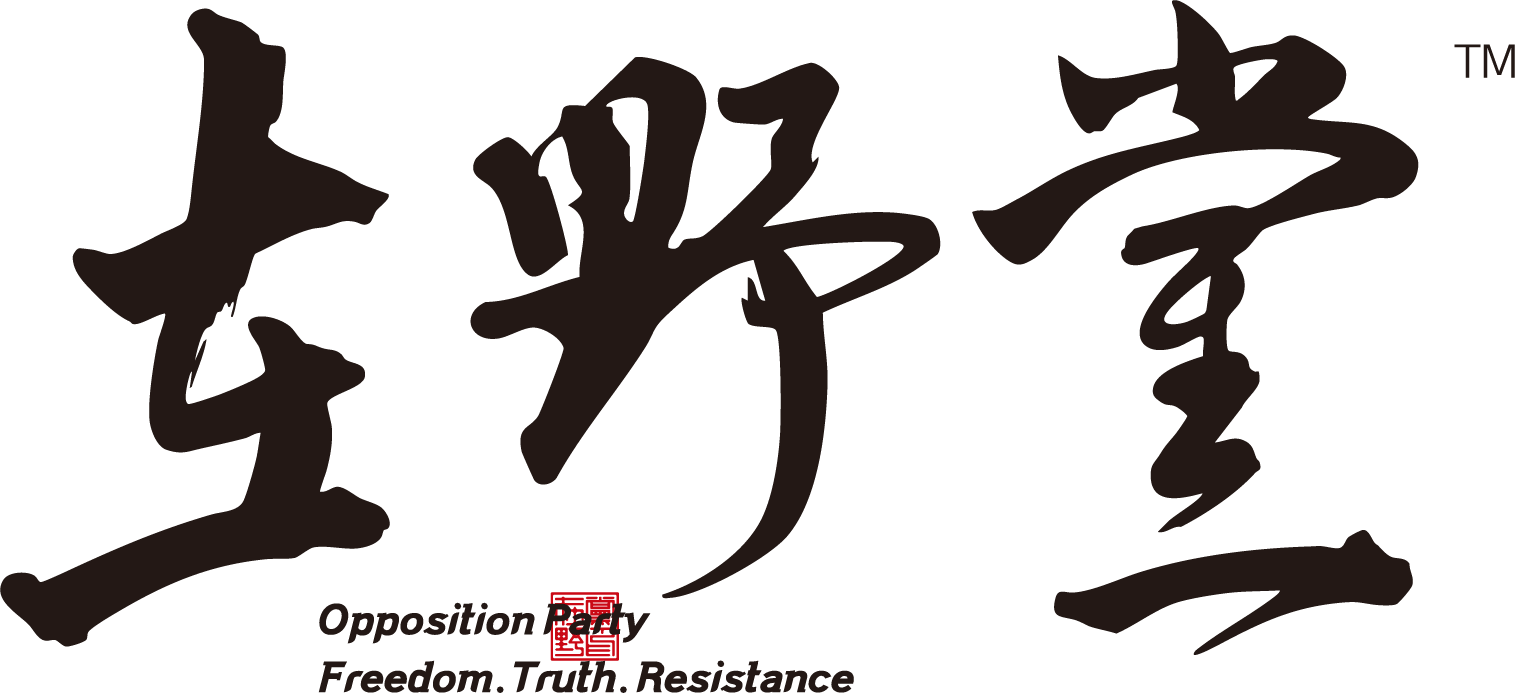
在中国民主党的发展过程中,《在野党》的诞生是一件很有意义的事。
回望历史,浙江筹委会相对于全国各地的民主党组织,是最认真,最坚韧,最悲壮的团队。浙江筹委会初始的六位成员,每个人都独当一面,大家每天都在殚精竭虑地为发展中国民主党出谋划策,毛庆祥提出,浙江筹委会应该办一份刊物,他的提议受到大家一致叫好,毛庆祥就选了一些文章直接去印刷店印刷了,封面印上隶书体的“在野党”,印好拿回来,我感觉这个刊名有点儿违和,大家凑在一起歪着脑袋想半天,也想不出更好的名称,《在野党》杂志就这样横空出世了。王荣清提议,老毛一个人出杂志吃不消,每个人轮流出一期,也被大家采纳了。每期出刊都由王荣清邮寄给有关部门和各地筹委会,多年后湖南谢长发说,当时他们每个月都期待着浙江的这份《在野党》杂志。
当中国民主党遭到大规模镇压后,政保警察逼问毛庆祥杂志是在哪个文印店复印的,毛庆祥坚持不牵连他人,独自承担了下来,为此多判了一年刑。
一个政治组织必须拥有自己的文字记录和思想阵地。
于是,《在野党》逐渐成为浙江民主党重要的民间刊物。
它记录民主党活动,讨论民主、人权和政治制度,也保存许多参与者的文章和历史资料。
对于朱虞夫而言,《在野党》的意义不仅是宣传。
它更重要的价值是:
留下证据。
很多街头活动过去以后不会留下任何东西;
很多参与者去世以后,他们的故事也可能消失。
但是只要刊物还在,至少后来的人能够知道:
某一年、某一个地方,曾经有人做过这些事情。
所以朱虞夫对复刊的《在野党》杂志寄予厚望,要杂志真实地记录现实,探幽索隐,考证每一次事件每一个人物,把网络上在特殊时期形成的错谬予以更正。《在野党》不玩虚的,不搞噱头,不哗众取宠,踏踏实实稳妥运行。
二十、浙江筹委会的精神
中国民主党浙江筹委会走过了二十八年,二十八年来,浙江的监狱里,每一天都有中国民主党人在坐牢。
浙江民主党人为民主党而坐牢的人次全国第一。
坐牢的刑期之长全国第一。
浙江民主党人坚持不认罪、不减刑全国第一。
浙江民主党人越挫越勇,永不言败,昂扬的斗志全国第一。
浙江民主党人在服刑期间被折磨致死的全国第一。
但是,海外的政治地痞居然说,浙江没有民主党,因为他们只是“筹备”,没有成立“党部”。好在历史不会被他们改变,晒出中共的判决书,历历在目。
朱虞夫提到,在他第一次坐牢前,政保警察好几次对他好言相劝,并说,只要他退出中国民主党,可以担保他一天牢都不用坐,如果不听的话,已经给他定了十年刑期。但是被他拒绝了。他义无反顾地选择了一条充满血与火的荆棘之路。
浙江筹委会的其他成员面对着威逼利诱也是铮铮铁骨、凛凛正气,前赴后继、不屈不挠,写下了中国民主党组党活动中最光彩的一页。


朱虞夫说,随着国际国内的形势发展,中共的气数将尽。民众反抗专制独裁、争取基本人权的斗争将风起云涌,浙江民主党人的事迹将会激励更多的勇士奋起,写下人类发展史上的浓重一笔。
编辑:李晶 校对:孔祥庆
Let Not History Be Reduced to Ashes
Zhu Yufu’s Recollections of China’s Democracy Movement (Part II)
Reporters: Shen Meihua and Jia Jia
Abstract
Zhu Yufu personally experienced the Cultural Revolution, the Hangzhou Democracy Wall movement, the 1989 pro-democracy movement, and the founding efforts of the China Democracy Party. Imprisoned three times, he spent a total of sixteen years behind bars. In his later years, he looks back on these events with one purpose: to preserve the history of China’s democracy movement and ensure that future generations remember those who paid a heavy price for the pursuit of democracy.
Profile
Zhu Yufu, a native of Hangzhou, Zhejiang Province, is a longtime participant in China’s democracy movement, one of the early prominent figures associated with the China Democracy Party, and the founder of The Opposition magazine.
XVI. Xu Wenli and the Dispute Over the Beijing Party Organization
Zhu Yufu holds strong personal opinions about Xu Wenli’s later involvement in the China Democracy Party.
According to Zhu’s recollections, in September 1998, the Zhejiang Preparatory Committee sent representatives to Beijing in the hope of encouraging the establishment of a Beijing Preparatory Committee of the China Democracy Party.
When Wu Yilong first approached Xu Wenli, Xu reportedly asked bluntly, “If you want me to get involved, fine. But what position will I have?”
The question caught Wu completely off guard. Wu had come to spark the formation of a party organization, not to recruit a chairman.
If a Beijing Preparatory Committee were established, Xu could be elected its chairman without needing Wu’s approval. If Xu wanted to become chairman of the Zhejiang organization, Wu had no authority to make that decision either.
Seeing Wu hesitate, Xu immediately dismissed him, saying, “I’m not doing it. You can leave.”
The following day, Xu Wenli publicly announced the principle of “Read more books, make more friends, and postpone forming associations.”
To Zhu, Xu’s attitude toward party formation was obvious. Xu later defended himself by arguing that “postponing association” still implied the intention to establish an association eventually.
After leaving Xu’s residence, Wu Yilong consulted his contact list and found Ren Wanding’s telephone number. He visited Ren, who immediately agreed to establish the China Democracy Party’s Beijing Preparatory Committee. The committee was formally launched on September 17.
Following what Zhu describes as a false announcement on September 6 that the Shandong Preparatory Committee had successfully registered, democracy activists across China were greatly encouraged. Organizations in various regions began openly adopting the China Democracy Party name.
Xu Wenli, meanwhile, appeared to have been sidelined during this wave of party-building activity. According to Zhu, Xu was deeply dissatisfied.
On November 6, Xu suddenly proposed organizing the First National Congress of the China Democracy Party. He and his wife also issued an extraordinary declaration stating that, from that day forward, they would never acquire privately owned property.
Zhu recalls that many activists regarded Xu’s actions as an attempt to seize the fruits of others’ work. His proposed national congress received little support.
Perhaps realizing that he had not yet established his own party organization and that his ambition to become national chairman was premature, Xu founded the “Beijing–Tianjin Party Headquarters of the China Democracy Party” on November 9.
According to Zhu, Xu sought to surpass other activists in organizational scale and even appointed Lü Honglai as vice chairman without Lü’s knowledge.
Zhu believed Xu assumed that the title of vice chairman would be enough to win Lü over and bring him under control.
From that point onward, competing centers of authority began emerging within the China Democracy Party. Zhu believed these divisions contributed to the circumstances surrounding the Chinese Communist Party’s subsequent crackdown.
Xu’s position was that repression would have occurred sooner or later regardless of how the party was organized. Zhu, however, argued that delaying the crackdown could have allowed the rapidly expanding China Democracy Party more time to develop within China.
After establishing the Beijing organization, Xu Wenli immediately proclaimed himself national chairman.
Zhu recalled receiving a telephone call from Xu, who told him:
“The national headquarters of the China Democracy Party has been established. I am the chairman, and Qin Yongmin is the vice chairman. Since Zhejiang was the first to establish the party, we are reserving one vice-chairmanship for you. You have twenty-four hours to submit a name. Otherwise, Zhejiang will be excluded, and there will be no place for Zhejiang in the China Democracy Party. I will be responsible for everything north of the Yangtze River, and Qin Yongmin will be responsible for everything south of it.”
Zhu happened to be with Zhu Zhengming at the time and handed him the telephone.
Zhu Zhengming listened silently, hung up, and said, “We will ignore him.”
According to Zhu Yufu, Xu Wenli himself acknowledged many years later that the telephone call had been highly inappropriate.
Zhu Yufu has long believed that the Chinese Communist Party employed elaborate strategies in suppressing the China Democracy Party.
He pointed to the prison sentences imposed on three prominent democracy activists—eleven, twelve, and thirteen years respectively—and questioned whether their alleged offenses could truly have differed by precisely one year each.
In Zhu’s interpretation, the authorities were strategically positioning potential future negotiating partners and understood Xu Wenli’s character very well.
After leaving China, Xu Wenli, according to Zhu, repeatedly portrayed himself as a founder of the China Democracy Party and claimed to have proposed establishing a political party decades earlier at the so-called Ganjiakou Meeting.
Zhu challenged this account by pointing to earlier organizations that had used the same name.
He cited the emergence of a China Democracy Party following the Qing government’s relaxation of restrictions on political associations in 1906, as well as Lei Chen’s establishment of a China Democracy Party in 1960.
He also recalled that many earlier advocates of independent political organization after the Communist takeover had been executed after being labeled leaders of “counterrevolutionary groups.”
“The internet has a memory,” Zhu observed.
He questioned why, during the authorities’ extensive efforts to assemble charges against China Democracy Party activists, the supposedly significant Ganjiakou planning meeting was not used as evidence.
Zhu pointed instead to a document dated October 5, 1998, entitled Three Proposals by Peng Ming and Xu Wenli Concerning Party Formation and Association on the Chinese Mainland.
Its third proposal, according to Zhu, explicitly urged activists in various regions to “temporarily postpone submitting applications to establish political parties.”
Zhu asked rhetorically whether Xu had forgotten this written record.
Years later, Zhu discussed what he regarded as Xu Wenli’s damaging personal ambitions with Wang Youcai.
Wang reportedly described Xu as a formidable political operator, suggesting that someone of his character might even have been capable of overthrowing the Communist Party through sheer force of personality.
Zhu, however, considered Xu a skilled performer.
He recalled Xu’s emphatic declaration before his arrest that he would never leave China, and contrasted it with Xu’s eventual departure.
Zhu argued that Xu had not been physically forced onto an airplane by the authorities.
He further maintained that, under Chinese prison regulations, sentence reductions, parole, and medical release generally required prisoners to acknowledge guilt and accept the judgment of the authorities.
According to Zhu, officials approached Qin Yongmin in prison in 2002 with an offer of parole and departure from China in exchange for such an acknowledgment. Qin reportedly rejected the proposal outright.
Zhu also criticized Xu for allegedly misattributing the famous line “I offer my blood to Xuanyuan”—a line from Lu Xun—to Tan Sitong.
Zhu raised another question: why did the Chinese authorities, in June 2002, go to extraordinary lengths to abduct Wang Bingzhang and bring him back to China, only to allow Xu Wenli to leave the country approximately six months later?
He suspected that the two developments were part of a carefully calculated strategy.
What angered Zhu particularly was the behavior of certain overseas activists whom he accused of flattering Xu’s ambitions.
He recalled the slogan “The Sun Rises in the American East,” which glorified Xu, and criticized Xu’s subsequent support for an organization called the “International Alliance of the China Democracy Party.”
Zhu concluded with a pointed remark:
“Birds of a feather flock together.”
XVII. The Question of Funding
Zhu recalled that the Zhejiang activists disliked what they saw as Xu Wenli’s narrow-mindedness and refused to submit to his authority.
According to Zhu, Xu assumed that the Zhejiang organization, like his own activities, depended on financial support from overseas.
Xu allegedly wrote to overseas contacts demanding that they cut off funding to Zhejiang in order to force its compliance.
But Zhu maintained that Xu had misjudged the situation.
According to Zhu, apart from individual transfers made by the overseas organization Human Rights in China to selected persons, no overseas donor had provided financial assistance to the other Zhejiang democracy activists, at least not before Zhu’s imprisonment.
The Zhejiang Preparatory Committee received attention and encouragement from Wang Bingzhang and other overseas activists.
Many believed it was necessary to establish an overseas support organization for the China Democracy Party.
Such an organization could serve two purposes: promptly communicate developments inside China to the international community and help obtain essential communications equipment, particularly fax machines, which were difficult for domestic activists to afford.
Overseas supporters did eventually donate a fax machine to the Zhejiang organization.
Wang Rongqing obtained 10,000 yuan from Fu Shenqi under the pretext of collecting an old business debt from the 1980s. According to Zhu, the entire sum was used to cover necessary expenses of the Zhejiang Preparatory Committee.
Zhu recalled that he once approached an overseas friend about making a donation to support organizational development.
The friend replied that overseas democracy activists were also struggling financially and that, during the Democracy Wall movement, everyone had paid expenses out of their own pockets.
After that conversation, Zhu never raised the subject again.
Among members of the Zhejiang Preparatory Committee, Wang Rongqing was the most financially secure.
He hosted nearly all visiting activists from other regions and frequently provided travel money to those arriving from poorer areas.
Mao Qingxiang, Zhu Yufu, and Li Xi’an also regularly contributed their own money to organizational activities.
They helped cover travel and accommodation expenses for Wu Yilong’s efforts to encourage party formation in other regions.
At the time, they were unaware that Yao Zunxian had privately arranged to accompany Wu and had paid most of the expenses of the journey.
According to Zhu, before leaving China, Yao Zunxian gave Wu Yilong more than 200,000 yuan remaining from the sale of his Shanghai apartment, intending the money to support the Zhejiang Preparatory Committee.
Zhu alleged that Wu concealed the transaction from everyone and handed the money to his girlfriend.
After his release from prison, Wu reportedly attempted to recover the money, but his girlfriend refused to return it.
That, Zhu noted, was another story.
Zhu estimated that he personally raised a little over 1,000 yuan for the party-building effort.
Hong Zhesheng of Democratic Forum knew about the Zhejiang organization’s financial difficulties but was unable to provide direct assistance.
He suggested that Zhejiang activists submit articles to earn modest writing fees.
Meanwhile, Zhu recalled, the Chinese Communist Party—whose own early revolutionary activities had benefited from Soviet funding—assumed that the China Democracy Party must also be financed from abroad.
According to Zhu, the authorities instructed police to investigate overseas financial transfers and offered officers an incentive: they could receive 60 percent of confiscated funds that they identified and recovered.
Zhu said the prospect made the police particularly enthusiastic.
Under these circumstances, Zhu told overseas friends not to send his writing fees directly into China.
If payments had to be made, he suggested transferring them to his younger sister in Japan.
Some of the money belonged to other activists as well.
After Zhu’s release from prison, his sister handed over the entire amount, totaling more than 9,000 yuan.
Following the imprisonment of Zhu and other leading activists, Nie Minzhi and Chen Shuqing took responsibility for managing the Zhejiang Preparatory Committee.
They distributed overseas donations intended to assist the families of imprisoned activists.
Zhu’s family received 2,000 yuan.
According to Zhu, police subsequently visited the hospital where his wife worked and confiscated the entire amount.
After that, he recalled, there was no further assistance—not even a telephone call of sympathy.
He described enduring severe mistreatment while imprisoned.
XVIII. The Overseas Democracy Movement
The overseas Chinese democracy movement received support from foreign democracy foundations.
In Zhu’s view, this should have placed overseas activists in a strong position to support the China Democracy Party during its exceptionally difficult struggle.
Yet he was deeply disappointed.
He believed that hostility among prominent overseas democracy activists was far more intense than their counterparts inside China could have imagined.
Each faction guarded its own sphere of influence.
As Zhu put it, they were skilled at fighting one another but ineffective at confronting their common political adversary.
When the China Democracy Party began emerging inside China, one prominent overseas activist was reportedly asked about it during an interview with a Taiwanese journalist.
According to Zhu, the activist responded dismissively, “They are all Communist Party agents.”
Zhu later remarked that, in undermining the China Democracy Party, certain “overseas comrades” had acted earlier and more ruthlessly than the Communist authorities themselves.
What he found even more disturbing occurred when preparatory committees had been established in more than twenty Chinese provinces and municipalities and the movement appeared to be spreading rapidly.
At that moment, according to Zhu, some overseas figures began attempting to bring the domestic organizations under their own control.
In February 1999, someone visited Zhu’s home carrying a document entitled A Letter from a Certain Individual to Democracy Activists Inside China.
The central message of the letter was that the domestic activists had established their party organizations under the writer’s instructions.
Zhu replied that he personally had never received such instructions.
However, he could not rule out the possibility that others had done so.
He therefore asked to show the letter to several fellow activists and invited the messenger to return a few days later for a response.
Zhu consulted several colleagues, all of whom denied having received any instructions.
He concluded that the author of the letter was attempting to manufacture a claim of authority in order to attract followers.
For Zhu, however, the pursuit of human conscience required honesty and integrity.
He gave the messenger a truthful answer, and the visitor departed disappointed.
A few days later, reports arrived from southern China claiming that the same messenger had been traveling from place to place, encouraging activists to dissolve their China Democracy Party organizations while distributing money generously.
Against this background, Zhu regarded the support offered by Wang Bingzhang and a small number of other overseas activists—who themselves had been marginalized by parts of the overseas democracy movement—as especially valuable.
At the time, several overseas supporters, including Wang Bingzhang, proposed that the domestic party organizations authorize them to establish an overseas preparatory committee of the China Democracy Party.
Others offered to serve as authorized overseas spokespersons.
Zhu Yufu was initially enthusiastic.
He casually told Zhu Zhengming, the convener of the Zhejiang Preparatory Committee, that the proposals sounded excellent and should be accepted.
Zhu Yufu himself served only as secretary-general.
Zhu Zhengming, however, was much more cautious.
He feared that overseas activists might act irresponsibly in the party’s name—a concern that Zhu later believed was vindicated by developments following Xie Wanjun’s emergence overseas.
Zhu Zhengming initially rejected the proposals.
To avoid embarrassing Zhu Yufu, he suggested limiting any overseas spokesperson’s authorization to two months.
This reportedly angered a Hangzhou native surnamed Xu, who had hoped to become the Zhejiang committee’s overseas spokesperson and left in frustration.
Eventually, under pressure from Mao Qingxiang, Wang Rongqing, and Li Xi’an, Zhu Zhengming relented.
He and Zhu Yufu issued a letter of authorization recommending the establishment of an Overseas Support Committee for the China Democracy Party.
Its principal responsibilities were to communicate developments inside China to the outside world and, where possible, raise financial support for domestic activists.
Zhu acknowledged that the overseas support organization made a substantial contribution to the development of the party-building movement inside China.
Looking back, Zhu believed that, at the time, overseas activists had not yet begun casually appropriating the China Democracy Party name for personal gain.
He alleged that after Xie Wanjun emerged overseas, some individuals recognized the potential to exploit the party’s name in connection with political asylum applications.
In Zhu’s sharply critical account, various opportunists then began establishing organizations under the same name.
He referred to reports that a street in Flushing, New York, had become crowded with more than a dozen competing organizations calling themselves the “China Democracy Party,” all seeking business.
He accused some of collaborating with immigration law firms and profiting from the suffering of genuine democracy activists.
Zhu further alleged that, in Los Angeles, the general manager of an immigration law firm had even become the chairman of a China Democracy Party organization.
XIX. The Opposition Monthly Magazine
The birth of The Opposition was a significant event in the development of the China Democracy Party.
Looking back, Zhu regarded the Zhejiang Preparatory Committee as one of the most dedicated, resilient, and tragic groups among the party organizations established throughout China.
Each of its six original members was capable of taking independent responsibility.
They devoted themselves daily to developing strategies for expanding the China Democracy Party.
Mao Qingxiang proposed that the Zhejiang Preparatory Committee publish its own magazine.
The proposal received unanimous support.
Mao selected several articles and took them directly to a printing shop.
On the cover, he printed the title The Opposition in a traditional clerical-style Chinese typeface.
When the printed copies were brought back, Zhu felt that the title seemed somewhat awkward.
The members gathered together, tilted their heads, and tried to think of something better.
No one could come up with a more suitable name.
And so The Opposition magazine was born.
Wang Rongqing suggested that producing every issue would be too much work for Mao alone and proposed that the members take turns editing and publishing it.
Everyone agreed.
Wang Rongqing was responsible for mailing each issue to relevant authorities and preparatory committees throughout China.
Years later, Xie Changfa of Hunan recalled that activists there eagerly anticipated receiving Zhejiang’s monthly magazine.
After the Chinese authorities launched a large-scale crackdown on the China Democracy Party, political security police interrogated Mao Qingxiang about the printing shop that had reproduced the magazine.
Mao refused to implicate anyone else and assumed full responsibility himself.
According to Zhu, this resulted in an additional year being added to Mao’s prison sentence.
A political organization must possess its own written records and a platform for expressing its ideas.
Over time, The Opposition became an important independent publication associated with the Zhejiang democracy movement.
It documented China Democracy Party activities, discussed democracy, human rights, and political institutions, and preserved articles and historical materials contributed by participants.
For Zhu Yufu, the magazine’s significance extended far beyond political advocacy.
Its most important function was to preserve evidence.
Many street demonstrations leave little behind once they have ended.
When participants pass away, their stories may disappear with them.
But as long as the publications survive, future generations can at least know that, in a particular year and at a particular place, people once undertook these actions.
For this reason, Zhu placed great hopes in the revived edition of The Opposition.
He wanted the magazine to document contemporary realities faithfully, investigate neglected details, examine the evidence surrounding every event and individual, and correct inaccuracies that had emerged online under unusual historical circumstances.
The Opposition, he insisted, should avoid empty gestures, sensationalism, and publicity stunts.
Instead, it should operate steadily, responsibly, and with a firm commitment to historical truth.
XX. The Spirit of the Zhejiang Preparatory Committee
Twenty-eight years have passed since the establishment of the China Democracy Party’s Zhejiang Preparatory Committee.
According to Zhu, throughout those twenty-eight years, there has not been a single day when Zhejiang’s prisons held no members of the China Democracy Party.
He described the Zhejiang activists’ record in a series of emphatic claims:
Zhejiang ranked first nationwide in the number of imprisonments suffered by China Democracy Party activists.
It ranked first in the length of prison sentences imposed on its members.
It ranked first in the determination of imprisoned members to refuse confessions of guilt and sentence reductions.
It ranked first in the resilience, courage, and unyielding spirit of activists who refused to surrender despite repeated setbacks.
And it ranked first in the number of democracy activists who, according to Zhu, died as a result of mistreatment while serving prison sentences.
Yet Zhu complained that certain overseas political opportunists insisted there was no China Democracy Party in Zhejiang simply because the organization had been called a “preparatory committee” rather than a formally established “party headquarters.”
History, he argued, cannot be rewritten so easily.
The court judgments issued by the Chinese Communist authorities remain part of the historical record.
Zhu recalled that before his first imprisonment, political security officers repeatedly tried to persuade him to abandon the China Democracy Party.
They allegedly promised that if he withdrew from the organization, they could guarantee that he would not spend a single day in prison.
If he refused, they warned, a ten-year prison sentence had already been prepared for him.
Zhu rejected their offer.
He knowingly chose a path filled with hardship, danger, and sacrifice.
Other members of the Zhejiang Preparatory Committee, he recalled, also confronted threats and inducements with unwavering courage and integrity.
One after another, they continued the struggle, refusing to submit or retreat.
In Zhu’s view, their actions constitute one of the most honorable chapters in the history of the China Democracy Party’s founding movement.
Zhu believed that, as domestic and international circumstances evolved, the Chinese Communist Party’s rule would eventually come to an end.
He anticipated that public resistance to authoritarian rule and the struggle for fundamental human rights would grow increasingly widespread.
The sacrifices and achievements of Zhejiang’s democracy activists, he hoped, would inspire future generations to stand up for freedom and write another significant chapter in the history of human progress.
Editor: Li JingProofreader: Kong Xiangqing