十一国殇日将至,
中国民主党旧金山党部
将举行一年一度的国殇日抗议活动,
敬请各位民主义士
及台、港、藏民主同仁
共同参加,并肩战斗!
时间:10/1/2025
地址:旧金山中共总领馆

十一国殇日将至,
中国民主党旧金山党部
将举行一年一度的国殇日抗议活动,
敬请各位民主义士
及台、港、藏民主同仁
共同参加,并肩战斗!
时间:10/1/2025
地址:旧金山中共总领馆
王连江-rId7-1280X853.jpeg?w=768&resize=768,0&ssl=1 "民运风采 郭斌——传递反共之声的译者")
作者:王连江
编辑:钟然 责任编辑:罗志飞 翻译:吕峰
郭斌,1994年生,吉林人,翻译学硕士。曾荣获全国大学生翻译比赛研究生组国家级一等奖,并担任过新航道考研英语讲师。因不满社会不公,揭露当地派出所的黑幕而遭受打压与威胁,最终毅然来到美国。
他如今奋战在民运前线,目光坚定,语调铿锵,举止间透出推翻中共法西斯政权的勇气与决心。活动现场,他翻译迅捷流畅、沟通自如,展现出深厚的英语功底与自由斗士的风采。
王连江-rId7-1280X853.jpeg "民运风采 郭斌——传递反共之声的译者")
郭斌2025年9月6日在自由雕塑公园欢送反中共病毒车队大游行出发仪式上发言。
Author: Wang Lianjiang
Editor: Zhong Ran Responsible Editor: Luo Zhifei Translator: Lyu Feng
Guo Bin, born in 1994 in Jilin Province, holds a master’s degree in Translation Studies. He once won the national first prize in the postgraduate division of the National College Student Translation Competition and served as a postgraduate English instructor at New Channel International Education. Dissatisfied with social injustice and after exposing corruption at the local police station, he faced suppression and threats, ultimately making the resolute decision to come to the United States.
Today, he stands on the front lines of the pro-democracy movement, his gaze firm, his voice forceful, his demeanor radiating the courage and determination to overthrow the CCP’s fascist rule. At public events, his translations are swift and fluent, his communication effortless, showcasing not only his strong command of English but also the spirit of a freedom fighter.
Guo Bin delivered a speech on September 6, 2025, at the Freedom Sculpture Park during the send-off ceremony for the Anti-CCP Pandemic Accountability Convoy Rally.
王连江-rId7-1280X853.jpeg?w=768&resize=768,0&ssl=1 "记民运人士——袁泽刚")
作者:王连江
编辑:李聪玲 责任编辑:罗志飞 翻译:吕峰
在我多日的耳闻目睹中,袁泽刚给我整体的感受是:话不多,净干实事!在2025年9月初—10初的中共病毒车队大游行活动中,他担心牵引大房车动力不足,自己花费54000美元换了一部新车,并路上一人开车,非常辛苦!2025年9月4号在由25人组成的送别Atticus Freeman 重返乌克兰前线的聚会上,自己又慷慨解囊1000多美元。在中国实现自由民主宪政的漫长征程中,有许多民运人士出人出钱又出力,他们不计回报,默默付出!我们应当心存感激并铭记他们。
王连江-rId7-1280X853.jpeg "记民运人士——袁泽刚")
袁则刚在自由雕塑公园做义工
Author: Wang Lianjiang
Editor: Li Congling Responsible Editor: Luo Zhifei Translator: Lyu Feng
From what I have seen and heard over many days, my overall impression of Yuan Zegang is this: he is a man of few words who devotes himself fully to real action. During the Anti-CCP Pandemic Accountability Convoy Rally held from early September to early October 2025, he was worried that the RV towing vehicle might lack sufficient power. Out of his own pocket, he spent $54,000 to replace it with a new car, and then drove it alone on the road — a truly exhausting effort!
On September 4, 2025, at a gathering of 25 people to bid farewell to Atticus Freeman before his return to the Ukrainian front lines, Yuan again gave generously, donating more than $1,000.
On the long journey toward achieving freedom, democracy, and constitutional government in China, there are many pro-democracy activists like Yuan who contribute their money, their labor, and their energy. They ask for nothing in return and give quietly, selflessly. We should remain grateful to them — and remember them.
Yuan Zegang Volunteering at the Freedom Sculpture Park

记者:张致君
编辑:李之洋 责任编辑:罗志飞 翻译:吕峰

【在野党采访部 张致君讯】2025年9月13日,海外多位民运人士在中国驻洛杉矶总领事馆门前举行抗议集会,揭露中共最高领导人习近平在与俄罗斯总统普京的对话中所流露的“人类本世纪或许可以活到150岁”的言论。与会者批评这一表态是“独裁者的荒唐幻想”,并呼吁全球关注中国人民在专制体制下的处境。
在现场主持人林养正发言中,习近平的所谓“长生梦”被视为极权者妄图永远掌控政权的象征。主持人指出:“绝对的权力让人失去了作为一个人最基本的理智。习近平不仅妄想挑战死亡的自然规律,更妄图永远坐在独裁者的宝座上。”
活动中参与者将习近平的执念与中国历史上的独裁统治者进行了对比。秦始皇为追求长生不死大肆搜寻仙药,结果不仅未能逃脱死亡,秦朝更在其死后三年便迅速覆灭。与会者批评说:“两千多年过去,习近平竟然在科学昌明的今天走上这条荒唐之路。唯一不同的是,秦始皇迷信仙药,而习近平和普京则妄图借助科技与鲜血,利用他们统治下的‘人矿’与韭菜来延续权力。”
与会者余一飞在现场发言中说到:“共产党就是西方神话故事里的吸血鬼,被他们奴役的中国人民不光要为他们服徭役,还要用鲜血为他们永葆青春延年益寿。近年来越来越多中国人民开始觉醒了,已经觉醒的中国人已经明显超过了为虎作伥的那一群人。限于共产党掌握的强大暴力机器,中国人民的抗争不大可能像孟加拉国和尼泊尔人民的抗争那样一蹴而就。我们现在所做的反共活动,与其说在声援中国人民,不如说是在促使中共党内戈尔巴乔夫的诞生。”
与会者胡德旺特别强调,中共统治下的人权状况已极度恶化。中共试图用非法的器官移植来换取自己的生命,却从不关心那些因良心、因自由而被关押、被迫害的政治犯!
主持人指控中共高层长期利用民众作为“器官库”,高官在需要时可透过权力渠道获取普通民众的器官。“在这个专制的国度,我们不是公民,不是国家的主人,而是独裁者的私有财产。”
历史规律的警示成为集会的另一大主题。主持人表示,历代独裁者在晚年执着于追求“长生”之时,往往意味着政权的崩溃已近在眼前。“我们相信,习近平和中国共产党,也会遵循历史的规律,在不久的将来轰然倒塌,可能比想象中更快。”
集会现场气氛庄严而高昂。参与者高举标语,高呼口号:“结束中共独裁暴政!”“结束一党专制!”“我们是人,不是器官库!”“释放所有政治犯!”“自由万岁!”
据主办方中国民主党介绍,本次集会吸引了来自不同地区的民主运动支持者参加,部分人是从中国流亡出来的异议人士,他们以亲身经历作证,揭露了中共暴政的残酷。组织者表示,未来还将继续在洛杉矶开展类似行动,推动国际社会关注中国人权议题,并支持中国人民争取自由的斗争。

本次活动由中国民主党主办,茉莉花第755次行动:
发起人:胡德旺/杨皓
策划:李聪玲
活动主持:林养正
活动负责人:黄吉洲
活动总协调:孙小龙
视觉设计:傅怡红
Reporter: Zhang ZhijunEditor: Li ZhiyangResponsible Editor: Luo ZhifeiTranslator: Lyu Feng
Abstract:This report presents the profound critique of the Chinese Communist regime by overseas pro-democracy activists. Drawing lessons from history, they expose the dictator’s “immortality fantasy” and call on the international community to pay attention to human rights and freedom in China, voicing support for the Chinese people’s struggle.
[Opposition News Department, Reported by Zhang Zhijun]On September 13, 2025, several overseas pro-democracy activists held a protest rally in front of the Chinese Consulate General in Los Angeles, exposing remarks made by Chinese Communist Party (CCP) leader Xi Jinping during a conversation with Russian President Vladimir Putin, in which he suggested that “human beings might be able to live to 150 years old this century.” Participants criticized the statement as “the ridiculous fantasy of a dictator” and called on the world to pay attention to the plight of the Chinese people under authoritarian rule.
In remarks delivered by rally host Lin Yangzheng, Xi’s so-called “dream of immortality” was framed as a symbol of a tyrant’s ambition to cling to power indefinitely. “Absolute power robs a person of the most basic rationality,” the host declared. “Xi Jinping not only fantasizes about defying the natural law of death, but also about sitting forever on the dictator’s throne.”
Participants drew parallels between Xi’s obsession and the behavior of despots in Chinese history. Qin Shihuang, the First Emperor of Qin, frantically searched for elixirs of immortality but failed to escape death, and his dynasty collapsed only three years after his passing. “More than two thousand years later, Xi Jinping has embarked on the same absurd path in today’s age of advanced science,” attendees said. “The only difference is that Qin Shihuang trusted in magic potions, while Xi and Putin attempt to exploit technology and blood, treating the people under their rule as ‘human mines’ and chattel to extend their own reign.”
At the rally, activist Yu Yifei remarked: “The Communist Party is like the vampires of Western mythology. The enslaved Chinese people are not only forced into servitude, but their very blood is extracted to sustain the rulers’ youth and longevity. In recent years, more and more Chinese have awakened, and those who have woken up already outnumber those who still serve as accomplices to tyranny. Given the CCP’s powerful machinery of violence, the Chinese people’s struggle is unlikely to achieve sudden breakthroughs like in Bangladesh or Nepal. What we are doing now through anti-CCP activities is less about assisting the Chinese people directly, and more about hastening the emergence of a Gorbachev within the Party itself.”
Activist Hu Dewang stressed that the human rights situation under CCP rule has deteriorated to an extreme. “The CCP seeks to extend its leaders’ lives through illegal organ transplants, while ignoring the countless political prisoners who are jailed and persecuted for conscience and freedom.”
The host accused the CCP leadership of long exploiting the populace as a vast “organ bank,” where high-ranking officials can obtain ordinary citizens’ organs through the power of their positions. “In this authoritarian state, we are not citizens, not the masters of our nation—we are the private property of a dictator.”
The warnings of history were another theme of the rally. The host noted that throughout history, dictators obsessed with “immortality” in their twilight years often signaled that their regimes were on the verge of collapse. “We believe that Xi Jinping and the Chinese Communist Party will follow the same law of history. Their downfall may come sooner than expected.”
The atmosphere at the rally was both solemn and impassioned. Participants raised banners and shouted slogans: “End CCP dictatorship!” “End one-party rule!” “We are human beings, not an organ bank!” “Free all political prisoners!” “Long live freedom!”
According to the organizers, the China Democracy Party, the rally drew supporters of the pro-democracy movement from different regions. Some were dissidents who had fled China and testified from personal experience about the cruelty of CCP tyranny. The organizers stated that similar actions will continue to be held in Los Angeles to push the international community to pay attention to China’s human rights issues and to support the Chinese people’s struggle for freedom.
This event was organized by the China Democracy Party, as part of the 755th Jasmine Action:
Initiators: Hu Dewang / Yang Hao
Planning: Li Congling
Host: Lin Yangzheng
Event Director: Huang Jizhou
General Coordinator: Sun Xiaolong
Visual Design: Fu Yihong
作者:陈婷
编辑:李之洋 责任编辑:罗志飞 翻译:tomorrow
近日,我看到了一则令我震惊与愤怒的消息:年仅22岁的女留学生张雅笛(网名“ Tara”),在2025年7月5日回国探亲后,于7月30日在云南香格里拉失联,至今已超过四十余天音讯全无。多方消息称,她可能因所谓“危害国家安全”被国安带回长沙。更令人揪心的是,前往长沙帮助其母亲的知名人权律师江天勇,也在9月16日被不明身份人员强行带走。
作为一名藏传佛弟子、达赖喇嘛尊者的追随者,我心中充满了悲痛与愤怒。这不仅仅是一个年轻学子的个人遭遇,而是整个民族自由、信仰自由与人权尊严被践踏的又一铁证。
张雅笛是湖南长沙人,今年才刚满22岁。她长期在法国学习生活,不仅通晓汉语、藏语、英语和法语,更是获得伦敦大学亚非学院人类学硕士奖学金的优秀青年。正值花样年华的她原本应当在今年9月踏上英国求学之路,继续投身学术研究与跨文化交流,却因为一次普通的探亲之行而从此音讯全无。
在失联之前,张雅笛曾积极参与学术与社会议题,曾经加入「华语青年挺藏会」,担任编辑工作,致力于传播藏民族文化,推动汉藏之间的理解与和解。她用自己的学识与行动,努力打破民族隔阂,推动不同群体之间的交流。这是任何一个现代国家都应当珍视的青年才俊,却在中国的政治铁拳下被视为“危险分子”。
张雅笛的失踪,并非孤立事件。自上世纪以来,中共对藏传佛教和藏人社会的控制早已深入骨髓:第十一世班禅喇嘛根敦确吉尼玛,在六岁时被确认身份后不久即遭中国政府秘密劫持,至今三十年杳无音讯。全世界都知道他是最年轻的政治犯之一,却没有人能见到他真实的生活状况。藏传佛教的各类活动、寺庙僧侣、法会修行都在高压监控之下,甚至连达赖喇嘛尊者的照片也被禁止。
近年来,中国更是通过所谓《藏传佛教活佛转世管理办法》试图垄断宗教事务,妄图掌控达赖喇嘛尊者的转世,严重侵犯信仰自由。
而今,连一名努力促进民族对话、支持藏人、追随真理的汉族女青年,也遭遇了与班禅喇嘛类似的“强迫失踪”。这充分说明,打压信仰、打压人权、打压真相,并非只针对西藏或某个民族,而是针对一切坚持良知、勇于发声的人。
作为佛弟子,我学到要以慈悲心对待众生,但慈悲并不意味着沉默。佛陀教导我们,见到不公时,应当勇敢发声,守护正义。张雅笛的遭遇,让我想到无数在西藏、在新疆、在中国各地被强迫沉默的人。他们因为信仰、因为良知、因为渴望真相而被消失、被囚禁。这样的行为不仅违背了国际人权公约,更违背了最基本的人性与良心。
我为张雅笛祈祷,愿她无论身处何地,都能得到佛菩萨的加持与护佑;我也为她的母亲祈愿,愿她在绝望与恐惧中得到力量与勇气。同时,我也要以佛弟子的身份郑重发声:任何政府都无权剥夺一个人追求真理、表达思想与信仰的自由。
在此,我要向国际社会、向所有热爱自由与正义的人们呼吁:
要求中国当局立即公布张雅笛的下落,保障她的人身安全。
呼吁中国释放第十一世班禅喇嘛,并停止对达赖喇嘛尊者转世事务的政治操控。
敦促各国政府、人权组织与媒体加大关注,不要让这些“失踪者”在黑暗中被遗忘。
号召所有佛弟子与正义之士共同祈祷、共同发声,让世界听到我们的呼喊。
今天,张雅笛的遭遇,再次证明了达赖喇嘛尊者多年来的警示:中国对宗教自由与人权的打压,绝不是个别事件,而是一种系统性、制度化的镇压。我们不能沉默,因为沉默就是纵容。
作为藏传佛弟子,我深知佛法中的一句话:“众生无边誓愿度。” 这意味着我们不仅要为藏人祈愿,更要为所有遭受不公的人发声。张雅笛,一个年轻的汉族女子,她选择了支持藏人,选择了走在真理的道路上,如今却因此被噤声。她的勇气值得我们铭记,她的遭遇值得我们行动。
我衷心祈愿:张雅笛能早日获释,重获自由;愿她的善心与勇气化作更多人的力量;愿未来的中国不再有这样的迫害。愿慈悲与正义早日照亮这片黑暗。
Author: Chen Ting
Editor: Li Zhiyang Editor-in-Chief: Luo Zhifei Translation: tomorrow
Abstract: This article, as a Buddhist disciple, calls for attention to Zhang Yadi’s disappearance, connects it to the issue of human rights and religious freedom in Tibet, exposes the CCP’s suppression of different ethnic groups and beliefs, emphasizes that compassion does not mean silence, and calls on the international community to speak out alongside Buddhist disciples and pray for freedom and justice.
Recently, I read a piece of news that shocked and angered me: 22-year-old international student Zhang Yadi (nicknamed “Tara”), who returned to China to visit her family on July 5, 2025, went missing in Shangri-La, Yunnan, on July 30. She has been missing for over 40 days. Multiple sources suggest she may have been taken back to Changsha by the National Security Bureau on charges of “endangering national security.” Even more distressing is that Jiang Tianyong, a renowned human rights lawyer who had traveled to Changsha to assist her mother, was also forcibly abducted by unidentified individuals on September 16.
As a Tibetan Buddhist and a follower of His Holiness the Dalai Lama, I am filled with grief and anger. This is not just the personal experience of a young student, but further evidence of the trampling of the freedom of an entire nation, freedom of belief, and human rights.
Zhang Yadi, a native of Changsha, Hunan, just turned 22 this year. She has lived and studied in France for a long time, becoming fluent in Chinese, Tibetan, English, and French. She was also a recipient of a scholarship for a Master’s degree in Anthropology from the School of Oriental and African Studies, University of London. In her prime, she was supposed to embark on her studies in the UK this September, dedicating herself to academic research and cross-cultural exchange. However, she disappeared without a trace during a simple family visit.
Before her disappearance, Zhang Yadi was actively involved in academic and social issues. She served as an editor for the Chinese Youth Support Tibet Association, dedicated to promoting Tibetan culture and fostering understanding and reconciliation between Han and Tibetan peoples. Through her knowledge and actions, she worked to break down ethnic barriers and promote exchanges between different groups. This is a young talent that any modern nation should cherish, yet under China’s iron fist, she is considered a “dangerous element.”
Zhang Yadi’s disappearance is not an isolated incident. Since the last century, the Chinese Communist Party’s control over Tibetan Buddhism and Tibetan society has been deeply ingrained. The 11th Panchen Lama, Gedhun Choekyi Nyima, was secretly abducted by the Chinese government shortly after his identity was confirmed at the age of six, and has remained missing for thirty years. While the world knows he is one of the youngest political prisoners, no one has ever seen his true living conditions. Tibetan Buddhist activities, monks in temples, and religious ceremonies are all under heavy surveillance. Even photos of His Holiness the Dalai Lama are banned.
In recent years, China has attempted to monopolize religious affairs through the so-called “Regulations on the Management of the Reincarnation of Living Buddhas in Tibetan Buddhism”, attempting to control the reincarnation of His Holiness the Dalai Lama and seriously infringing on freedom of belief.
Now, even a young Han Chinese woman who has been working hard to promote interethnic dialogue, support Tibetans, and pursue the truth has suffered a similar “enforced disappearance” as the Panchen Lama. This fully demonstrates that the suppression of faith, human rights, and the truth is not limited to Tibet or any particular ethnic group, but targets all those who uphold their conscience and dare to speak out.
As a Buddhist, I’ve learned to treat all beings with compassion, but compassion doesn’t mean silence. The Buddha taught us to speak out courageously and defend justice when we see injustice. Zhang Yadi’s plight reminds me of the countless people who have been forced into silence in Tibet, Xinjiang, and across China. They have been disappeared and imprisoned for their faith, their conscience, and their desire for the truth. Such actions not only violate international human rights conventions, but also violate the most basic human nature and conscience.
I pray for Zhang Yadi, hoping that wherever she is, she will receive the blessings and protection of the Buddhas and Bodhisattvas. I also pray for her mother, hoping that she will find strength and courage amidst her despair and fear. At the same time, as a Buddhist disciple, I solemnly declare: No government has the right to deprive a person of their freedom to pursue truth, express their thoughts, and believe.
Here, I appeal to the international community and to all those who love freedom and justice:
Demand that the Chinese authorities immediately disclose Zhang Yadi’s whereabouts and ensure her safety.
Call on China to release the 11th Panchen Lama and cease its political manipulation of the reincarnation of His Holiness the Dalai Lama.
Use governments, human rights organizations, and the media to step up their efforts and not allow these “missing persons” to be forgotten in the darkness.
Call on all Buddhists and those who uphold justice to pray and speak out together, so that the world can hear our cries.
Today, Zhang Yadi’s experience reaffirms what His Holiness the Dalai Lama has warned us about for years: China’s suppression of religious freedom and human rights is not an isolated incident, but a systematic, institutionalized repression. We cannot remain silent, for silence tantamount to connivance.
As a Tibetan Buddhist, I deeply understand the Buddhist motto: “I vow to save all sentient beings.” This means we must not only pray for Tibetans, but also speak out for all those who suffer injustice. Zhang Yadi, a young Han Chinese woman, chose to support Tibetans and walk the path of truth, yet now she is being silenced. Her courage deserves our remembrance, and her story deserves our action.
I sincerely pray that Zhang Yadi will be released soon and regain her freedom. May her kindness and courage empower more people. May such persecution no longer exist in China in the future. May mercy and justice soon illuminate this darkness.
作者:陈婷
编辑:李聪玲 责任编辑:胡丽莉 翻译:何兴强
近日,联合国五位人权专家联合发布通报,对中国当局涉嫌严重干涉西藏精神领袖第十四世达赖喇嘛尊者的转世事宜,以及对第十一世班禅喇嘛根敦确吉尼玛长达三十年的强迫失踪表示严重关切。这份通报让我深受触动,也引发了许多思考。
首先,作为一名藏传佛教的修行者,我清楚地知道,达赖喇嘛转世问题并不仅仅是一个宗教仪式,而是西藏文化与身份的核心。达赖喇嘛不仅是宗教领袖,更是西藏人民精神上的依靠。转世制度千百年来依靠藏传佛教自身的传统与仪轨延续,绝非世俗政权能够干涉的范围。中国政府通过法律将转世纳入政治掌控,实质上是对西藏宗教信仰自由的彻底剥夺。这种做法不仅伤害了藏人,也挑战了人类社会普遍认同的宗教自由原则。
联合国专家特别提到,中国的《藏传佛教活佛转世管理办法》和《宗教事务条例》,要求所有转世都需经过政府批准。这种赤裸裸的控制,完全背离了宗教的本质。佛法讲究的是清净传承,依靠上师与弟子之间的信任与誓愿。如果转世被政治化,失去了宗教的真实性,那对于信众来说,不仅是信仰的打击,更是文化的断裂。
其次,关于第十一世班禅喇嘛根敦确吉尼玛的遭遇,更是让人痛心。他在六岁时被中国政府带走,从此三十年下落不明。作为一名佛弟子,我常常在法会上为他祈愿,愿他安好。但现实是,他的失踪不仅是个人和家庭的巨大悲剧,更是整个藏人群体的集体创伤。一个六岁的孩子,因其被认定为宗教领袖,就被剥夺了最基本的人身自由,这是人类社会无法接受的严重侵犯。联合国专家在通报中明确指出,这一强迫失踪违反了国际法的绝对禁止性规范。这样的表述,不仅是对中国政府的警告,也是对世界各国的提醒——不能对这种长期的人权侵害保持沉默。三十年的等待太久了,国际社会必须持续发声。
我尤其感受到,这份联合通报不仅是人权层面的文件,更是对藏人信仰尊严的一次支持。藏传佛教徒在国内面临极其恶劣的宗教环境,寺庙被严密监控,僧侣被强制“爱国教育”,法会受到严格限制。很多修行人被迫隐秘修行,甚至因为信仰而失去自由。在这样的背景下,联合国的声音无疑是一种国际道义的支持。
作为一个在自由环境下修行的佛弟子,我尤其体会到宗教信仰自由的珍贵。能够自由参加法会、自由阅读佛经、自由表达信仰,这些在海外显得平常的权利,在中国却可能付出巨大的代价。因此,我更加理解到,联合国专家强调的“宗教自由是一项基本人权”,不仅是一句原则性的宣言,而是真实关系到千万藏人日常生活的现实。
这份通报也让我想到达赖喇嘛尊者的最新声明。尊者明确指出,未来的转世认证将由甘丹颇章信托基金董事会负责,除此之外的任何认证都不具备合法性。这不仅是宗教上的规定,更是对藏人自主权的坚守。尊者已经九十高龄,但仍然心系信众的未来,这让我深感感恩与敬佩。
在我看来,中国政府对达赖喇嘛转世的干涉,以及对班禅喇嘛的强迫失踪,实质上反映了其对西藏宗教和文化的深层次不安全感。一个真正自信的政权,不会害怕宗教领袖的存在。正是因为他们明白,信仰代表着精神的力量,而这种力量是不可能通过压制来消灭的。
未来的道路必然艰难,但联合国的通报让我看到了一线希望。国际社会的关注虽然不能立刻改变西藏的现状,但它至少为藏人争取到了一种国际舆论的支持。只要这种支持持续存在,就会成为推动改变的力量。任何为自由与真理发声的努力,必将种下善的种子。愿这份联合国通报成为更多人关注西藏、支持宗教自由的契机。愿第十一世班禅喇嘛早日重获自由,愿达赖喇嘛尊者长久住世,为更多的藏传佛教徒带来光明的指引。
Abstract:
UN human rights experts have raised concerns about the Dalai Lama’s reincarnation and the disappearance of the Panchen Lama, highlighting the Chinese government’s severe violations of religious freedom and human rights, prompting profound reflection on Tibetan faith, dignity, and international support.
Author: Chen Ting
Editor: Li Congling
Chief Editor: Hu Lili
Translator:He XingQiang
Recently, five United Nations human rights experts jointly issued a communication expressing grave concern over the Chinese authorities’ alleged interference in the reincarnation process of His Holiness the 14th Dalai Lama, and the enforced disappearance of the 11th Panchen Lama, Gedhun Choekyi Nyima, for thirty years. This communication deeply moved me and sparked many reflections.
First, as a practitioner of Tibetan Buddhism, I know clearly that the issue of the Dalai Lama’s reincarnation is not merely a religious ritual, but lies at the core of Tibetan culture and identity. The Dalai Lama is not only a religious leader but also the spiritual anchor of the Tibetan people. For centuries, the reincarnation system has been maintained through the traditions and rituals of Tibetan Buddhism itself, and it is absolutely beyond the jurisdiction of any secular government. By codifying reincarnation into political control, the Chinese government has in essence stripped Tibetans of their religious freedom. This practice not only harms Tibetans but also challenges the universally recognized principle of religious freedom.
The UN experts specifically highlighted that China’s Measures on the Management of the Reincarnation of Living Buddhas in Tibetan Buddhism and the Regulations on Religious Affairs require all reincarnations to be approved by the government. Such naked control completely contradicts the essence of religion. The Dharma emphasizes pure transmission, grounded in the trust and vows between teacher and disciple. If reincarnation is politicized, stripped of its religious authenticity, then for the faithful it means not only a blow to belief but also a rupture in culture.
Second, the case of the 11th Panchen Lama, Gedhun Choekyi Nyima, is particularly heartbreaking. At the age of six, he was taken away by the Chinese government, and since then he has been missing for thirty years. As a Buddhist disciple, I often pray for him during Dharma assemblies, wishing him safety and well-being. Yet the reality is that his disappearance is not only a personal and family tragedy but also a collective trauma for the entire Tibetan community. A six-year-old child, deprived of the most basic human freedom simply because he was recognized as a religious leader—this is an egregious violation unacceptable to human society. The UN experts made clear that this enforced disappearance violates jus cogens, the absolute prohibitions of international law. Such a statement is not only a warning to the Chinese government but also a reminder to the world that it must not remain silent in the face of long-term human rights abuses. Thirty years is too long to wait— the international community must continue to speak out.
I particularly feel that this communication is not just a human rights document but also an affirmation of the dignity of Tibetan faith. Tibetan Buddhists face an extremely harsh religious environment inside China: monasteries are tightly monitored, monks are forced into “patriotic education,” and religious gatherings are severely restricted. Many practitioners are forced into secret practice, and some even lose their freedom because of their beliefs. Against this backdrop, the UN’s voice is undoubtedly a form of moral support from the international community.
As a Buddhist disciple practicing in a free environment, I especially cherish religious freedom. The ability to freely attend Dharma assemblies, freely read scriptures, and freely express faith—rights that seem ordinary abroad—may require tremendous sacrifice in China. Thus, I understand more deeply that the UN experts’ statement that “freedom of religion is a fundamental human right” is not just a principle but a reality affecting the daily lives of millions of Tibetans.
This communication also reminded me of His Holiness the Dalai Lama’s latest declaration. He has made it clear that the future recognition of his reincarnation will be decided by the Gaden Phodrang Trust, and any recognition outside of this will be invalid. This is not only a religious directive but also a defense of Tibetan self-determination. Despite being in his nineties, His Holiness still cares deeply about the future of his followers, which fills me with gratitude and admiration.
In my view, the Chinese government’s interference in the Dalai Lama’s reincarnation and the enforced disappearance of the Panchen Lama reflect a deep insecurity about Tibetan religion and culture. A truly confident government would not fear the existence of religious leaders. They understand that faith represents spiritual power, and such power cannot be extinguished through suppression.
The road ahead will surely be difficult, but the UN communication gives me a glimmer of hope. International concern may not immediately change Tibet’s reality, but at least it provides Tibetans with international moral support. As long as such support continues, it will become a force for change. Every effort to speak for freedom and truth will plant the seeds of goodness. May this UN communication inspire more people to pay attention to Tibet and support religious freedom. May the 11th Panchen Lama regain his freedom soon, and may His Holiness the Dalai Lama live long and continue to guide countless Tibetan Buddhists with light.
秩序的奔溃%20-rId4-588X294.jpeg?w=768&resize=768,0&ssl=1 "中共罪行———秩序的奔溃")
作者/编辑:Gloria wang
责任编辑:胡丽莉
翻译:何兴强
历史背景:
1927年「大革命」失败后:国共分裂,中共转入农村,以农民为基础展开武装暴力行动。
1927–1930年间:中共在井冈山、赣南、闽西等地建立所谓的「苏维埃根据地」,其中核心政策就是「打土豪,分田地」。
1930年前后:随着中共控制区扩大,针对地主的运动变得更激烈,目的是削弱传统的土地阶级结构,企图以此获取农民的支持。
中共为达目的,争取民众盲从,在部分地区的行动导致激烈暴力,地主阶层被严厉清算,秩序瓦解,社会矛盾加剧,甚至中农也受到波及,引发混乱。
社会因斗争被撕裂,群众斗争极端化,地主不仅失去土地与财产,很多人遭到公开羞辱、殴打甚至处决。人际矛盾变得尖锐,村落内部的亲戚、邻里之间因为「划阶级」而互相揭发、报仇。还引起社会心理创伤,许多地主家庭成员,包括妇女、儿童均被牵连,造成社会阴影。
此举使得阶级仇恨制度化,土地革命把「敌我矛盾」引入农村生活,形成了长期的「阶级划分」思维。后来延伸到「整风运动」「土改运动」「文革」,阶级斗争思维成为中国政治文化的长期基调。造成伦理秩序破坏,传统社会中的长辈尊重、宗族维系,被「革命正义」取代。年轻贫农在「斗争大会」上可以公开辱骂、惩罚年长地主,颠覆了传统伦理。这种做法虽削弱旧秩序,但也带来道德真空。
中共为达到自己的短期利益,不惜用不正当手段使得贫苦阶层被分得土地,从而出于个体利益支持中共。但这一行为付出的长远代价是农村内部矛盾激化、经济破坏、社会伦理被动摇,并种下了长期「阶级斗争」的仇恨种子。
1930年前后苏区斗争会规模庞大,一个县动辄召集数千农民参加。地主在公开批斗后常被「没收财产+驱逐」,部分被处决。学者估算仔1927–1931年间,在红色根据地被处决的地主、富农约 20万–30万人。数字因地区不同差异极大,有的县几乎全部地主被清算。
土地分配后,农业总产量并未明显上升,部分地区1930–1931 年粮食产量甚至下降 10–15%。主因是缺乏耕牛、农具,战争环境不稳定。地主被消灭后,农村信贷体系崩溃,过去地主经常向农民放贷,农忙时提供种子、钱粮。打击地主后,农民短期虽分田,但缺乏资金与流动性。
这场「打击地主」运动的核心并非真正的社会公平,而是中共巩固政权的工具。透过分田分地,中共赢得农民支持,借由没收地主资产,补充其军事与政治资源。这是一场以政治利益为目的的斗争运动,而非为百姓谋福祉。农民在短暂分得土地后,很快又陷入新的政治压迫之下。据中共自己统计,1931–1933年间,江西苏区共重新分配土地约 1700万亩,其中大部分被军队和革命干部优先分得。普通农民虽一度得到土地,但不久又在征粮、征兵与「再分配」中失去,短暂的得益转瞬即逝。
中共打击地主的行为,既非真正的土地改革,也非社会公正的体现,而是以革命之名行劫掠之实。它用暴力破坏了农村社会的秩序,用仇恨摧毁了人伦与信任。这样的历史悲剧提醒我们:任何以「公平」为名、却建立在仇恨与暴力之上的运动,最终只会留下满目疮痍。
由此可见,中共的此举造成社会秩序的崩毁及恶劣深远的影响,此为第一罪。
秩序的奔溃 -rId4-588X294.jpeg)
Author/Editor: Gloria Wang
Chief Editor: Hu Lili
Translator:He XingQiang
Historical Background
After the failure of the “Great Revolution” in 1927, the Kuomintang and the Chinese Communist Party split. The CCP retreated to rural areas and launched armed violent movements based on mobilizing peasants.
Between 1927 and 1930, the CCP established so-called “Soviet base areas” in places such as Jinggangshan, southern Jiangxi, and western Fujian. The core policy there was “Strike down the landlords, divide up the land.”
By around 1930, as CCP-controlled areas expanded, the movement against landlords intensified. Its goal was to weaken the traditional landowning class structure in order to win peasant support.
Violence and Breakdown of Order
To achieve its aims and secure blind obedience from the masses, the CCP’s actions in certain areas led to intense violence. The landlord class was subjected to harsh purges, social order collapsed, and conflicts escalated—even middle peasants were implicated, creating widespread turmoil.
Society was torn apart by “class struggle.” Landlords not only lost land and property but were publicly humiliated, beaten, and even executed. Interpersonal relationships grew tense; within villages, relatives and neighbors turned against one another, exposing and seeking revenge under the guise of “class labeling.” This also inflicted psychological trauma on society, as entire landlord families—including women and children—were implicated, leaving deep scars.
This institutionalized class hatred, embedding the concept of “enemy versus us” into rural life. It set the stage for later campaigns such as the “Rectification Movement,” the “Land Reform,” and the “Cultural Revolution.” Class struggle became a long-term cornerstone of Chinese political culture. Traditional ethics—respect for elders and the cohesion of clans—were replaced by “revolutionary justice.” Young poor peasants were encouraged to openly insult and punish elderly landlords at “struggle sessions,” overturning social ethics. Although this weakened the old order, it also created a moral vacuum.
Political Goals Under the Guise of Fairness
For its short-term interests, the CCP resorted to improper means, granting land to poor peasants so they would support the Party out of self-interest. But the long-term cost was grave: intensified rural conflicts, economic disruption, undermined social ethics, and the sowing of lasting seeds of class hatred.
By around 1930, struggle meetings in Soviet areas grew massive. In some counties, thousands of peasants would gather. After public denunciations, landlords were often subjected to “confiscation and expulsion,” and some were executed. Scholars estimate that between 1927 and 1931, some 200,000–300,000 landlords and rich peasants were executed in CCP-controlled base areas. The figures varied greatly by region—some counties saw nearly the entire landlord class eliminated.
Despite land redistribution, total agricultural output did not rise significantly. In some areas, grain production between 1930 and 1931 even fell by 10–15%. The main reasons were lack of oxen, farm tools, and the instability of war. After landlords were eliminated, the rural credit system collapsed. In the past, landlords often provided loans to peasants, offering seeds or money during the busy farming seasons. Once landlords were destroyed, peasants briefly gained land but soon lacked liquidity and capital.
The essence of the “anti-landlord” movement was not genuine social fairness, but a political tool for the CCP to consolidate power. Through land redistribution, the CCP won peasant support. By confiscating landlord assets, it funded its military and political operations. This was a struggle for political gain, not for the welfare of the people. Peasants who briefly received land soon fell back into new forms of political oppression. According to CCP’s own statistics, between 1931 and 1933, some 17 million mu of land were redistributed in the Jiangxi Soviet, but much of it was allocated first to the army and revolutionary cadres. Ordinary peasants, though they temporarily obtained land, quickly lost it again through requisitions, conscription, and repeated redistribution. The short-lived benefit vanished.
Consequences
The CCP’s assault on landlords was neither true land reform nor genuine social justice, but robbery under the banner of revolution. With violence, it shattered the order of rural society; with hatred, it destroyed ethics and trust.
This tragic history reminds us: any movement carried out in the name of “fairness,” but built upon hatred and violence, will ultimately leave nothing but devastation.
Thus, it is clear that the CCP’s actions caused the collapse of social order and produced profound, malignant consequences. This constitutes its first crime.

作者:陆乾坤
编辑:周志刚 责任编辑:胡丽莉 翻译:程铭
一、阅兵场上的幻象
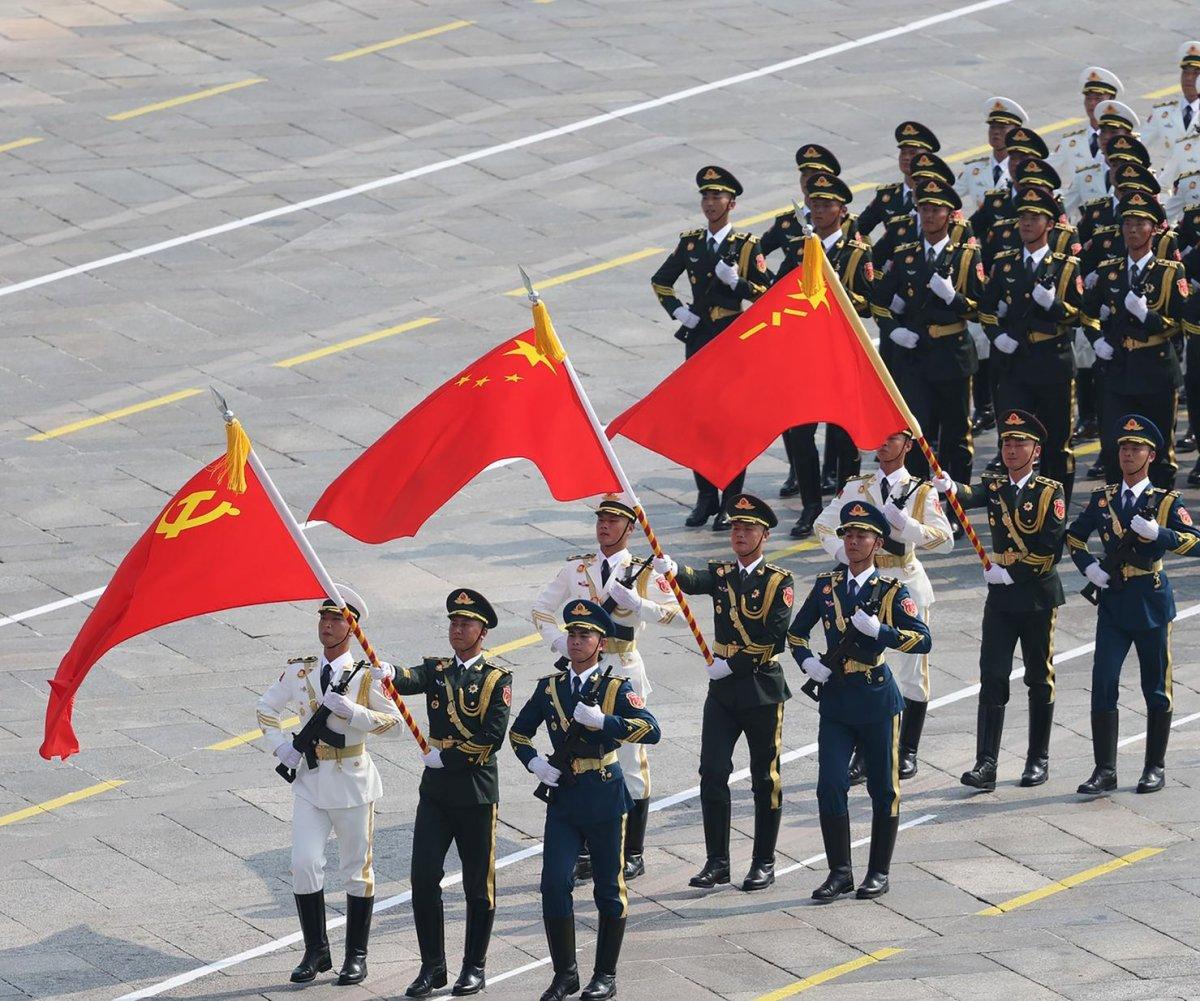
2025年9月3日,北京天安门广场。坦克轰鸣、战机呼啸,中共以“反法西斯胜利80周年”为名举办大规模阅兵。然而,站在天安门城楼上的,却是当今世界最臭名昭著的两个独裁者:因入侵乌克兰遭国际刑事法院通缉的普京,以及延续三代世袭、让朝鲜沦为炼狱的金正恩。
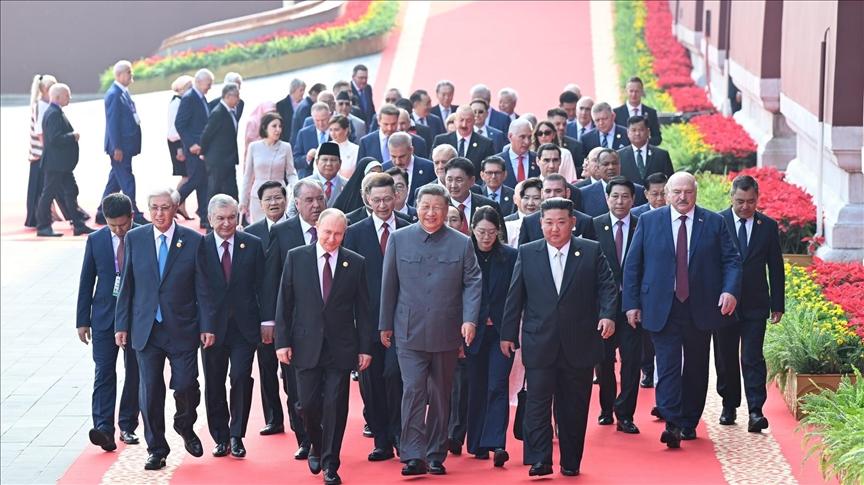
这一幕,荒诞至极。所谓“反法西斯胜利纪念”,竟被中共演绎为“当代法西斯的集会”。真正的国际民主力量与抗战盟友永远不可能理睬这个专制小圈子。这不仅暴露了中共在国际外交上的孤立,更彰显了其对历史的盗窃与对现实的无力。
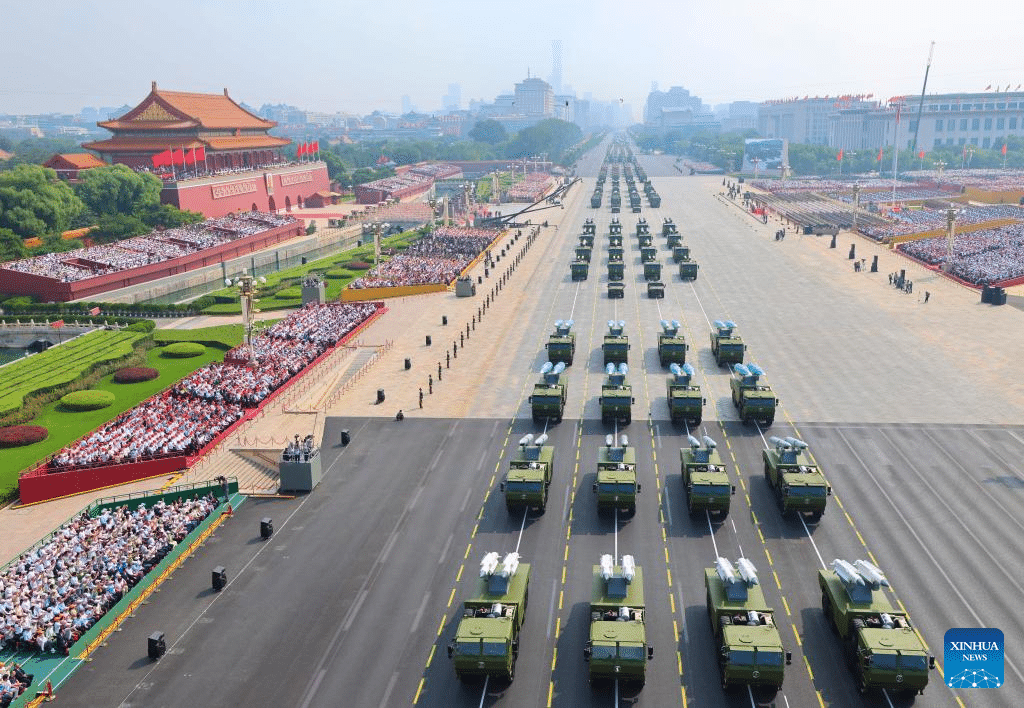
事实上,这并非中共第一次利用阅兵进行政治表演。2015年九三阅兵,便是一次典型的“秀肌肉”场景。正如当年苏联在解体前仍频繁举办红场阅兵,中共同样试图通过耀武扬威掩盖内部危机。
二、苏联的镜像与中共的焦虑
回望历史,苏联在1980年代末已陷入深重困境:经济停滞、物资匮乏、社会矛盾激化。然而在红场上,坦克和导弹依旧列队前行,仿佛强大如昔。结果呢?几年的时间,苏联轰然解体。阅兵所展示的“强大”,只是崩塌前的幻影。
中共的九三阅兵,无论2015还是2025,都是同样逻辑:
掩盖困境:面对房地产崩盘、债务危机、青年失业潮,政权需要一个盛大的舞台来制造繁荣幻觉。
言论封锁:当经济失去支撑,社会不满滋生,只能靠压制声音维持表面稳定。
外部威慑:通过军力展示,恐吓国际社会,让其在援助中国人民时投鼠忌器。
这种政治逻辑,与当年的苏联如出一辙。历史的相似性令人不寒而栗:一个外表强硬的政权,内里早已千疮百孔。
三、盗用历史与法理荒谬
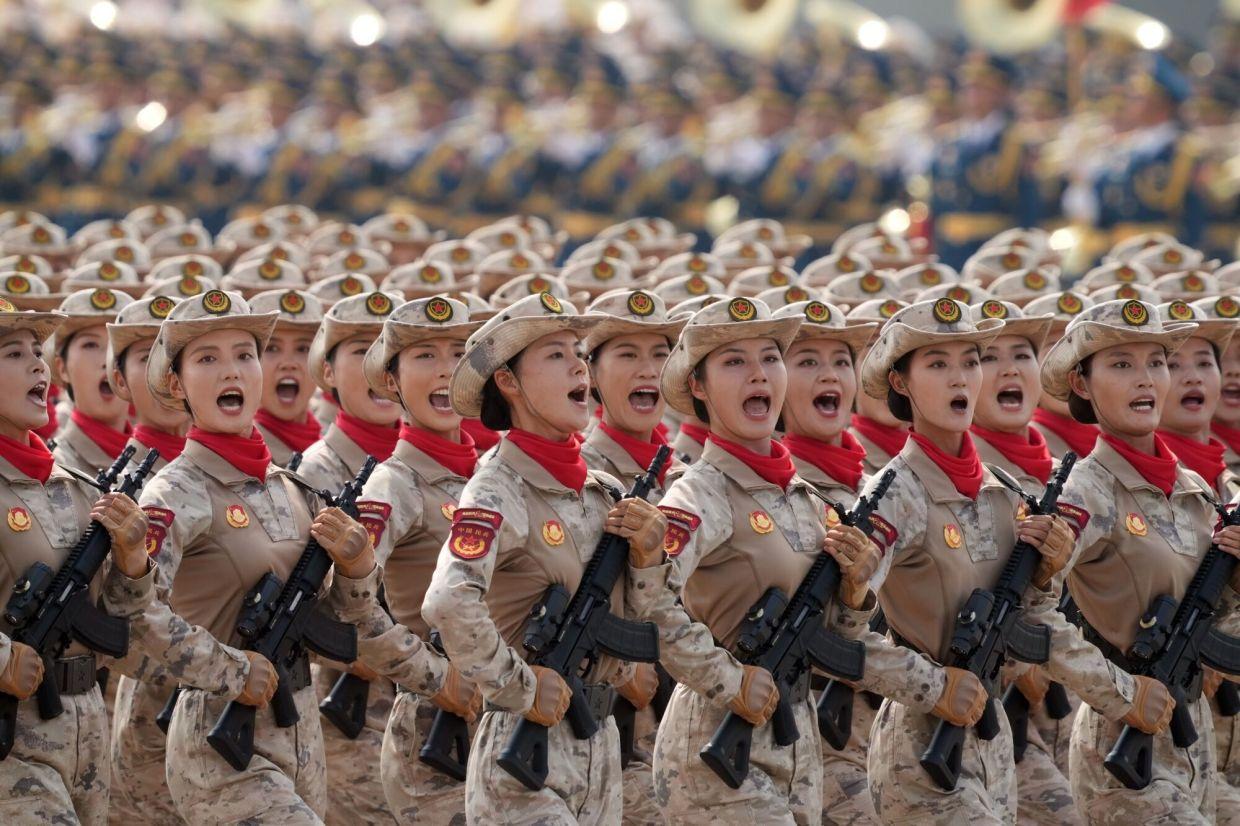
中共宣称自己是“反法西斯胜利的领导者”,但事实是:1945年抗战胜利的功劳属于当时的中华民国政府与全体中国人民。中共在抗战时期不过是游击队一隅,真正的主力战场是国民政府军的正面抗战。
今天,中共却将中华民国的功勋据为己有,甚至把“反法西斯胜利”包装成自己的胜利日。这是对历史的篡改,是对中华民族记忆的盗窃。更荒诞的是,它邀请普京、金正恩这类当代战争罪犯登上城楼,以“纪念反法西斯”之名,行“法西斯同盟”之实。
这不仅是法理不通,更是对先烈的背叛。
四、“强大中共”的真实意图
“别忘了你的身后还有一个强大的中共”,这句话,是政权给百姓的恐吓,也是对国际社会的警告。
对内:它要告诉中国人民,你们身后有强大的军队,有不可挑战的政权,任何反抗都将无济于事。
对外:它要提醒世界,任何试图援助中国民间社会、推动人权的行动,都必须考虑北京手中握有的导弹与核武库。
对党内:阅兵也是权力秀,最高领导人以“统帅”姿态检阅三军,借此巩固其在党内的绝对地位。
这种“强大”,并非源自人民的自由与创造力,而是源自恐惧、压迫与武力。
五、外交的孤立与小圈子
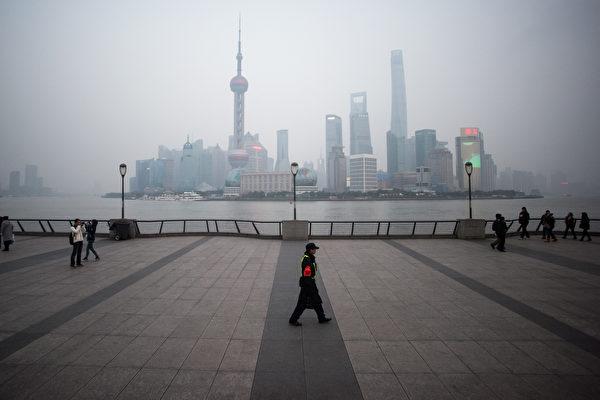
表面上,中共九三阅兵邀请了20余个国家领导人出席。但这些国家,大多是依赖中国援助的弱国,或是与北京同病相怜的专制政权。欧美主要国家当然没有任何领导人出席,中共也没这个脸去邀请。亚洲重要邻国保持距离,只派遣了特使和代表。
这恰恰说明,中共在全球体系中已经陷入孤立。它的“强大”更多是虚张声势,它的朋友圈越来越窄,剩下的只是抱团取暖的独裁者小圈子。
六、虚幻的强大与真实的脆弱
阅兵展示的坦克、导弹、战机,看似威风,但掩盖不了社会深层的危机:
经济衰退:房地产泡沫破裂,外资撤离,青年失业率居高不下。
社会焦虑:中产阶层财富缩水,普通百姓生活艰难,年轻人选择“躺平”。
民生危机:出生率急剧下降,人口老龄化加速。
这种局面,正如当年苏联商店货架空空如也,却依旧在红场展示导弹。所谓“强大中共”,不过是末日政权的自我安慰。
七、历史的反讽与未来的启示
九三阅兵,本应是纪念反法西斯胜利的日子,却被中共变成了法西斯的狂欢。它既是历史的反讽,也是对未来的警示。
苏联的教训已经证明:军事炫耀不能延长政权寿命,言论封锁不能阻止崩溃,虚幻的“强大”终将化为尘土。中共今天的表演,正是在重演苏联的历史剧。
真正的强大,从来不是导弹与坦克,而是人民的自由、尊严与创造力。当一个政权彻底依赖恐惧维系统治,它已然走在灭亡的道路上。
八、结语
“别忘了你的身后还有一个强大的中共”,这句话听起来声势骇人,实则是一种恐惧的表白。中共要百姓害怕它,要世界顾忌它,要历史被它篡改。但最终,它无法阻止人民对自由的渴望,也无法阻止世界对真相的认知。
阅兵的盛大烟火,只能暂时遮掩天空,却不能改变历史的方向。未来的中国,必将属于那些追求民主、自由与法治的人们,而中共的“强大”,终将被证明只是脆弱的幻象。
Author: Lu Qiankun
Editor: Zhou Zhigang Responsible Editor: Hu Lili Translator: Ming Cheng
Abstract: The Communist Party of China used the September 3rd military parade to show off its military power, but in fact it covered up the crisis. Isolated from the international, bluffing. Its “powerfulness” comes from fear and suppression and will eventually be disintegrated by freedom and truth.
I. Illusions on the parade ground
September 3, 2025, Tiananmen Square, Beijing. Tanks roared and warplanes roared. The Communist Party of China held a large-scale military parade in the name of the “80th anniversary of the victory of anti-fascist”. However, standing on the Tiananmen Tower are the two most notorious dictators in the world today: Putin, who was wanted by the International Criminal Court for invading Ukraine, and Kim Jong-un, who continued three generations of hereditary and reduced North Korea to purgatory.
This scene is extremely absurd. The so-called “anti-fascist victory memorial” was interpreted by the Communist Party of China as a “contemporary fascist assembly”. The real international democratic forces and anti-war allies can never ignore this authoritarian small circle. This not only exposes the isolation of the Communist Party of China in international diplomacy but also highlights its theft of history and powerlessness in reality.
In fact, this is not the first time that the Communist Party of China has used the military parade to perform politically. The September 3rd Military Parade in 2015 was a typical “showing muscles” scene. Just as the Soviet Union frequently held military parades in the Red field before the collapse, the Communist Party of China also tried to cover up the internal crisis by showing off its power.
II. The mirror image of the Soviet Union and the anxiety of the Communist Party of China
Looking back on history, the Soviet Union had fallen into a deep predicament in the late 1980s: economic stagnation, shortage of materials, and intensification of social conflicts. However, on the Red Field, tanks and missiles were still lined up, as if they were as powerful as before. What about the result? In a few years, the Soviet Union disintegrated. The “powerful” shown by the military parade is just an illusion before the collapse.
The Communist Party of China’s September 3rd Military Parade, whether in 2015 or 2025, has the same logic:
Covering up the dilemma: In the face of real estate collapse, debt crisis and youth unemployment, the regime needs a grand stage to create the illusion of prosperity.
Speech blockade: When the economy loses support and social dissatisfaction breeds, we can only maintain superficial stability by suppressing voices.
External deterrence: through military display, intimidate the international community and let it throw a weapon when helping the Chinese people.
This political logic is the same as that of the Soviet Union at that time. The similarity of history is chilling: a regime that is tough on the outside has long been full of holes inside.
III. Misappropiracy of history and legal absurdity
The Communist Party of China claims to be the “leader of the anti-fascist victory”, but the fact is that the merit of the victory in the Anti-Fascist War in 1945 belongs to the government of the Republic of China and all the Chinese people at that time. During the War of Resistance, the Communist Party of China was just a corner of the guerrillas, and the real main battlefield was the frontal resistance war of the Kuomintang army.
Today, the Communist Party of China takes the merits of the Republic of China for itself, and even packages the “anti-fascist victory” as its own victory day. This is a tampering with history and a theft of the memory of the Chinese nation. What’s more absurd is that it invited contemporary war criminals such as Putin and Kim Jong-un to the tower and practice the “fascist alliance” in the name of “commemorating anti-fascism”.
This is not only unreasonable, but also a betrayal of the martyrs.
IV. The true intention of “strengthening the Communist Party of China”
“Don’t forget that there is a strong Communist Party of China behind you”, this sentence is the intimidation of the regime to the people and a warning to the international community.
To the inside: It should tell the Chinese people that there is a strong army behind you and an unchallengeable regime, and any resistance will be of no use.
Externally: It should remind the world that any action that tries to assist Chinese civil society and promote human rights must take into account the missiles and nuclear arsenal held by Beijing.
To the party: the military parade is also a show of power. The supreme leader examines the three armies as a “commander” to consolidate their absolute position in the party.
This “power” does not come from people’s freedom and creativity, but from fear, oppression and force.
V. Diplomatic isolation and small circles
On the surface, more than 20 national leaders were invited to attend the military parade of the Communist Party of China on September 3rd. But most of these countries are weak countries that rely on China’s aid, or authoritarian regimes that share the same disease as Beijing. Of course, no leaders from major countries in Europe and the United States are present, and the Communist Party of China does not have the face to invite. Important neighboring countries in Asia kept their distance and only sent special envoys and representatives.
This shows that the Communist Party of China has fallen into isolation in the global system. Its “strongness’s ” is more of a bluff, its circle of friends is getting narrower and narrower, and the rest is just a small circle of dictators who are warming up.
VI. Illusory strength and real vulnerability
The tanks, missiles and warplanes displayed in the military parade seem to be majestic, but they cannot cover up the deep crisis of society:
Economic recession: the real estate bubble bursts, foreign capital withdraws, and the youth unemployment rate remains high.
Social anxiety: the wealth of the middle class is shrinking, the life of ordinary people is difficult, and young people choose to “lie flat”.
People’s livelihood crisis: the birth rate has declined sharply, and the aging of the population has accelerated.
This situation, just like the shelves of Soviet stores were empty in those years, but missiles were still displayed in the Red Square. The so-called “strong Communist Party of China” is just the self-comfort of the doomsday regime.
VII. The irony of history and the revelation of the future
The September 3rd Military Parade, which was originally to commemorate the victory of the anti-fascist, was turned into a fascist carnival by the Communist Party of China. It is not only an irony of history, but also a warning to the future.
The lessons of the Soviet Union have proved that military show-off cannot prolong the life of the regime, the speech blockade cannot prevent the collapse, and the illusory “powerful” will eventually turn into dust. Today’s performance of the Communist Party of China is a replay of the historical drama of the Soviet Union.
The real strength is never missiles and tanks, but the freedom, dignity and creativity of the people. When a regime completely relies on the system of fear, it is already on the road to destruction.
VIII. Conclusion
“Don’t forget that there is a powerful Communist Party behind you”, this sentence sounds terrifying, but in fact it is a confession of fear. The Communist Party of China wants the people to be afraid of it, the world to be afraid of it, and history to be tampered with by it. But in the end, it cannot stop the people’s desire for freedom, nor can it stop the world’s awareness of the truth.
The grand fireworks of the military parade can only temporarily cover the sky but not change the direction of history. The future of China will definitely belong to those who pursue democracy, freedom and the rule of law, and the “strength” of the Communist Party of China will eventually prove to be just a fragile illusion.
张致君-rId7-510X560.jpeg?w=768&resize=768,0&ssl=1 "从胡洋/张雅笛被捕案看中共对海外言论的监控")
作者:张致君
编辑:钟然 责任编辑:罗志飞 翻译:吕峰
张致君-rId7-510X560.jpeg "从胡洋/张雅笛被捕案看中共对海外言论的监控")
2025年7月26日,上海浦东机场的门口走过无数旅客。他们推着行李箱,怀里抱着孩子,神情疲惫,却满心期待着家里的饭菜和床。胡洋也是其中之一。他从荷兰飞回来,准备探亲。警察把他带走。罪名叫“寻衅滋事”。行李箱还没来得及打开,钥匙还揣在兜里,给朋友买的礼物也没有送到,他的旅行就结束了。他的妈妈在胡洋被羁押35天后在推特上发帖求助,没有一天就被强制删帖。
四天之后,2025年7月30日,英国留学的张雅笛也回国。她的罪名比胡洋更重,叫“危害国家安全”。她甚至没有机会把在伦敦买的纪念品送给父母,就消失了。她的妈妈约见了709律师汪天勇寻求法律援助,会面时,律师汪天勇就被三名不明人士带走。
两个年轻人,一个男生,一个女生,他们的未来像机场的玻璃一样,被轻轻一敲,碎成无数片。
胡洋的“罪行”或许是写下几句话。张雅笛的“罪行”或许是编辑几篇文章。
他们没有杀人,没有放火,没有贪污,也没有诈骗。他们做的事情,是最轻的,却被赋予最重的罪名。
在中共的字典里,说话是一种危险。说错话是犯罪,不说话是安全。
于是一个国家里,语言像石头一样沉重。一个眼神、一句玩笑、一个词语,都可能变成铁镣。
古代的文字狱是诗里的一个字,史书里的一个典故。今天的文字狱是推特上的一条帖,是微信群里的一句话。
过去,皇帝怕文人讽刺。现在,中共怕留学生说话。
过去,宫廷里的人噤若寒蝉。现在,海外的留学生也开始自我审查。
中共文字狱的范围,不再是皇宫,也不再是长城以内,而是扩展到整个地球。
极权最大的本领,是制造恐惧。恐惧不在监狱里,它在机场的大厅,在留学生的课堂,在家庭的电话那头。恐惧不在警察的手里,它在父母的叮嘱里:“别乱说话,回来小心点。”恐惧不在法律条文里,它在聊天记录的删除键里,在朋友圈的沉默里。
胡洋和张雅笛被抓,不只是抓了两个人,而是把恐惧推给了无数人。每一个海外留学生甚至旅居海外的人都明白:你随时可能成为下一个。
一个政党强大时,不会害怕几句话。一个政党脆弱时,才会把几句话当成威胁。
中共害怕的不是胡洋,也不是张雅笛,而是他们背后的自由世界。害怕他们在荷兰的课堂里学到什么,在英国的社团里讨论什么。害怕他们的声音穿过国界,带回给国内的朋友,撕开一条小口子。
真话就是这样的东西,一旦漏进来,再多的铁墙也挡不住。
在自由的世界里,人们难以理解这种恐惧。为什么一个留学生说句话,就能让一个政府颤抖?
这是因为,中共的权力不是靠选票赢得的,而是靠控制语言维系的。一旦语言失控,政权就会摇晃。
所以他们要跨国镇压,把海外的声音也堵住。这不是他们的自信,而是他们的虚弱。这不是他们的力量,而是他们的恐慌。
罗岱青与张冬宁的被捕并不是开始,胡洋与张雅笛的被捕也非结束。
中共的长臂管辖想让越来越多的留学生不再敢说话。每当课堂上涉及中国问题,他们要低头做笔记;饭桌上朋友聊到政治,他们要笑笑不接话。中共想让他们因为害怕而沉默,让他们害怕手机里的记录,害怕回国的路。
沉默像传染病一样蔓延,会把一个个鲜活的灵魂,变成灰色的影子。
一个政权手里有枪炮,却害怕几个学生的笔。一个国家拥有核武器,却害怕几个年轻人的推文。一个党统治十四亿人,却容不下两名留学生的声音。
荒诞吗?是的,但这就是现实。
现实荒诞到,我们笑的时候,笑声里有泪。现实荒诞到,我们哭的时候,眼泪里有怒。
胡洋和张雅笛的消失,不是结束,而是开始。
他们的名字被写下,他们的故事被讲述,他们的遭遇被传播。每一次讲述,都是一次抵抗。每一次传播,都是一次共鸣。
自由的力量,不在于一个人,而在于无数个声音的叠加。声音可以被堵住一时,却永远不能被消灭。
在黑暗中说话,是需要勇气的。在恐惧中坚持,是需要信念的。
胡洋无罪,张雅笛无罪。言论无罪,自由无罪。我们要让他们知道,他们不是孤单的。我们要让中共知道,我们不会沉默的。
声音要穿越国界,像风一样。风吹过围墙,吹过铁窗,吹进每一个心里。
当无数声音汇聚在一起,就会形成共鸣。这共鸣,将比恐惧更强大。
我们和自由同在。
我们是他们中间的一个。
Author: Zhang ZhijunEditor: Zhong RanChief Editor: Luo ZhifeiTranslator: Lyu Feng
On July 26, 2025, countless travelers walked through the gates of Shanghai Pudong Airport. They pushed luggage carts, carried children in their arms, their faces weary yet filled with anticipation for a home-cooked meal and their own bed. Among them was Hu Yang, returning from the Netherlands to visit family. The police took him away. The charge: “picking quarrels and provoking trouble.”
His suitcase was still unopened, the keys still in his pocket, the gifts he had bought for friends undelivered—his journey ended before it began. After Hu Yang had been detained for 35 days, his mother posted an appeal for help on Twitter. It was forcibly deleted within a day.
Four days later, on July 30, 2025, Zhang Yadi, a student returning from the UK, was also arrested. Her charge was even graver: “endangering national security.” She didn’t even have the chance to give her parents the souvenirs she had brought from London before she vanished. Her mother sought help from lawyer Wang Tianyong, known for defending rights activists from the “709” crackdown. But during their meeting, Wang himself was taken away by three unidentified men.
Two young people—one male, one female—their futures shattered like airport glass with a single tap.
Hu Yang’s “crime” might have been writing a few sentences.Zhang Yadi’s “crime” might have been editing a few articles.
They did not kill, they did not commit arson, they did not embezzle, they did not defraud. What they did was light, yet the punishment was heavy.
In the CCP’s dictionary, speaking is dangerous. Speaking wrongly is a crime. Not speaking is safety.
Thus, in this country, language weighs like stone. A glance, a joke, a single word can become chains of iron.
In ancient times, “literary inquisition” meant a character in a poem, a reference in a chronicle. Today, it is a tweet on Twitter, a sentence in a WeChat group.
In the past, emperors feared scholars’ satire. Today, the CCP fears students studying abroad.
In the past, those in the imperial court fell silent. Today, even overseas students practice self-censorship.
The boundaries of the CCP’s literary inquisition are no longer the imperial palace, no longer confined within the Great Wall. It now extends across the globe.
The greatest skill of totalitarianism is manufacturing fear. Fear is not confined to prisons; it lurks in airport halls, in classrooms abroad, in phone calls home. Fear is not only in the hands of police; it is in the warnings of parents: “Don’t say too much, be careful when you come back.” Fear is not just in legal codes; it is in the delete button of chat logs, in the silence of social media feeds.
The arrests of Hu Yang and Zhang Yadi were not just about two individuals; they pushed fear onto countless others. Every overseas student, every member of the diaspora, understands: you could be the next.
A strong political party does not fear a few words. Only a weak one treats words as threats.
The CCP is not afraid of Hu Yang or Zhang Yadi. It fears the free world behind them. It fears what they learn in classrooms in the Netherlands, what they discuss in societies in the UK. It fears their voices crossing borders, bringing back truths to friends at home, tearing open small cracks.
That is the nature of truth: once it slips in, no iron wall can keep it out.
In the free world, it is hard to understand this fear. Why would a government tremble at the words of a student abroad?
Because CCP power is not won through votes—it is maintained through controlling language. Once language slips from its grasp, the regime begins to shake.
That is why it reaches across borders, to silence voices overseas. Not out of confidence, but out of weakness. Not out of strength, but out of fear.
The arrests of Luo Daiqing and Zhang Dongning were not the beginning. The arrests of Hu Yang and Zhang Yadi are not the end.
The CCP’s long-arm control aims to silence more students. In classrooms, when China is discussed, they must lower their heads and take notes. At dinner tables, when friends mention politics, they must smile and stay quiet. The Party wants them to fall silent out of fear—afraid of the records on their phones, afraid of the road home.
Silence spreads like a contagion, turning vibrant souls into grey shadows.
A regime with cannons fears a student’s pen.A state with nuclear weapons fears a young person’s tweet.A party ruling 1.4 billion cannot tolerate the voices of two students.
Absurd? Yes. But this is reality.
Reality so absurd that our laughter carries tears.Reality so absurd that our tears contain rage.
The disappearance of Hu Yang and Zhang Yadi is not the end—it is the beginning.
Their names are written down, their stories told, their experiences shared. Each telling is an act of resistance. Each sharing is an act of solidarity.
The power of freedom does not lie in one person, but in the accumulation of countless voices. A voice may be silenced for a time, but it can never be erased.
To speak in darkness requires courage. To persist in fear requires conviction.
Hu Yang is innocent. Zhang Yadi is innocent. Speech is not a crime. Freedom is not a crime.
We must let them know: they are not alone. We must let the CCP know: we will not be silent.
Voices must cross borders, like the wind. The wind blows over walls, through prison bars, into every heart.
When countless voices converge, they form a resonance. And this resonance will be stronger than fear.
We stand with freedom.We are one among them.
© 1998–2026 在野党(Opposition Party).