记者:林小龙 编辑:张致君 责任编辑:朱虞夫 资料整理:邢志远 翻译:周敏
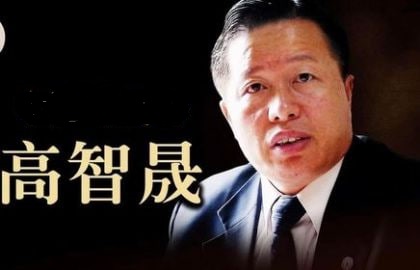
高智晟,中国人权律师,曾被外界誉为“中国最勇敢的律师之一”。
他出生贫寒,靠着自学一步步走上法律道路,通过司法考试后,在北京创办律师事务所,很快在业内崭露头角。那时的他,拥有令人羡慕的事业前景,也完全可以像许多成功律师一样,在商业案件与现实秩序之间找到一个安全、体面的立足点。
但高智晟没有这样选择。
随着执业深入,他接触到越来越多普通人无力发声、也无人愿意接手的案件:弱势群体的维权、宗教信仰者的处境、政治异议者的申诉。这些案件往往不只是法律问题,更意味着触碰权力最敏感的边界。在中国多数律师迫于政治压力,对敏感案件避之不及,而他却一步步走了进去。
2000年代初的中国,正沉浸在经济高速增长的叙事之中。高楼拔地而起,资本涌动,世界也开始越来越多地将目光投向这个正在崛起的大国。在那样一个普遍歌颂“发展”与“稳定”的年代,高智晟选择走向另一条路:他没有停留在繁荣表象之中,而是进入制度最幽暗的边缘地带,去触碰那些不被允许触碰的问题,去凝视那些被刻意遮蔽的人。
为受迫害的法轮功学员伸冤成为他人生真正的转折点。
2004年底开始,他连续三次向胡锦涛、温家宝为代表的中国最高层发出公开信,揭露针对法轮功学员的系统性迫害,并呼吁立即停止相关行动。这些信件措辞直接、内容尖锐,既带有法律人的理性,也带有一种几近孤绝的道德勇气。它们迅速引发国际社会的强烈关注,也让高智晟从一名执业律师,转变为当局重点打压和清除的对象。
从那之后,他的人生轨迹被彻底改写。
他的律师执照被吊销,律师事务所被关闭,原本建立起来的职业生涯被强行中断。他本人则陷入长期的拘押、软禁、监控与强迫失踪之中。与许多政治案件不同,高智晟所遭遇的,并不是一次明确的审判、一段清晰的刑期,然后一切结束;相反,他面对的是一种更为模糊、也更令人窒息的状态——反复发生的“消失”。长时间里,外界无法得知他的确切处境,也无法确认他是否安全。即便偶尔获释,也只是短暂回到公众视野,不久之后便再次进入同样的循环。这样的命运,不是单纯的惩罚,而是一种持续性的摧毁:它不只是剥夺人的自由,更是要摧毁一个人稳定生活,摧毁他与社会、与家人、与公共记忆之间的连接。
关于他在拘押期间究竟经历了什么,外界至今仍难以获得完整而权威的答案。人们只能通过极少数流出的描述,拼接出一个令人不寒而栗的轮廓:长期隔离、严密监控、持续施压,以及那些始终难以被完全证实、却又从未真正消散的酷刑指控。正是这种“无法被证实”的状态,构成了另一种意义上的恐惧——因为它让暴力不必公开,也不必承担解释。
2017年,高智晟再次失踪。
自那以后,关于他的下落,始终缺乏公开、明确、可信的信息。多年过去,一个曾在中国法律界公开执业、曾以文字和行动震动国际社会的人,就这样在中共制度深处被“抽离”出公众视野,仿佛一个名字仍在流传,但一个具体的人却被有意从现实中抹去。
从个人命运的角度去看,这是一个律师职业道路的悲剧性终结:一个本有才华、有理想、有影响力的人,被权力机器层层碾压,最终归于沉寂。
把他的经历放到更大的时代语境中来看,它显然不止于个人悲剧,而是制度性现象的缩影。
2026年在美国加州雕塑公园,一座以高智晟的雕像落成。人们在现场集会、发言,而高智晟律师本人依然被囚禁在中国。
《在野党》杂志社有幸采访到高智晟律师的家属——耿和女士。
问:耿和老师,如今在很多人眼中,高智晟律师已经不仅仅是一个具体的人物,更像是一种象征。那么,在家庭里、在您的心中,他究竟是一个什么样的人?
耿:在我心里,他是一个非常善良、幽默,而且极有智慧的人。真的,我觉得没有人能像他那样。他还很会唱歌,而且唱得特别好听。
如果要说他的为人,我会说,他特别善良,也特别正直。正是这些品行,这么多年来一直深深影响着我们一家人。
我想跟大家分享一件小事。2005年3月,高智晟的母亲去世了,去世时才67岁。自那以后,他每年回陕北老家,无论是一年回去一次、两次,还是三次,每次回去,他都会专门去看望村里70岁以上的老人,并给每位老人送上20块钱。虽然钱不多,但那份心意非常珍贵。
在我看来,这不仅仅是一点物质上的表达,更体现了他内心深处的善良、体贴和对长者的尊重,也代表着一种非常可贵的中国传统美德。
问:作为家属,您第一次真正意识到他所做的这些事情会带来危险,是在什么时候?
耿:应该就是在2006年。那年8月15日他被抓捕之后,我们家就一直处在警方的严密监控之下,家门口有人跟踪,家里也住进了警察。也是从那个时候开始,我才真正意识到,他所做的这一切,已经不仅仅是承受压力,而是随时可能付出自由甚至更沉重的代价。
其实在那之前,我从来没有想过他会被抓捕。虽然我们已经能感觉到外部的压力越来越大,但我没有想到,事情最终会发展到那一步。
问:当高智晟律师面临的政治风险越来越明显的时候,您和他之间有没有发生过思想上的争执?
耿:我和他之间没有过这样的争执。因为在我们家里,我更多是负责家庭这一边,他主外。在国内的时候,他也很少跟我讲这些事情,很多事他都是自己在承担。
问:高智晟律师失踪以后,对您来说,这意味着什么?是一种突如其来的恐惧,还是一种漫长而持续的消耗?
耿:最开始的时候,其实我们总还是抱着一点希望。因为有时候他会消失三天、两天,我们就会想,也许再等一等,他就回来了。我甚至会拿着给他准备的钱,心里想着,他大概还是抱着“我明天就能回来”的念头离开的。
可是后来,等待的时间越来越长。原本以为只是几天,结果变成了两个月、几个月,最后变成一种看不到尽头的等待。那种感觉,不只是恐惧,更是一种无止境的消耗。你一直在期盼,一直在等,一直在盼着会不会突然有一点关于他的消息。
到后来,我几乎像看天气预报一样,时刻关注外界的变化,总觉得是不是国家发生了什么大事,是不是哪一天,就会传来一点关于他的消息。就是这样,在盼望和失望之间,一天天熬着,整整盼了八年零八个月。
问:这些年里,支撑您一路走下来的,主要是什么?是一种什么样的信念?
耿:这些年来,我一直都在往前走,也一直在不断调整自己。我也一直在学习,慢慢让自己变得更坚强一些。我觉得,最重要的是先把自己调整好,把当下的日子过好,把眼前的每一天过稳。只有先把自己撑住,才能继续走下去。
问:耿和老师,您有没有什么话,是一直想对高智晟说,却始终没有机会说出口的?
耿:其实,我常常也会想这个问题。但到了今天,我觉得自己最想的,已经不只是说一句什么话,而是如果每天还有一点时间、还有一点力量,我们还能为他做些什么。
因为这样的分离,已经持续了17年。到了今天,我们能做的,好像已经不只是等待,而是继续坚持,继续想办法营救他。某种程度上说,我们现在更像是同在一个战壕里的战士,仍然在为把他救出来而努力。
问:今天,我们在美国加州的这座雕塑公园里,看到了这座关于高智晟的雕像。对您来说,它意味着什么?
耿:这座雕塑从开始筹备、制作到现在,已经快一年的时间了。它承载的不只是我们全家的希望,也承载着陈维明老师的心血和希望。我们都希望,能够借由这样的方式,让更多人知道高智晟,关注高智晟,也希望有一天,我们能够真正迎来一个好的结果。
说实话,我今天是发自内心地感动。你看,今天现场来了这么多认识的、不认识的人,大家都愿意来到自由雕塑公园,愿意为高智晟律师的雕塑落成仪式伸出援手,愿意关注这件事。我们真的非常希望高智晟被囚禁、被失踪的日子能够尽快结束。
我们更希望,有一天高智晟能够重新回到公众面前,重新回到家人面前,也希望有一天,他能够亲眼看到这座雕像。
问:您觉得,如果高智晟本人今天站在这里,看到这座雕像,他会说些什么?
耿:其实,我也不知道他会说些什么。但我觉得,这座雕塑所代表的,已经不仅仅是高智晟个人。它承载的是一个真相,也是一种揭露。它让人看到,在暴政之下,一个因为说真话、因为坚持良知而遭受迫害的人,究竟经历了什么。
我觉得,高智晟的雕像就像一面镜子。透过这座雕塑,人们看到的不只是一个人的遭遇,更能看到中共暴政本身的丑陋和残酷。
在加州自由雕塑公园里,高智晟律师的雕像静静矗立。它沉默无声,却仿佛始终在传递着某种讯息:即使身处黑暗,人依然会抬起头,去寻找光的方向。
对于耿和来说,时间从来不是简单地流逝。它被分解为漫长的等待、反复的回忆,以及日复一日的坚持。
这些片段拼凑出了一种更为具体、也更为沉重的现实。而在这样的现实之中,仍有一些问题,至今没有答案。
但也许,正如那尊雕像所隐含的意义:人未必总能改变自己的处境,却仍然可以选择——在黑暗中,仰望星空。
编者按:
高智晟律师的被中共当局“失踪”的案件中,我们看到的是一种持续性的权力运作方式:惩罚并不以法律程序的终结为终点,甚至很多时候,真正沉重的打压发生在法律程序之外。行政权力、国保体系、社会控制、信息封锁、职业剥夺、人格污名化——这些机制交错运作,使一个人即便在形式上“服完刑”或“结束处理”,其身份、权利与行动空间,仍然被随时重新定义、重新限制、重新剥夺,乃至强制失踪。
高智晟的失踪,绝不只是针对他个人的迫害,更是中共当局向所有仍试图在制度框架内争取权利、推动改变、坚守原则的人发出的一种威胁与警告。
而这,也正是“高智晟”这个名字之所以重要的原因。
他的意义,早已超出一个律师的职业范畴,也超出一桩个案本身的范围。他是一个时代留下的注脚:当法律不再是限制权力的工具,而逐渐成为权力运作的一部分;当程序不能保证正义,反而可能被用来包装压制;当一个以法律为武器的人,最终被法律与法律之外的力量共同吞没——那么,人们就不得不重新追问那个最根本的问题:
当法律本身成为权力的一部分时,个体还能在多大程度上依赖它来保护自己?
对于这个问题,高智晟用自己的一生,提出了一个极其沉重的诘问。而遗憾的是,直到今天,这个问题依然没有答案。
The Seventeenth Year of Waiting for Gao Zhisheng
Reporter: Lin Xiaolong Editor: Zhang Zhijun
Executive Editor: Zhu Yufu Data Compilation: Xing Zhiyuan Translator: Zhou Min
Gao Zhisheng, a Chinese human rights lawyer, was once hailed by the outside world as “one of China’s bravest lawyers.”
He was born into poverty and stepped onto the legal path step by step through self-study. After passing the judicial examination, he founded a law firm in Beijing and quickly rose to prominence in the industry. At that time, he possessed enviable career prospects and could have completely found a safe, decent foothold between commercial cases and the realistic order, just like many successful lawyers.
But Gao Zhisheng did not choose this.
As his practice deepened, he came into contact with more and more cases where ordinary people were powerless to speak out and no one was willing to take them on: the rights protection of vulnerable groups, the situation of religious believers, and the appeals of political dissidents. These cases were often not just legal issues, but meant touching the most sensitive boundaries of power. While most lawyers in China, under political pressure, avoided sensitive cases, he walked into them step by step.
China in the early 2000s was immersed in the narrative of high-speed economic growth. High-rise buildings rose from the ground, capital surged, and the world began to cast its gaze more and more toward this rising major power. In an era that generally praised “development” and “stability,” Gao Zhisheng chose to walk another path: he did not stay within the superficial appearance of prosperity, but instead entered the darkest peripheral zones of the system to touch those issues that were not allowed to be touched, and to gaze at those people who were deliberately obscured.
Seeking justice for persecuted Falun Gong practitioners became the true turning point of his life.
Starting from the end of 2004, he sent three consecutive open letters to China’s highest leadership, represented by Hu Jintao and Wen Jiabao, exposing the systematic persecution of Falun Gong practitioners and calling for an immediate end to related actions. These letters were direct in phrasing and sharp in content, carrying both the rationality of a legal professional and a nearly desolate moral courage. They quickly triggered strong attention from the international community and caused Gao Zhisheng to transform from a practicing lawyer into a key target for suppression and elimination by the authorities.
From then on, the trajectory of his life was completely rewritten.
His law license was revoked, his law firm was closed, and his established professional career was forcibly interrupted. He himself fell into long-term detention, house arrest, surveillance, and enforced disappearance. Unlike many political cases, what Gao Zhisheng encountered was not a clear trial and a clear prison term after which everything ended; on the contrary, he faced a more blurred and suffocating state—repeated “disappearances.” For long periods, the outside world could not know his exact situation or confirm whether he was safe. Even if occasionally released, it was only a brief return to public view before entering the same cycle again soon after. Such a fate is not simple punishment, but a continuous destruction: it does not just deprive a person of freedom, but aims to destroy a person’s stable life and destroy the connection between him and society, his family, and public memory.
As to what exactly he experienced during his detention, the outside world still finds it difficult to obtain a complete and authoritative answer. People can only piece together a spine-chilling outline through a very few leaked descriptions: long-term isolation, close surveillance, continuous pressure, and those allegations of torture that have always been difficult to fully confirm yet have never truly dissipated. It is precisely this “unconfirmable” state that constitutes another kind of fear—because it allows violence to not be public and to not bear the burden of explanation.
In 2017, Gao Zhisheng disappeared again.
Since then, there has been a consistent lack of public, clear, and credible information regarding his whereabouts. Many years have passed, and a person who once publicly practiced in the Chinese legal circle and shook the international community with his words and actions has thus been “extracted” from public view deep within the CCP system, as if a name is still circulating, but a specific person has been intentionally erased from reality.
Viewed from the perspective of personal fate, this is the tragic end of a lawyer’s career path: a person who originally had talent, ideals, and influence was crushed layer by layer by the power machine and finally returned to silence.
Putting his experience into a larger historical context, it is clearly more than an individual tragedy; it is a microcosm of a systemic phenomenon.
At the end of 2026, a statue of Gao Zhisheng was unveiled in the Liberty Sculpture Park in California, USA. People gathered and spoke at the scene, while Lawyer Gao Zhisheng himself remains imprisoned in China.
Opposition Party magazine had the honor of interviewing Lawyer Gao Zhisheng’s family member—Ms. Geng He.
Q: Ms. Geng He, today in the eyes of many, Lawyer Gao Zhisheng is no longer just a specific figure, but more like a symbol. In the family and in your heart, what kind of person is he exactly?
Geng: In my heart, he is a very kind, humorous, and extremely wise person. Truly, I feel no one can be like him. He is also very good at singing, and he sings particularly beautifully.
If I were to speak of his character, I would say he is exceptionally kind and exceptionally upright. It is precisely these qualities that have deeply influenced our whole family for all these years.
I want to share a small story with everyone. In March 2005, Gao Zhisheng’s mother passed away; she was only 67 when she died. Since then, every time he went back to his old home in Northern Shaanxi—whether he went back once, twice, or three times a year—every time he returned, he would specifically go to visit the elderly in the village over 70 years old and give each elderly person 20 yuan. Although it wasn’t much money, that sentiment was very precious.
In my view, this is not just a small material expression, but it reflects the kindness, thoughtfulness, and respect for elders deep in his heart, and represents a very valuable traditional Chinese virtue.
Q: As a family member, when did you first truly realize that the things he was doing would bring danger?
Geng: It should have been in 2006. After he was arrested on August 15 of that year, our home was under close surveillance by the police; there were people tailing us at the door, and police moved into the house. It was also from that time that I truly realized that everything he was doing was no longer just about enduring pressure, but that he might pay the price of his freedom or even a heavier price at any time.
Actually, before that, I never thought he would be arrested. Although we could already feel the external pressure growing, I did not expect that things would eventually develop to that point.
Q: When the political risks faced by Lawyer Gao Zhisheng became more and more obvious, were there any ideological disputes between you and him?
Geng: There were no such disputes between him and me. Because in our home, I was more responsible for the family side, and he handled the outside. When we were in China, he rarely spoke to me about these things; he bore many things by himself.
Q: After Lawyer Gao Zhisheng disappeared, what did this mean to you? Was it a sudden fear, or a long and continuous exhaustion?
Geng: At the very beginning, we actually always held on to a bit of hope. Because sometimes he would disappear for three days or two days, and we would think, maybe if we wait a little longer, he will come back. I would even hold the money I prepared for him, thinking in my heart that he probably left with the thought that “I can come back tomorrow.”
But later, the waiting time became longer and longer. What I originally thought was just a few days turned into two months, several months, and finally became a kind of wait with no end in sight. That feeling is not just fear, but an endless exhaustion. You are constantly hoping, constantly waiting, constantly looking forward to whether there will suddenly be a little news about him.
Later on, I almost watched the changes in the outside world like watching a weather forecast, always thinking whether some major event had happened in the country, whether one day, a little news about him would come. Just like that, between hope and disappointment, enduring day by day, I waited for a full eight years and eight months.
Q: Over these years, what has mainly sustained you to keep going? What kind of belief is it?
Geng: Over these years, I have always been moving forward and constantly adjusting myself. I have also been learning, slowly letting myself become a bit stronger. I feel the most important thing is to first adjust myself well, live the current days well, and stabilize each day before me. Only by supporting yourself first can you continue to walk on.
Q: Ms. Geng He, is there anything you have always wanted to say to Gao Zhisheng but have never had the chance to say out loud?
Geng: Actually, I often think about this question too. But today, I feel that what I want most is no longer just to say a certain sentence, but if there is still a little time and a little strength every day, what more can we do for him.
Because this separation has lasted for 17 years. Today, what we can do seems to be no longer just waiting, but continuing to persist, continuing to find ways to rescue him. To some extent, we are now more like soldiers in the same trench, still working hard to get him out.
Q: Today, in this sculpture park in California, USA, we see this statue of Gao Zhisheng. What does it mean to you?
Geng: This sculpture has taken nearly a year from the beginning of preparation and production until now. It carries not only the hopes of our whole family but also the hard work and hope of Teacher Chen Weiming. We all hope that through this method, more people can know about Gao Zhisheng and pay attention to Gao Zhisheng, and we also hope that one day, we can truly welcome a good result.
To tell the truth, I am moved from the bottom of my heart today. Look, so many people I know and don’t know came to the scene today; everyone is willing to come to the Liberty Sculpture Park, willing to lend a hand for the unveiling ceremony of Lawyer Gao Zhisheng’s statue, and willing to pay attention to this matter. We really hope that the days of Gao Zhisheng being imprisoned and disappeared can end as soon as possible.
We hope even more that one day Gao Zhisheng can return to the public again, return to his family again, and hope that one day, he can see this statue with his own eyes.
Q: If Gao Zhisheng himself were standing here today and saw this statue, what do you think he would say?
Geng: Actually, I don’t know what he would say either. But I feel that what this sculpture represents is no longer just Gao Zhisheng as an individual. It carries a truth and is also an exposure. It lets people see what a person who suffered persecution for speaking the truth and for persisting in conscience actually went through under tyranny.
I feel that Gao Zhisheng’s statue is like a mirror. Through this sculpture, people see not just one person’s encounter, but can see even more the ugliness and cruelty of the CCP tyranny itself.
In the California Liberty Sculpture Park, Lawyer Gao Zhisheng’s statue stands quietly.
It is silent, yet it seems to be constantly transmitting a message: even when in darkness, people will still lift their heads to look for the direction of the light.
For Geng He, time never simply flows by. It is decomposed into long waiting, repeated memories, and day-after-day persistence.
These fragments piece together a more concrete and heavier reality. And within such a reality, there are still some questions that have no answers to this day.
But perhaps, just as the meaning implied by that statue: humans may not always be able to change their circumstances, yet they can still choose—to look up at the stars in the dark.
Editor’s Note: In the case of Lawyer Gao Zhisheng being “disappeared” by the CCP authorities, what we see is a continuous mode of power operation: punishment does not end with the conclusion of legal procedures; in fact, many times, the truly heavy suppression occurs outside of legal procedures. Administrative power, the domestic security (Guobao) system, social control, information blockade, professional deprivation, and character stigmatization—these mechanisms operate interchangeably, so that even if a person has formally “served their sentence” or “ended processing,” their identity, rights, and space for action are still redefined, restricted, and deprived again at any time, even resulting in enforced disappearance.
Gao Zhisheng’s disappearance is absolutely not just persecution directed at him personally, but is a threat and warning issued by the CCP authorities to all who still attempt to strive for rights, promote change, and uphold principles within the institutional framework.
And this is precisely the reason why the name “Gao Zhisheng” is important.
His significance has long exceeded the professional scope of a lawyer and exceeded the scope of a single case itself. He is a footnote left by an era: when law is no longer a tool to limit power but gradually becomes a part of power operation; when procedures cannot guarantee justice but may instead be used to package suppression; when a person who uses the law as a weapon is ultimately swallowed by the law and forces outside the law together—then, people have to re-ask that most fundamental question:
When the law itself becomes a part of power, to what extent can an individual still rely on it to protect themselves?
Regarding this question, Gao Zhisheng, with his own life, put forward an extremely heavy interrogation.
And unfortunately, until today, this question still has no answer.