Why I Am Forced to Leave: A Public Statement by a University Teacher
Author: He Wenlong Editor: Huang Jizhou Proofreader: Feng Reng Translator: Zhou Min
Abstract: The author frankly states that writing this article is not an accusation or a mobilization, but simply making public a process that would otherwise have been “silently handled,” because if all similar changes remain silent, they will be impossible to understand or discuss.
I am He Wenlong, a native of Lujiang, Anhui.
I graduated from Sun Yat-sen University with a Master of Arts in Translation and Interpretation, and have long been engaged in English teaching and text translation work.
I have always been a Christian preacher; the church I belong to is the RPC. My previous job was as a full-time English teacher at the Guangxi Polytechnic Vocational and Technical College. Currently, I hold a position as an English teacher at a university in Wuzhou, Guangxi, and I have already been summoned for talks to pressure me to leave.
The reason is that I am a Christian preacher, have close ties with house churches (underground churches), and maintain close contact with overseas Tibetans and Uyghurs. Because I was within the education system, I collected a large amount of first-hand materials on how the CCP controls the religious beliefs of students and teachers in schools.
My career path was clear and ordinary: enter a university, engage in teaching, and participate in academic and language-related work. This should have been a stable, clear, and sustainable path.
But now, this path has been forcibly interrupted.
I have been summoned for talks by the relevant authorities and explicitly required to “leave my current post.” There is no formal document, no public procedure, but the conclusion is very clear:
I am no longer suitable to continue remaining within the existing university system.
This article is my public statement regarding this matter.
1. What I Have Done
I have not participated in any illegal activities, have not engaged in any radical behavior, and have not organized any confrontational events.
What I have done is, in fact, very simple:
As a university teacher, completed daily teaching tasks.
Conducted translation and text editing.
Initiated and participated in the “Classic and Intellectual Text Translation Project.”
Maintained contact with some non-institutionalized social groups.
In any normal society, these actions should belong to an individual’s professional extension and cultural practice.
But in reality, they have been redefined.
2. The Problem Is Not “What I Have Done,” But “Which Category of Person I Belong To”
I gradually realized that the real problem does not lie in the specific actions themselves, but in a deeper logic of classification:
Can a person within the system simultaneously maintain a state of “not being completely homogenized”?
In other words:
Is total uniformity mandatory?
Is it mandatory to be incorporated into the same logic at all levels?
Is it permitted to have contacts and practices that exist outside the boundaries?
My situation illustrates one point:
The answer is no.
3. So-called “Stability” Is Becoming a One-Way Requirement
Stability within the system is usually understood as a guarantee:
Stability of the post, stability of income, and stability of identity.
But the reality is that this stability is being attached to increasingly explicit prerequisites:
Behavior must be predictable.
Contacts must be explainable.
Expression must remain within established limits.
When a person exceeds these ranges—even if only partially—his “stability” will be re-evaluated.
And this evaluation does not require public standards.
4. The True Meaning of Being Asked to Leave
From a formal perspective, this is a job adjustment;
But from a substantive perspective, it is a signal:
You can exist, but not in the way you do now.
That is to say:
You can continue to be a teacher, but you must change who you are.
You can continue to stay within the system, but you must give up a part of your existing social contacts and practices.
This is not a simple professional choice, but a demand for identity reshaping.
5. Why I Cannot Accept This
It is not that I cannot understand the rules of reality, nor that I cannot make compromises.
But the problem lies here:
This kind of compromise has exceeded the scope of professional adjustment and entered the level of “self-denial.”
If I accept:
I need to give up the translation work I have long been invested in.
I need to cut off existing social ties.
I need to compress myself into a “fully compliant, singular identity.”
Then what I would have preserved is only a formal post, not a real human being.
6. I Did Not “Choose to Be in the Wild,” But I Am Being Pushed There
I have not organized any political forces, nor have I attempted to become a so-called “dissenter.”
But when a person can no longer be accommodated by the existing structure, his status has already changed.
“In the wild” (Zai Ye) is not an active choice here, but a passive result.
It means:
You are no longer recognized by the formal system.
You must find your position anew.
You begin to survive on the margins of the system.
This is exactly where I am now.
7. This Is Not an Individual Problem, But a Structural Problem
If it were only an individual conflict, it could be attributed to personal choice.
But if similar situations continue to emerge, the problem is no longer the individual, but the structure.
I do not believe I am special.
On the contrary, I am more likely just a typical case:
A person who has received higher education.
A person who entered the system.
A person who tries to retain a part of independent space.
Ultimately being required to exit.
8. What I Will Face
Leaving the system does not mean an end, but means an uncertain beginning.
I will lose:
A stable career path.
A clear social identity.
A predictable life structure.
But at the same time, I will also face a more real question:
Without the guarantee of the system, how does a person continue to exist?
There is no standard answer to this question.
9. My Purpose in Writing This Article
I am not accusing, nor am I mobilizing.
I am simply doing one very simple thing:
Making public a process that would have been “silently handled.”
Because if all similar changes remain silent, they will not be understood, nor will they be discussed.
10. Conclusion
I did not become the kind of person I once envisioned.
I did not rise stably within the system, nor did I develop along a set path.
On the contrary, I am being forced to leave.
But this does not mean failure.
It simply illustrates that in certain structures, a person cannot simultaneously retain:
Professional identity
Actual social contacts
Self-consistency
When these three conflict, one must always be abandoned.
On the Structural Essence of the CCP’s Ethnic Minority Policies
Author: Zhou Min
Editor: Huang Jizhou Proofreader: Feng Reng Translator: Zhou Min
Abstract: This article criticizes the Chinese Communist Party’s (CCP) “preferential” policies toward ethnic minorities as tools of United Front work that mask cultural suppression and the deprivation of rights, revealing a structural logic of rule that exchanges benefits for obedience.
In the official narrative of the People’s Republic of China, ethnic minorities have always enjoyed special care: exemptions from family planning, bonus points on the college entrance exam (Gaokao), and cultural protection clauses. This set of expressions is meticulously maintained to create hidden resentment among the Han toward ethnic minorities domestically, and to serve as a diplomatic fortification internationally. However, when we pierce through this narrative, what we see is a systematic cultural disarmament.
1. The Public Opinion Function of Preferential Treatment
The CCP’s preferential policies for ethnic minorities operate with a dual public opinion effect both at home and abroad.
Internally, it sends a clear moral signal to the Han: ethnic minorities have already received sufficient care; any resistance is ungrateful. This gives the Han public a preemptive sense of defensive moral superiority when facing issues in Xinjiang or Tibet, viewing protesters as separatist forces rather than oppressed groups.
Externally, this set of rhetoric constitutes a standard talking point for responding to international human rights criticism: We gave them birth exemptions, gave them bonus points, and gave them festival holidays—where is the oppression? This rebuttal reduces human rights issues to welfare statistics, using quantified benefits to divert inquiries into the essence of freedom.
For ethnic minority elite groups, the upward mobility channel is exchanged for silence and representation: they can become delegates to the National People’s Congress and appear in official propaganda images, on the condition that they play the role of symbols of ethnic unity required by the system, rather than acting as authentic voices for their own group’s interests.
2. At Which Levels Does Emasculation Occur?
Emasculation is a more sophisticated technique of rule than extermination. Physical extermination creates martyrs and historical memories; if the systematic dismantling of a culture succeeds, even the language of resistance will disappear. The CCP’s ethnic minority policy unfolds precisely along this logic. Systematic deprivation is manifested in five levels:
Regarding Language: The curtailing of mother-tongue education. In 2020, Inner Mongolia forcibly replaced Mongolian with Mandarin for instruction, triggering large-scale protests. Tibetan language schools continue to shrink. The extinction of a language means an ethnic group can no longer use its own cognitive structures to understand and inherit the world.
Regarding Religion: Islam and Tibetan Buddhism have been incorporated into “Sinicization” transformation projects. Domes and crescents are removed from mosques, and clergy members must swear allegiance to the Party. Religion is the core of ethnic identity and moral order; removing religion cuts off the spiritual sovereignty of the group.
Regarding Historical Memory: Recoding the history of ethnic minorities to make it a footnote to their “integration into the great Chinese family since ancient times,” rather than a historical subject with an independent trajectory.
Regarding Childbearing: On paper, they are exempt from family planning; in reality, Uyghur women have been subjected to forced IUD insertions and sterilization surgeries. Between 2015 and 2018, the birth rate in Uyghur-populated counties plummeted, with declines exceeding 80% in some areas. This is a direct falsification of the myth of preferential treatment.
Regarding Political Representation: Officials with ethnic minority faces exist, but they represent the will of the Party, not the interest demands of their own ethnic groups. Representation is preserved in form but hollowed out in substance.
Give you bread so you have no strength to rebel; take away your language so you have no tools to think; keep your festival costumes so outsiders see “multiculturalism.” Is this tolerance? This is hidden conquest.
3. The Historical Pedigree of This Model
Exchanging benefits for identification and replacing conquest with co-option is not an original creation of the CCP. It is a classic “signature move” of empires ruling frontier ethnic minorities, with a clear historical pedigree:
Roman Citizenship: Expanding citizenship to integrate elites and dilute local identity through the granting of legal status, causing frontier groups to internalize the empire’s value system.
The Qing Dynasty’s League and Banner System: Retaining the formal authority and religious privileges of Mongolian and Tibetan aristocrats, incorporating them into the imperial hierarchy, and exchanging limited autonomy for loyalty to the central authority.
Soviet National Delimitation: Creating autonomous units of national form and filling them with socialist political content—what Lenin called “national in form, socialist in content.”
The CCP’s version is a contemporary upgraded edition of this tradition. Digital surveillance provides unprecedented granular control; Big Data governance allows for the identification and suppression of dissent before public crackdowns occur; and “Vocational Education and Training Centers” have scaled and systematized the re-education (brainwashing) project.
4. The Essence of the United Front Logic
To understand the CCP’s ethnic minority policy, “United Front” (Tongzhan) is a more accurate analytical framework than either racial discrimination or multiculturalism. The core of the United Front is: providing controllable interests to those beneficial to stability; and applying asymmetric soft violence to those who pose a threat to stability.
Therefore, preferential treatment is not a guarantee of rights, but the result of an actuarial calculation of “stability maintenance” (Weiven) costs. When birth exemptions contribute to frontier stability, they exist; when the population growth of a certain group is assessed as a threat, sterilization policies follow. The elasticity of the policy itself reveals its instrumental essence—it serves the needs of rule, not any inherent principle of equality.
What the CCP gives to ethnic minorities has never been rights, but a buyout—buying out obedience, buying out silence, and buying out the surrender of sovereignty.
Dispersing the mist of these illusions, when we ask again “Does the CCP treat ethnic minorities preferentially?”, we realize these are actually two completely different questions: In terms of the ledger of welfare policies, yes, it once existed and is currently being eroded. In the sense of political rights and cultural subjectivity, it never existed.
The illusion of preferential treatment is a sophisticated rhetorical achievement of imperial rule: it makes the ruled feel grateful, makes onlookers feel confused, and makes critics fall into a pointless debate over whether “preferential treatment” truly exists, leaving no time to ask the more fundamental question—does a nation have the right to be itself?
The difference between cultural genocide and physical genocide is not the severity of the consequence, but the visibility. The former is harder to see, and therefore harder to hold accountable. Precisely for this reason, exploring the structural logic of this system is of great significance to both the author and the reader.
Guo Quan: He was imprisoned for 14 years for one sentence
Interview: Lin Xiaolong Information compilation: Zhao Jie Editor: Zhang Zhijun Editor-in-Chief: Zhu Yufu Translator: Ge Bing
In today’s reality where China’s political speech space continues to tighten and public expression is constantly compressed, openly discussing institutional issues has become a risky behavior in itself. In such an environment, those who still insist on expressing independent political views often have to pay a heavy price. Guo Quan, a former associate professor at Nanjing Normal University, holds a master’s degree in sociology and a doctorate in philosophy. He is exactly such a scholar-dissident who continues to speak out under high pressure.
Unlike many intellectuals who only stay at the level of academic discussion, Guo Quan puts his political ideas into direct practice. He was not content to discuss concepts such as “democracy ”“ freedom” in the abstract, but put it in an extremely clear and even challenging way: the true institutional core lies not in rhetoric but in “multi-party campaigning”. In his view, all political discourse ——whether “democracy ”“ rule of law” or “constitutionalism”—— that can be repeatedly packaged and exploited by authoritarian systems is nothing more than a re-decoration of power if it lacks real mechanisms for competing for power.
In 2007, Guo Quan initiated the formation of the “China New People’s Party” on the Internet, openly advocating multi-party elections to replace one-party dictatorship. This move quickly touched a political no-go zone, making it a key target of suppression by the authorities. In 2008, he was sentenced to ten years in prison “for subversion of state power”; just over a year after his release from prison, he was arrested again for speech and sentenced to four years in prison, and was not allowed to leave prison again until 2024. His imprisonment of more than ten years has not silenced him, but has made his position more radical and his expression more direct.
Guo Quan is special in that he is not only a critic of the system, but also a clear advocate of institutional alternatives. He compressed complex political issues into a powerful judgment: without multi-party elections, there can be no true democracy; all systems that are not based on power competition will eventually slide into authoritarianism. This highly simplified but highly directional expression has caused its views to resonate strongly between supporters and opponents.
In a political environment that emphasizes “stability overrides everything”, Guo Quan’s continued expression itself has constituted a challenge to the order of reality. His experience also reflects the common dilemma faced by contemporary Chinese public intellectuals: repeatedly weighing expression and risk, and making choices between silence and voice.
In this interview, Guo Quan not only reviewed his own ideological path from academic research to political expression, but also further elaborated on his judgment on the authoritarian system, external intervention and China’s future political transformation. His views may be fierce, even controversial, but in increasingly shrinking public spaces, such voices themselves have become a part of the record.
Lin Xiaolong: Hello Mr. Guo, given the current severe political speech environment in China, regarding your question in this interview, you can answer it if you are willing to answer it, and if you are not willing to answer it, just change the topic.
First of all, I would like to ask if you could briefly introduce a growing experience and family background of yours, and what impact it had on your values as an adult, so that later you dared to express your political views openly in such a politically high-pressure society and paid a huge price for it.
Mr. Guo Quan: Let me first briefly introduce myself. I went to college in 1987, so I experienced the August 964 Movement. However, I am not in Beijing, not in Tiananmen Square. We are in various parts of the country and in our respective places, that is, we participated in that movement. So what happened after that was also an experience, being influenced by some democratic ideas, and then after graduating from university in 1990 with these democratic ideas and heading to work, it would have a great impact on my daily life.
First, when working in corporate government, we will find that many social problems cannot be solved if they are not solved in a democratic way. Although the authoritarian system can solve some problems, it has great problems in democratic decision-making. So I took the master’s degree in sociology from Nanjing University in 1993. During the study process of this master’s degree in sociology, I discovered even more that democratic systems will bring a way of operating to society, but autocracy is not an option. So after graduating with a master’s degree, I went on to study for a doctorate, at which time I worked in the court and at the Nanjing Municipal Court. Then, in the court’s trial work, we also found many, many things. In fact, social problems are caused by authoritarian systems. So then I went to study for a PhD, and the concepts that were basically formed while studying for a PhD
That is, politics and philosophy are inseparable. That is, if politics is not thought of in terms of philosophy, then politics will go to extremes.
So, from 1996 to 1999, when I studied for a doctorate in philosophy, I formed a view of democracy, that is, universal values, in those three years. So what about this universal value, the whole society is also talking about universal values now, but for example, freedom, democracy, I think the four words freedom and democracy will also be used by despots to deceive people. It will also say: we are socialist democracy, socialist rule of law, and even our socialism is freedom. So I thought this was not okay, so I replaced this liberal democracy with four words, multi-party campaign. I think only multi-party campaign can check and balance authoritarianism.
Lin Xiaolong: Yes, almost all anti-American countries have an authoritarian system. One common feature is that they are unwilling to run for multiple parties.
Mr. Guo Quan: So this is the death hole of the authoritarian system. I talked about this issue in the article I wrote. Later, after graduating with a doctorate in 1999, I went to South Normal University as a postdoctoral fellow. The topic of my postdoctoral research was: liberal literature. This made me feel even more that the fundamental reason for all social contradictions is the lack of democratic systems. So after completing his postdoctoral thesis, he stayed at South Normal University as an associate professor. During the teaching process, he gradually discussed the democratic system with his classmates and then studied China’s future development direction with them. Finally, in 2007, he launched the China New People’s Party online. So by 2008, I was arrested, sentenced, and sentenced for 10 years. What about the whole process, which was from development to arrest, then 10 years in prison, and then coming out in 2018, my opinion not only did not change, but on the contrary became more and more mature and mature. That is, multi-party elections, even if there are even 10,000, are not good. For example, it is a loss of efficiency, which is not good. For example, it is slow decision-making or other disadvantages to authoritarian systems. However, the system of multi-party competition is better than authoritarianism. This is a certain concept, that is, democracy, democracy with multi-party elections, must be better than autocracy. So how do you disguise yourself as an authoritarian system, saying that we are socialist democracy, whole-process democracy, etc., is definitely not as good as multi-party campaigning. That’s for sure. So now in 2020, I have been released from prison for one year and two months, and was arrested again. I was also accused of inciting propaganda to subvert state power. I was sentenced to another four years and will be released in 2024. After coming out, I haven’t changed at all. I am still writing articles, including now. I think paying attention to the democratic development of international politics will be a great reference and promotion for China in the future. So now my articles don’t pay much attention to internal affairs in China, because I think internal affairs in China are actually very simple, such as the food issue, the environmental issue, and the rights protection issue. I think if these things are used in multi-party elections, everything will be solved.
Lin Xiaolong: What is the difference between your multi-party campaign theory and the concept of constitutionalism, and what is the difference between the two?
Mr. Guo Quan: Right now, we in China also say that our country is also a constitutional democracy, but in fact it is not multi-party competition. That is, if it is not multi-party competition, then it is useless to have any constitutional government. Because this can be said as I just said, democracy, freedom, constitutionalism, the rule of law, and it is also said in the case of authoritarian countries. During the period of Qin Shi Huang’s rule in history, it also had the laws of the Qin Dynasty. It can also be said that it was a country ruled by law and had absolute imperial power. So, replacing everything with the four words multi-party competition is the nouns that cover up the truth, such as human rights, freedom, democracy, rule of law, constitutionalism, and I think all of these things will be used by despots. Even if Hitler lived to this day, or the Empress Dowager Cixi lived to this day, she did.
Lin Xiaolong: Yes, we must be realistic. Realistic means four words: multi-party campaign.
Regarding the campaign, what kind of social changes or promotion do you think are needed to achieve this multi-party campaign, and how can we achieve this?
Mr. Guo Quan: What about the process, what I feel now is that this approach cannot be achieved without the United States striking Venezuela and the United States striking Iran. That is, if the United States does not catch Maduro in the United States, then Venezuela will always be this kind of authoritarian country. Iran, then, could never have moved towards democracy without the US-led Operation Imposing Rage against Iran. So, it is also China, and many people now believe that the autocratic system has its own internal contradictions and internal struggles, and there will be people like Chiang Ching-kuo or Gorbachev who dare to overthrow the autocratic system. That way, people like Chiang Ching-kuo or Gorbachev will automatically move towards democracy through internal struggles within the party. I think it is impossible, so we must use external forces and must intervene from external forces.
Lin Xiaolong: But what I understand is the Communist Party. It is a collective. It is now a collective that implements this special
Zheng is not a person. If we arrest this person, a president, or Xi Jinping, but it will not affect this authoritarian system and will not lead to the multi-party campaign you mentioned
Mr. Guo Quan: The article I wrote today talks about this, which is that letting a leader go first will not shake the way the entire management system operates. It is that if President Trump kills Khamenei this time but does not eliminate all the management of the Revolutionary Guard, then it is useless. He can just replace him with his son What younger brothers, older brothers, and even grandchildren does his son have. So, the problem now is not to let the leaders go first, but to let the leadership go all the way and the entire management system be eliminated, so that the people can establish a new regime and a new government. But what about the Venezuelan issue, President Trump chose a method, which is to use your original people first, but if your original people did not operate in the same way as the United States, the United States would still eliminate you. So President Trump is now using some people in Venezuela’s original government to conduct temporary operations in order to transition to the final multi-party election. This is very clear, that his current temporary government is preparing for a multi-party election.
Lin Xiaolong: In other words, you believe that if China wants to achieve multi-party elections in the future, it must rely on external forces to intervene.
Guo Quan: Yes, there is only external force, only external force, otherwise it is impossible, because of China’s 90 million party members, which one do you want to remove, then
There are others who will continue to come to power.
Lin Xiaolong: Then how do you think ordinary people can participate in such a process and contribute their part
What is the power behind promoting democracy in China?
Mr. Guo Quan: I think it is just like me, to accept interviews with you, to be friends with your friends overseas, and then write articles to introduce more about the situation abroad, and then let the Chinese know about some advanced systems abroad. Then let those of us who are at home do things so that people overseas can know about them. What is this like? That is, if a new government wants to use people, it must of course use people who are in line with the new operating system and cannot use the original people. So, we are definitely the ones that the new society will use in the future. So, we are here in the country now, if you are willing to be a force for use in the new society, then show your light now and be ready.
Lin Xiaolong: Do you think this journey will be fast?
Mr. Guo Quan: Personally, I think it will be very fast because China’s economy is declining more and more, and people’s lives are obviously not as good as in previous years. China and Clinton were doing this economic bundling at the time. The economy was very good at that time, but now it is basically decoupled and broken
The chain is almost there. The economy is very bad, which is an inherent factor, that is, people want to live. Then, China has this intention to expand, and this intention is in conflict with the United States, so it is inevitable that the Sino-US conflict may occur in some way in the future.
From economic war to diplomatic war, and finally hot war can still occur. As long as once the hot war breaks out, then China will change, it will change. So now looking at China’s attack on Taiwan, China’s attack on Taiwan may be a key time point for resolving the problem. So I often joke with many people that if China does not attack Taiwan, then China will always be like this because the international community has no way to change China. Well, but if China attacks Taiwan, then there is a good chance that this will be a breakthrough. For example, other countries will join forces with the United States, Japan and Australia to help Taiwan. If China does not attack Taiwan, then China will never fight the international community, will never fight, and will always be able to govern. So if China doesn’t speak out against Taiwan, it’s very likely, because there’s no way to change him, no way. The Chinese people can say that 1.4 billion people, 1.4 billion people without guns, can’t fight 100,000 people with guns.
Lin Xiaolong: For 1989, we have already experienced it.
Mr. Guo Quan: Yes, so Iran’s 90 million people can’t defeat the 100,000 Revolutionary Guards at all. What
Said, the United States must help the Iranian people. If the United States does not help the Iranian people, Iran will always be ruled by this evil Iranian regime.
Lin Xiaolong: After you publicly expressed your political concerns, what specific events impressed you most were? Because you have experienced a lot of difficulties and pressures, including being arrested and being sentenced.
Mr. Guo Quan: What is most profound about me is that there are always many people in society who understand me. I think this is what makes me happiest and most inspiring. If I do this thing and many people don’t understand it, and people in society don’t understand it, then I feel that I have done it wrong. If some people don’t understand, but another part of people understand, multi-party campaigning means that some people agree with you, some people support you, and some people have to oppose you, right, some people oppose you, and some people support you, then now, I can always find that some people support me, and that’s enough. Including many friends, when I have no income, I read my articles, read my articles, and pay one yuan. There’s not much money, but it’s the same thing that can help me survive, so I’m very concerned.
Lin Xiaolong: This is also your point of view to continue doing this to form a driving force. Yes, as long as there are people supporting you, that is the motivation. I was also a little disappointed with some big people in China before. But hearing you say that, I think it’s still us
There is still some hope.
Mr. Guo Quan: Now we can talk about change. We have no way, nothing has changed. You say, for example: if you want to help the people defend their rights or criticize the government, then obviously, you will be imprisoned immediately and this change is impossible. So I’m saying now, what we can do now, I think it’s to make this sword of our own sharp and wait for the final moment, we’re going to kill it and restore this sword. So, people in China now should write more articles, receive more interviews from you, and let society know that, for example, there is another Guo Quan and another so-and-so in this China. Then after the changes in this society in the future, these people must be able to use it and be able to use it. For example, I have been writing articles since 2007 and have been writing articles ever since. Except for the time I was in jail, I have written articles every day and every day. Then the entire international community is paying attention and knows that my thoughts have never changed. Then after the changes in Chinese society, then I am a person who can be used, a person who can be used. As for what position to use it in, you need to run for election at that time, but if you are in the country, you are unknown, or you have an opinion but no articles, how can you accept other people’s choices? How do you participate?
Lin Xiaolong: Yes. Finally, what do you want to say or expect about some of China’s younger generation?
Mr. Guo Quan: I don’t recommend everyone to engage in some physical confrontation movement, because obviously, if you have even the slightest activity, you will disappear.
I suggest that the first one is: to understand the current situation in China, which is very critical. So understand the current situation.
Second: One conclusion must be drawn, that only multi-party campaigning can solve this problem, and the rest is useless. Many people talk about reform and opening up, and reform and opening up can solve this problem, but reform and opening up, it is within the party and is a way to continue authoritarianism. It is not fundamentally solving the problem. So, it is clear that the fundamental solution is multi-party campaigning.
The third one: you have to express your views continuously and strengthen them. Strengthening means expressing them every day so that after a new era, you will have the capital to participate in the campaign. Because in the end, China does not rely on fighting and killing. If it becomes a leader like a revolutionary, it must not be a multi-party campaign. One of the core things about multi-party campaigns is what you have done and what you have expressed, and that is the most critical. If you have never done something, you can’t just express it, because others will tell you that someone can only say and not do it, so there must be action and expression. Of course, it is difficult to act now, but some action must be taken and expressed. Finally, we must establish good relations with foreign countries, because the final China must be like Venezuela and the United States, Iran and the United States, the last way to connect. It was built on the influence of American democratic ideas. This is the future of China. It cannot be a democratic system separated from the United States. This is certainly not possible. For example, in Europe now, the current democratic system in Europe is a democratic system that is separated from the United States. As a result, something went wrong. You talk about Spain, France, and Britain. They all broke away from the United States to pursue their democracy, and ended up with something similar to Islamic socialism. How terrible this is.
Lin Xiaolong: Yes, thank you to Teacher Guo for accepting our interview in the opposition party magazine. I also hope that China will realize our multi-party governance system as soon as possible. Take care and goodbye.
Editor’s Note:
In this interview, Guo Quan, with his usual clear and firm stance, repeatedly emphasized the importance of “multi-party campaigning” as the core of the political system. In his view, the key to measuring whether a system is democratic lies not in its stated ideas or labels, but in whether there are real and effective mechanisms for competing for power. Compared with any form of authoritarian system, multi-party competition is not only an institutional arrangement, but also a fundamental guarantee to prevent the consolidation and abuse of power. It is an essential prerequisite for resolving social contradictions and realizing the public interest.
At the same time, Guo Quan also made a clear and direct judgment on the possible future change path for China. He believes that with the existing power structure highly stable, relying solely on internal evolution will not be able to shake the institutional foundation. Changes in the international landscape and the intervention of external forces will become important variables in promoting transformation to some extent. This judgment reflects both its clear understanding of the structure of reality and its radical presupposition of the path of institutional change.
For individuals, Guo Quan particularly emphasizes the meaning of “preparation”. He believes that the replacement of systems will not be automatic; it ultimately requires specific people to participate, take on, and build. Therefore, continuous expression, thought formation, and accumulation of public records are not only a personal choice, but also a political preparation for the future. In his view, the new system of the future will not emerge out of thin air. It will require a group of people who have already completed self-molding as its participants and promoters.
Furthermore, the meaning of this “expression itself” is already established even in the present moment. In an environment where expression is limited and risks are high, speaking out is no longer just a transmission of opinions, but a breakthrough to the mechanism of silence. It is both a small leverage on the order of reality and an advance writing of future possibilities.
Although the real environment remains severe and the costs are still real, as Guo Quan said in the interview, as long as there are still people who understand and support it, this expression will not be in vain. What it maintains is not just the individual’s position, but also a public spirit that has not disappeared.
This continuous and scarce voice also constitutes a rare but unbroken ideological vein among China’s current public intellectual community.
An Open Letter From Mr. Ezra Jin’s Wife Liu Chunli to China’s Minister of Justice He Rong
An open letter from Ezra Jin’s wife to Justice Minister He Rong called for protecting the rights of defense lawyers, stopping the interference in the crackdown, ensuring a fair trial of the case and reflecting the rule of law and humane care.
Bringing the “temperature of law enforcement” into the North Sea wall
— An Open Letter to Minister He Rong of the Ministry of Justice
Honorable Minister He Rong:
I’m Pastor Ezra Jin’s wife, Liu Chunli.
A few days ago, I followed your remarks on the “ministerial channel” at the National People’s Congress in the news. You mentioned that “law enforcement should reflect the rigid constraints of laws and regulations, and the temperature of law enforcement should promote social harmony and civilization.” As a family member of a citizen at the center of the legal storm, I was heartened by this and I had a glimmer of hope.
Today I am writing to inform you that in the case of my husband, Ezra Jin, and his co-workers, there is a lack of “temperature” and even a chill in the legal profession community.
1. You say “lawyers are an indispensable force”, but they are under pressure
You have repeatedly stressed that lawyers are “a highly qualified professional force indispensable to the full rule of law.” Yet in the case of the “illegal use of information networks” that my husband is now involved in, the defense lawyers who provide us with legal aid are in an unprecedented predicament.
Recently, a number of lawyers have reported that they have not only been “interviewed” and “warned” frequently, but have even had their licenses revoked, for performing their normal defense duties. Other lawyers’ families were interviewed and intimidated. was asked to withdraw from defending the Church of Zion. If, as you put it, “Safeguarding the lawful rights and interests of lawyers according to law is protecting the lawful rights and interests of the parties concerned,” how to protect the lawful rights and interests of my husband as a defendant when the voice of a defense lawyer is suppressed by administrative means?
2. Please put the “temperature of law enforcement” into practice
My husband, Ezra Jin, is a pastor who has always done his job to guide the faithful to goodness. Even if justice is now being instituted because of disputes over the application of law, such as the Administrative Measures for Religious Information Services on the Internet, we aspire to resolve our differences within a sunny and fair legal framework. There are defense lawyers who defend them and can go through the normal judicial process.
You want to “build a community of legal professions with positive interactions.” But in this case, the pressure on lawyers is undermining that interaction:
· The absence of a defense: if the best lawyers recoil from fear, the “rigidity” of the rule of law will become cold administrative crushing, not just adjudication.
· Guaranteeing the legality of judicial proceedings: I was informed that the Zion case had been postponed twice during the police investigation phase and was again told to do so before April 18. Unfortunately, there is no specific date for when!
3. Our Minor Expectations
Mr. Minister, you have spoken of the need for the public to feel fair and just in every judicial case. Justice should not be limited to grand narratives. It should be reflected in the serenity of every lawyer’s meeting at the North Sea Detention Center, in the equality of the accused and the defense in court, and in the protection of lawyers from threats. The judicial procedure is in normal and reasonable operation!
As a family member, I respectfully request the Department of Justice:
1. Ensure that the lawyers representing Ezra Jin in this case can fully exercise their right to practice law.
Stop all unnecessary summonses and administrative interference targeting lawyers performing their professional duties, and revoke any unreasonable penalties.
2. Implementing the requirements of “materialization of court trials.” Let the law’s arguments be settled in court, rather than outside it, by limiting the right to defense.
3. Highlight the “temperature of law enforcement”. In view of my husband’s physical condition (diabetes) and the particularity of the case, I respectfully request the judicial authorities to provide basic humanitarian care in the proceedings.
closing statement
You said, “Let the people really feel justice.” I think if such justice included tolerance and respect for a priest’s defense lawyer, and adherence to the rule of law process, then this “temperature” would warm not just my family, but the entire Chinese legal profession, and all those who believe in the rule of law.
May your vision of the rule of law begin with every defense of non-interference, fair judicial process and openness.
Respectfully,
Liu Chunli (wife of Ezra Jin)
March 18, 2026
Editor: Zhong Ran Proofreading: Cheng Xiaoxiao Translating: Ge Bing
Ding Jiaxi: I’m going to make a butterfly that flashes its wings constantly, and it’s going to cause a hurricane of social change
By Yu Jie
Editor: Hu Lili
Proofread: Mao Yiwei
Translation: Ge Bing
Abstract: Ding Jiaxi turned from engineer to lawyer, joined the civil movement, advocated the disclosure of officials’ assets, and was repeatedly suppressed and sentenced, which demonstrated his insistence and cost in pursuing the system change and social justice.
Ding Jiaxi: Human Rights Lawyer, one of the main activists of the New Citizens Movement. In 2013, he was arrested and sentenced to three years and six months in prison the following year for “gathering a crowd to disturb public order.” In 2019, he was arrested again and held until April 10, 2023. He was sentenced to 12 years’ imprisonment and deprived of political rights for three years for “subversion of state power.”
Ding Jiaxi, born on August 17, 1967 in Xiangkeyan Village, Yidu County, Yichang, Hubei. The area is a poor mountainous region of western Hubei, and as a child villagers used tipping machines invented during the Three Kingdoms to pour the land. Corn and wheat were processed with primitive tools such as stone mills.
Ding Jiaxi’s life is a turbulent “quartet”, a microcosm of China’s political and economic upheaval in the four decades since the Cultural Revolution, and of the struggle of contemporary Chinese intellectuals for truth and justice. He has abandoned the fame and fortune that everyone had fought for and that he has thrived on, and instead has embarked on a path that is rarely followed, difficult and bumpy, and that requires sacrificing even the most precious of freedoms.
The first movement of Ding Jiaxi’s “quartet” is the road to saving the country scientifically. This was a common feeling among the young people of the post-Cultural Revolution 1980s college generation. The brutal political struggles of the Cultural Revolution, when most of the hapless intellectuals came from liberal arts backgrounds, left the Chinese fearful of studying literature, history and philosophy, as well as law and politics. After the Cultural Revolution, reform, opening up and modernization have opened the way to science and technology. So that generation was flocking to science and engineering, especially cutting-edge technology. “I always want to learn something that is difficult but very practical,” he once said. I don’t want to learn something that’s difficult but not practical, or practical but not difficult. Aero-engines are a technical problem that China has not solved.”In 1986, he went to the Beijing University of Aeronautics and Astronautics with honors and received three first-class scholarships while in college, many of them with perfect scores.
After graduating from university, Ding Jiaxi was assigned to the Shenyang Aeroengine Research Institute (606). Two years later, he was sent back to Beijing University of Aeronautics and Astronautics to attend graduate school. Read halfway to the plane design department. His interest was in research, but he found that most researchers in the system were not interested in research, but in making money and climbing the ladder, and that China had difficulty making major breakthroughs in aircraft design and engines under the research environment at the time. Tired of dealing with data and equipment every day, he had the idea of a turnaround, and he qualified as a lawyer in his spare time. After graduating, he worked for more than a year at the 304 Institute of China Academy of Aerospace Science and Technology in Beijing before resigning to “go to sea”.
Ding Jiaxi, a member of the “June 4th” generation, spent his college days in Tiananmen Square as a democracy activist. He fully agreed with the school’s demands for “anti-corruption, anti-corruption, democracy and defeating the politics of the elderly.” “We will follow people when they say march, we will follow people when they shout slogans, and we will follow people when we sit in Tiananmen Square.” He spent three full days and three nights in Tiananmen Square at its longest time. Later in the campaign, after his father’s unexpected death, he rushed back to his hometown to die, missing the school run of late. It wasn’t until 2011, when he arrived in the United States as a visiting scholar and was exposed to a wealth of information about the uprisings that followed that year that he reawakened his youthful memory. He then wore black and went on hunger strike every year on the anniversary — even while in prison. But he confessed: “I don’t think the choice of my life is directly related to the Tiananmen student movement. It was a natural outcome.”
The second movement of Ding Jiaxi’s “Quartet” of life is to be a civil and commercial lawyer. In June 1996, he resigned from the Institute and moved into the new profession of lawyer. Early on, he was involved in criminal cases, but found that judges were often strong and lawyers struggled to act, gradually abandoning the defense. He has a technical background and is advantageous in doing business for the private sector, and has gradually developed expertise in corporate mergers, acquisitions, restructuring, investment, bankruptcy legal affairs, and intellectual property protection, among others. On April 16, 2003, he founded Der Hung Law Firm. In the first year, the firm’s revenue was $2 million; by the end of 2012, it had grown to $25 million. In 2011, he was selected as one of the top ten IP lawyers in Beijing. He also held a number of prominent social posts: member of the Business Restructuring Specialist Committee of the Beijing Lawyers Association, secretary general of the Beijing University of Aeronautics and Astronautics Entrepreneurs Association, and director of the Legal Committee of the Zhongguancun International Incubator Software Association.
Ding Jiaxi is not satisfied. He deals mostly with company chairmen and bosses, and his contacts with this class have given him a broader view of society. But he will still encounter cases of inequity that give him reason to think about the commonalities behind the cases and whether there is any chance of changing that reality. One of his first options was to join the China Democratic Alliance, one of the so-called “eight major democratic parties”, and to serve as a member of the NLD’s Central Commission for Legal Affairs from 2002 to 2007. Through NLD channels, he hopes to bring his views on social and rule of law issues to the CPPCC or the NPC to promote social progress in a moderate, gradual and reformed way.
After joining the NLD, Ding put forward eight proposals over a year. After the tainted milk scandal, for example, he proposed strengthening quality regulation of milk powder. Yet even such proposals, which do not endanger Communist party rule, are often towering. In 2003, after the incident of Sun Zhigang, Xu Zhiyong of the Central Legislative Affairs Commission of the NLD was expelled from the NLD for proposing to abolish the custody and repatriation system. Mr. Ding and Mr. Xu had strong ties but this made him realize that the NLD was not a normal “party” and was highly sclerotic. Later, he stopped participating in NLD activities.
Business success does not make up for Mr. Ding’s setbacks in social and political engagement. He found that in China, all rules tend to follow at the source and end up pointing to the same institutional problem. The problem is not solved, and many of the rules dilemmas are hard to really address. At the moment, Ding is losing interest in his job as a private business lawyer, hoping to change his choice of 20 years after college. He contacted a program of visiting fellows at Fordham University in New York, where he spent most of the year as a sponge immersed in the information environment of the free world. Previously, he was in the 1980s and 1990s, but knew little about the popular opposition movements that followed. Only then did he discover that there had been a steady stream of civil action in China.
During this period, Ding Jiaxi completed tens of thousands of words of “Comparison of History” and other manuscripts. By comparing the different paths of development between China and the United States in modern times, he gradually formed a further reflection on the issues of system and society.
The third movement of Ding Jiaxi’s “Quartet” in his life is to engage in human rights-related activities and civic actions as an “amateur” while not completely giving up his status as a civil and commercial lawyer. In October 2011, he returned to China from the United States to meet and cooperate with Xu Zhiyong again.
As his involvement deepened, he began to face frequent police attention and pressure.
On December 9, 2012, Ding Jiaxi and Xu Zhiyong, among others, issued an open letter calling for the promotion of public disclosure of officials’ assets. He then helped organize numerous citizen-related campaigns.
On April 13, 2013, he was taken away from his home by the police. He was detained on the 17th on charges of “illegal assembly.”
On April 18, 2014, the Haidian District Court of Beijing sentenced him to three years and six months’ imprisonment for the crime of “assembling a crowd to disturb public order”.
Ding gave a closing statement in court titled “I’m Going to Be a Butterfly”: “By asking the National People’s Congress to legislate on public disclosure of property, I’ve become a convicted criminal.I’m going to make a butterfly. Butterflies flap their wings constantly, and it’s going to be a hurricane of social change.”
On July 18, 2014, the First Intermediate People’s Court of Beijing Municipality adjudicated the second instance of Ding Jiaxi and Li Wei in writing instead of opening a court session and announced that they had upheld the original judgment.
Protests on 8th anniversary of Xi Jinping’s constitutional reform
By Guan Yongjie
Editor: Zhong Ran Proofreading: Cheng Xiaoxiao Translating: Ge Bing
Summary: On March 15, 2026, a protest was held in the San Francisco Bay Area against constitutional changes. Participants criticized the centralization of power resulting from the removal of term limits in 2018. They also discussed China’s political system and social issues and called for future political transformation and democratic development.
On the afternoon of March 15, 2026, a “protest against Xi’s constitutional revision” organized by the San Francisco branch of the China League for Democratic Rights took place in front of San Jose City Hall. A number of participants spoke and engaged in discussions.
The event aims to review the political and social impact of China’s 2018 constitutional changes and express concern about the country’s political system and human rights situation, organizers said.
Li Haifeng, the campaign’s organizer and head of the China League for Democracy and Human Rights in Northern California, opened the session. He recalled 2018, when the National People’s Congress, long considered a rubber stamp by outsiders, approved a constitutional amendment under Mr. Xi to remove term limits on the presidency. He wrote a commentary in a circle of friends at the time, lampooning Mr. Xi for fulfilling his “dream of becoming an emperor.” The speech shocked friends and provided an opportunity for a shift in his personal political views. He later moved into groups that discussed democratic freedoms after being introduced by friends. He became more concerned about China’s political system and social situation, and gradually became involved in democratic discussion groups abroad. He said there had been marked changes in the space for speech, the political environment and the social atmosphere in China over the years, and those changes had affected the lives and choices of many people.
In his speech, Mr. Li also noted that Chinese society has faced enormous pressure in recent years in the fields of the epidemic, the economic environment and employment, which he believes are closely related to the current highly centralized political system. In his speech, he expressed his dissatisfaction with China’s current political system and his hope that in the future China will be able to shed one-party rule and achieve a real political transformation.
Afterwards, Mr. Hui gave a speech. He noted that the power structure of China’s political system had changed markedly since the 2018 constitutional change. He argues that the removal of term limits on national leaders means that the old system of collective leadership is weakened, that individual power is concentrated further, and that it could lead to long-term or even lifelong rule.
Mr. Hui also spoke about the social and economic challenges facing China, including a declining population, an aging population, local debt pressures, a sluggish property market and employment difficulties for young people. He said that under the current political system, these problems are accumulating and will have a long-term impact on China’s social development. He said China’s exit from its current predicament will require fundamental political changes.
In her speech, Ms. He, who participated in the event, said the Constitution was often seen in modern countries as an important legal framework for limiting public power and protecting citizens’ rights. If constitutional changes are mainly used to perpetuate power or strengthen the concentration of power, their original institutional significance will be weakened and may even become a tool to serve power.
In his speech, Zhang Yong reviewed China’s political and economic development over the past decades. In the period after China’s reform and opening up, he says, the country’s political workings were marked by a tradition of leadership succession. He argues that the 2018 constitutional change broke that rule and brought Chinese politics back to a highly centralized state and was seen by many as an important setback for China’s political development.
During the event, some participants discussed the long-term development of China’s political system. Some participants believe that China’s current problems are not only related to individual leaders, but also to the institutional structure of one-party rule. The system is certainly unsustainable, and Mr. Xi’s emergence has accelerated the collapse of the Communist regime, so he is also nicknamed — Looking at the current international situation, one dictator after another has fallen, participants expressed hope that the future will see China end its current political system and move toward a more liberal and democratic political environment.
Towards the end of the event, there is an easy interactive session. The organizer, Li Haifeng, added some relief by showing photos of his pet dog and inviting attendees to give it a name.
The organizers said they hoped to draw more attention to China’s political development, human rights and possible future social changes through more flexible forms of events.




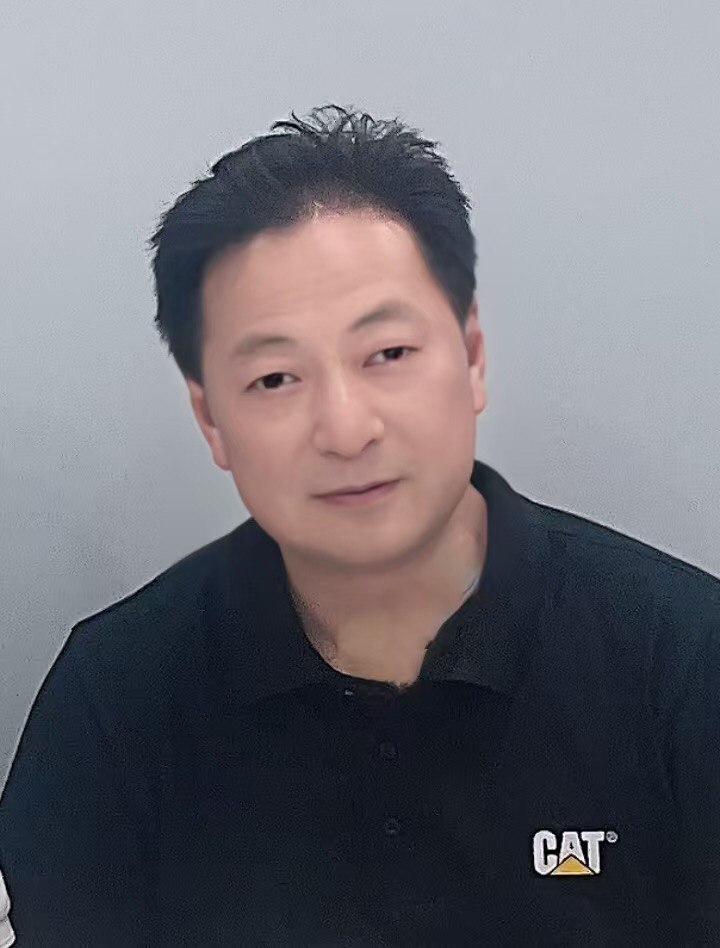
我要做一隻不停扇動翅膀的蝴蝶,一定會引發社會變革的颶風-rId5-320X320.jpeg?w=768&resize=768,0&ssl=1 "丁家喜:我要做一隻不停扇動翅膀的蝴蝶,一定會引發社會變革的颶風")
我要做一隻不停扇動翅膀的蝴蝶,一定會引發社會變革的颶風-rId5-320X320.jpeg "丁家喜:我要做一隻不停扇動翅膀的蝴蝶,一定會引發社會變革的颶風")
关永杰-rId5-1430X1073.jpeg?w=768&resize=768,0&ssl=1 "习近平修宪八周年抗议活动:独裁者的穷途末路")
关永杰-rId5-1430X1073.jpeg "习近平修宪八周年抗议活动:独裁者的穷途末路")
关永杰-rId6-1430X1073.jpeg)
关永杰-rId7-1430X1073.jpeg)
关永杰-rId8-1430X1073.jpeg)
关永杰-rId9-1280X960.jpeg)
关永杰-rId10-1430X1072.jpeg)