博客 页面 16

极权制度下“小事”变“大祸”的逻辑

0

作者:张兴贵
编辑:李聪玲 责任编辑:罗志飞 校对:程筱筱 翻译:刘芳

在极权制度中反复上演的悖论现象:一件“小事”总被放任,直至演变为席卷区域性甚至全国的“大事件”,而当危机彻底失控,政权又总是“集中力量办大事”,以雷霆之势平息一切。这看似矛盾的循环,并非偶然,而是极权治理逻辑的必然产物。它既暴露了权力的傲慢,也折射出权力的脆弱;既是日常治理的失效,更是危机应对的表演。

一、小事被掩盖——信息垄断与纠错失灵

极权制度的核心,是对信息、资源和权力的绝对垄断。在这种结构中,任何“小问题”都可能被视为对整体叙事的威胁,因此从一开始就被系统性掩盖。

信息流动被层层截留。基层官员深知,上报负面消息意味着政治风险。于是,瞒报、淡化、归类为“个案”成为常态。一件普通的民生诉求,在乡镇被视为“无理取闹”,在县里被归为“局部问题”,到省市层面则消失在“总体稳定”的报告中。中央决策者看到的,永远是经过“优化”的现实。

权力结构拒绝纠错。极权制度强调“集中统一领导”,基层不敢、也不能在问题萌芽时主动作为。“多一事不如少一事”、“没有上级指示不得擅动”——这种垂直依赖,让“小事”失去了被及时处理的可能。结果是小病不医,终成大患。

二、大祸爆发——压力积累与减压阀缺失

当小事被长期积压,社会矛盾就像地下岩浆,持续升温。极权制度看似坚不可摧,实则缺乏弹性。它没有独立的司法、自由的媒体、多元的监督作为“减压阀”,压力只能以更剧烈的方式爆发。一方面,社会信任持续瓦解。民众反复经历“投诉无门、维权无果、真相被掩盖”的过程,逐渐形成集体记忆:小事无人理,大事必引爆。一旦某个偶然事件触碰神经——无论是一起交通事故、一次执法冲突,还是一段网络视频——积怨便瞬间被点燃,演变为群体性事件。另一方面,技术加速了事态失控。互联网时代,信息传播速度远超管控能力。一段视频、一个帖子,可在数小时内冲破所有封锁。技术与民意的双重合力,往往让“小事”在转瞬之间升级为“大祸”。

三、集中力量办大事——非常态应对与治理表演

危机全面爆发后,极权制度祭出“杀手锏”——集中力量办大事。军队、警察、宣传、财政等资源被迅速整合,以摧枯拉朽之势平息风波。这种模式确实能在短时间内“摆平”局面:封路、抓捕、删帖……动作迅猛,规模宏大,外界往往为之震惊。但这并非治理能力的体现,而是危机应对的“非常态”。它依赖不受约束的权力,可跨部门、跨地区、无视程序调集资源;不受监督的决策,不计成本、不问效率;不受问责的后果,前期失误无人负责,深层问题并未解决。

四、恶性循环的根源——反馈机制的结构性缺失

为什么极权制度总陷入“小事→大祸→集中力量”的循环?根本原因在于缺乏正常的治理反馈机制。在民主社会,小事通过媒体曝光形成舆论压力,推动政策调整;官员受监督,必须承担责任。在极权制度,小事被瞒报、积压,直至突发危机才启动应急;官员只对上负责,无需面对民众。于是,放任→失控→强力压制成为唯一路径。

极权制度看似强大,却在“小事”面前暴露了致命的脆弱。它掩盖小事,是为了维护面子;它集中力量办大事,是为了挽回局面。但每一次循环,都在透支公信力、积累新隐患。真正的治理,不是在危机中“力挽狂澜”,而是在日常里“防微杜渐”;真正的强大,不是能“办成大事”,而是能让“小事”不再酿成大祸。一个不敢正视小问题的政权,终将被大问题拖垮;一个只会“集中力量”的制度,终会发现,再大的力量,也填不满信任的裂缝。

Why “Small Incidents” Become “Great Disasters” Under Totalitarian Rule

Abstract: In totalitarian systems, small problems are concealed due to information blockades and bureaucratic inertia, allowing tensions to accumulate until they erupt into major crises. When chaos finally breaks out, the regime suppresses it through its model of “concentrating power to accomplish big tasks,” forming a recurring cycle of concealment—loss of control—repression. This vicious cycle reveals governance failures and exposes a deep crisis of legitimacy.

Author: Zhang Xinggui
Editor: Li Congling Executive Editor: Luo Zhifei Proofreader: Cheng Xiaoxiao Translator: Liu Fang

A paradox repeatedly unfolds under totalitarian rule: a “small incident” is always allowed to fester until it grows into a regional or even nationwide “major event.” Once the crisis spirals out of control, the regime inevitably responds by “concentrating power to accomplish big tasks,” smashing everything with overwhelming force. This seemingly contradictory cycle is no accident—it is the inevitable outcome of totalitarian governance logic. It reveals both the arrogance and fragility of power; it reflects not only routine governance failures but also the performative nature of crisis response.

I. Small Incidents Are Covered Up—Information Monopoly and Failure to Correct Errors
The core of totalitarianism is the absolute monopoly over information, resources, and power. Within such a structure, any “small problem” may be treated as a threat to the official narrative, and is therefore systematically concealed from the beginning. Information flow is blocked at every level. Grassroots officials understand that reporting negative news brings political risk. Thus concealment, downplaying, and labeling issues as “isolated cases” become routine. A simple livelihood complaint is dismissed as “making trouble” at the township level, classified as a “localized issue” at the county level, and disappears entirely under “overall stability” in provincial reports. Central leaders always see a carefully polished reality. The power structure rejects correction. Totalitarian logic demands “centralized and unified leadership,” leaving grassroots officials unable—and afraid—to act proactively when problems first appear. “The less trouble, the better,” “No action without instructions”—such vertical dependence eliminates any chance for small issues to be addressed in time. Minor illnesses go untreated, eventually becoming major crises.

II. Major Disasters Erupt—Pressure Accumulation and the Absence of Relief Valves
When small issues are continually suppressed, social grievances accumulate like underground magma, heating steadily. Totalitarian regimes appear solid on the surface but lack resilience. They have no independent judiciary, no free press, and no pluralistic oversight to serve as “pressure valves.” Thus the tension erupts in more violent ways. On one hand, public trust erodes continuously. People repeatedly experience “no channel for complaints, no result from seeking justice, truth being concealed,” and gradually form a collective memory: small issues are ignored until they explode. Once an accidental event touches a raw nerve—whether it is a traffic accident, a law enforcement conflict, or a viral video—pent-up resentment ignites instantly, evolving into mass incidents. On the other hand, technology accelerates the loss of control. In the internet age, information spreads faster than censorship. A single video or post can break through all barriers within hours. The combined force of technology and public anger often turns a “small incident” into a “great disaster” almost overnight.

III. Concentrating Power to Accomplish Big Tasks—Extraordinary Response and Performative Governance
Once a crisis fully erupts, the totalitarian regime deploys its “ultimate solution”: concentrating power to accomplish big tasks. The military, police, propaganda apparatus, and financial resources are rapidly mobilized to crush the unrest with overwhelming force. This model can indeed “restore order” quickly—roadblocks, mass arrests, censorship—executed with stunning speed and scale. But this is not evidence of effective governance; it is merely an extraordinary emergency response. It relies on unchecked power that mobilizes resources across regions and agencies without regard for due process. Decisions are made without oversight, regardless of cost or efficiency. Consequences carry no accountability: earlier failures go unpunished, and deep structural issues remain untouched.

IV. The Root of the Vicious Cycle—The Structural Absence of Feedback Mechanisms
Why does totalitarianism fall into the cycle of “small incident → great disaster → concentrated power intervention”? The fundamental cause is the absence of normal governance feedback mechanisms. In democratic societies, small issues are exposed by the media, creating public pressure that drives policy adjustment. Officials are accountable and must respond to the public. In totalitarian systems, small issues are concealed and postponed until emergencies force reactive interventions. Officials answer only to their superiors, never to the people. Thus neglect → breakdown → force becomes the only available path.

Totalitarian regimes appear powerful, yet are fatally vulnerable to small problems. They conceal small issues to preserve their image; they concentrate power to handle big ones to salvage control. But each cycle erodes public trust and accumulates new dangers. Real governance is not about “spectacular rescues” during crises, but about “preventing problems at their root” in everyday governance. True strength is not the ability to “carry out big tasks,” but the ability to keep small issues from becoming catastrophes. A regime that does not dare face small problems will eventually be destroyed by big ones; a system that relies solely on concentrated power will one day discover that no amount of force can mend the cracks created by the loss of public trust.

中共不等于中国,更不代表中国人

0

作者: 周小星
编辑:胡景 责任编辑:李聪玲 校对:程筱筱 翻译:刘芳

当今世界,很多人对“中国”的误解如此之深,他们把对中共的批评误解为是对中国的批评,并把这种批评延伸到整个中华民族,把中共极权的傲慢等同于中国人的面孔。其实,这种混淆视听正是中共最擅长的政治伎俩。要让世界重新理解中国,第一步便是分清:中共不等于中国,更不代表中国人。

这几年我经常听到一句话:“你们中国人怎么这样?”每次听见,我都心里一紧。我知道,他们指的是中共的暴行,是极权的傲慢,是战狼式的咆哮,可那一刻,中国人却成了替罪羊。于是我常常想:到底要多少年,我们才能让世界明白一个简单的事实——中共不等于中国,更不代表中国人?

中共喜欢把自己和中国绑在一起。从“没有共产党就没有新中国”到“攻击共产党就是辱华”,它通过语言混淆偷换了概念,把一个政权的存亡,变成一个民族的生死。可是真实的中国远比共产党悠久。早在马克思出生前两千年,中国就已经有了《诗经》,有了孔孟,有了丝绸之路。那是文明的中国,不是党国。中共只是一段历史的意外,一个民族的噩梦,它不是中国的全部,更不能代表中国。

许多外国人混淆中共与中国,这是中共最希望看到的。它把14亿中国人推到自己的前面,作为自己的挡箭牌,“十四亿人”就这样成为了他们的护身符。它声称代表中国人民,却从不允许中国人民代表自己。那些敢于发声的人,要么被消失、要么被审判、要么被迫流亡。它用“中国”的名义压制“中国人”;用“国家”的名义对抗“个人”;用“人民”这个政治术语来代替“公民”;用“爱国”的名义要求人们沉默。这种故意混淆和政治绑架,是中国共产党最擅长的精致暴力。

中国不属于共产党,中国人也不是共产党的奴隶。看看那些被囚禁的律师、被驱逐的记者、被拆毁的教堂,还有那被禁声的网络,你就知道,真正的中国人正在承受怎样的艰辛和苦难。他们才是这个民族的良心,代表着被压制的中国。反对中共不是仇视中国人,恰恰相反,那才是对中国人的尊重。只有反对中共,这个民族才有未来,才有希望。

“CCP ≠ China ≠ Chinese”。这句话看似简单,其实是一场思想的复原。它让我们从语言里夺回真相,也让世界学会分辨一个政权与一个民族的区别。苏联共产党不是苏联,不能代表俄罗斯;纳粹也不是德国,不能代表德意志。同样,中共不是中国,更不能代表中国人。真正的中国不在天安门城楼上,更不在于那面巨大的党旗,它在人民的心里,在那些仍相信自由与公义的人心里。

我始终相信,五千年的文明社会不会被一个政党改写。终有一天中共会像苏共一样被历史抛弃,但中国会留下来,中国人也会留下来。到那时,世界才能真正理解这句话的含义——中共不等于中国,更不代表中国人。这句话不仅是事实的澄清,更是尊严的重建。

The CCP Is Not China, and It Does Not Represent the Chinese People

Author: Zhou Xiaoxing
Editor: Hu Jing Executive Editor: Li Congling Proofreader: Cheng Xiaoxiao Translator: Liu Fang

Abstract: In real life, many people fail to distinguish the Party from the state, or the nation from its people. They mistakenly equate the CCP with China, and with the Chinese people. As a result, the CCP’s crimes and abuses are unfairly projected onto the country and its citizens. This is wrong. Not all Chinese people praise or identify with the CCP.

In today’s world, the misunderstanding surrounding the word “China” has grown astonishingly deep. Many people take criticism of the CCP as criticism of China itself, and further extend this criticism to the entire Chinese nation—treating the arrogance of an authoritarian regime as the face of the Chinese people. In truth, this confusion is a political tactic the CCP has perfected. To help the world understand China again, the first step is simple: the CCP is not China, and it does not represent the Chinese people.

In recent years, I have often heard the question, “Why are you Chinese like this?” Every time, my heart tightens. I know they are referring to the CCP’s brutality, its authoritarian arrogance, its wolf-warrior rage. Yet in that moment, Chinese people themselves become the scapegoats. I often ask myself: how many more years will it take before the world understands a simple truth—the CCP is not China, and it does not represent the Chinese people?

The CCP loves binding itself to China. From “Without the Communist Party, there would be no New China” to “Criticizing the Party is insulting China,” it deliberately blurs language and swaps concepts, turning the fate of a political regime into the fate of a nation. But the real China is far older than the CCP. Two thousand years before Karl Marx was even born, China already had the Book of Songs, already had Confucius and Mencius, already had the Silk Road. That is the China of civilization—not the China of the Party-state. The CCP is an accident in history, a nightmare for a nation. It is not the entirety of China, nor can it represent China.

Many foreigners confuse the CCP with China—and this is exactly what the CCP wants. It pushes 1.4 billion people in front of itself as a human shield; “1.4 billion people” becomes its political armor. It claims to represent the Chinese people, yet never allows the Chinese people to represent themselves. Those who dare to speak out are disappeared, put on trial, or forced into exile. It uses the name of “China” to suppress Chinese; uses “the state” to crush individuals; replaces “citizens” with the political term “the people”; demands silence in the name of “patriotism.” This deliberate confusion and political hostage-taking is the CCP’s most sophisticated form of violence.

China does not belong to the Communist Party, and the Chinese people are not the Party’s slaves. Look at the imprisoned lawyers, the expelled journalists, the demolished churches, the suffocated internet—you will understand the hardships real Chinese people endure. They are the conscience of the nation; they represent the silenced China. Opposing the CCP is not hostility toward the Chinese people—on the contrary, it is a form of respect. Only by resisting the CCP can this nation have a future and hope.

“CCP ≠ China ≠ Chinese.” This phrase seems simple, yet it restores clarity of thought. It reclaims truth from political language and teaches the world to distinguish between a regime and a people. The Soviet Communist Party was not the Soviet Union and did not represent Russians. The Nazis were not Germany and did not represent the German people. Likewise, the CCP is not China and certainly does not represent the Chinese.

The real China is not on Tiananmen Gate, nor in that massive Party flag. It is in the hearts of the people—in those who still believe in freedom and justice.

I firmly believe that five thousand years of civilization cannot be rewritten by a single political party. One day, the CCP will be cast aside by history just as the Soviet Communist Party was. China will remain. The Chinese people will remain. And only then will the world fully understand this truth: The CCP is not China, and it does not represent the Chinese people. This statement is not only a clarification of fact—it is a restoration of dignity.

以良知抗暴政,以真相照黑暗——第761次茉莉花行动在洛杉矶举行

0
以良知抗暴政,以真相照黑暗——第761次茉莉花行动在洛杉矶举行

作者:曾群兰
编辑:黄吉洲 责任编辑:胡丽莉 校对:程筱筱

以良知抗暴政,以真相照黑暗——第761次茉莉花行动在洛杉矶举行

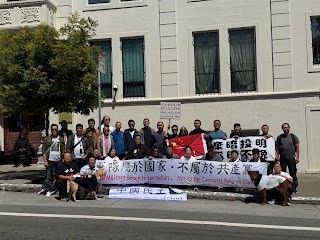
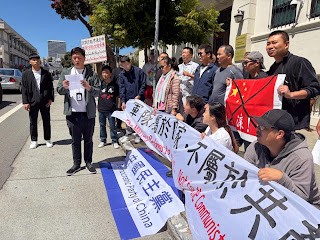
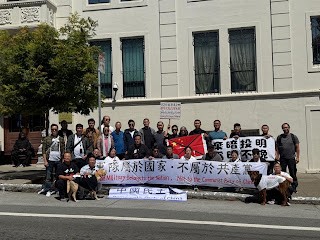
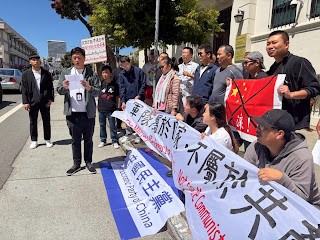
2025年10月25日,在中国驻洛杉矶总领事馆外,中国民主党洛杉矶委员会、中国民主人权联盟与《在野党》杂志社联合举办抗议活动,强烈谴责中共当局对邢望力、张盼成的长期迫害,并呼吁国际社会立即关注他们遭受的处境。

中国公民张盼成因坚持公民言论自由与社会公正,多次遭受牢狱之灾。他不畏强权,敢于揭露社会不公,声援被迫害的公民与良心犯。多次被以“寻衅滋事罪”入狱,出狱后仍遭持续骚扰与监控,甚至被强迫认定为“精神病”,身份证与户口本被没收,行动自由被剥夺。

2024年7月,他再次被刑事拘留,至今失联、杳无音讯。

同为中国公民的邢望力坚持二十年维权却换来十年牢狱与骨碎之伤,二十余年来,他累计被非法羁押达10年零8个月,多次遭受行政拘留、非法拘禁与监视居住等手段迫害。

自2002年起,邢望力踏上了艰难的维权之路。从个人维权到长期帮助他人维权。2016年,他在狱中遭暴力殴打,造成头颅骨粉碎性骨折。2019年,中共公安甚至跨国抓捕其子邢鉴。

2024年6月,中共总理李强访问新西兰期间,邢鉴在其酒店前举牌抗议中共暴政、呼吁其下台,现场遭中共势力围殴。新西兰主流媒体《Stuff》对此事件进行了报道。不久后,邢鉴住所遭人泼洒粪便,并被投放疑似冰毒晶体。

2025年8月,邢望力再次被中共以“寻衅滋事罪”构陷,无辜判处三年有期徒刑。当天,邢鉴亲赴洛杉矶抗议现场,声援父亲。

图为本次活动发起人及主持人合影:左起为何愚、中为张晓丽、右为曾群兰。

我们呼吁中共政府:公开邢望力与张盼成的现状,保障其基本人权;停止一切针对异议人士及其家属的迫害。

Resisting Tyranny with Conscience, Illuminating Darkness with Truth —

The 761st Jasmine Action Held in Los Angeles

Author: Zeng Qunlan
Editor: Huang Jizhou | Managing Editor: Hu Lili | Proofreading: Cheng Xiaoxiao

Abstract:On October 25, 2025, numerous groups gathered in front of the Chinese Consulate in Los Angeles to condemn the CCP’s persecution of dissidents Xing Wangli and Zhang Pancheng, calling on the international community to pay close attention to China’s human rights situation.

以良知抗暴政,以真相照黑暗——第761次茉莉花行动在洛杉矶举行

On October 25, 2025, outside the Chinese Consulate General in Los Angeles, the Los Angeles Committee of the China Democracy Party, the China Democracy & Human Rights Alliance, and Opposition Party magazine jointly held a protest condemning the Chinese Communist Party’s long-term persecution of Xing Wangli and Zhang Pancheng, calling on the international community to pay urgent attention to their situation.

Chinese citizen Zhang Pancheng has repeatedly been imprisoned for his commitment to freedom of expression and social justice. Fearless in the face of authoritarian power, he exposed social injustices and spoke out for persecuted citizens and prisoners of conscience. He was repeatedly jailed on the charge of “picking quarrels and provoking trouble.” Even after release, he continued to face harassment and surveillance, and was forcibly labeled as “mentally ill.” His ID card and household registration were confiscated, and his freedom of movement was stripped.

In July 2024, he was again placed under criminal detention. He has since disappeared, with no information about his whereabouts.

Another Chinese citizen, Xing Wangli, has spent twenty years defending rights, only to receive a decade of imprisonment and injuries as severe as skull fractures. Over the past two decades, he has been illegally detained for a total of 10 years and 8 months, and was subjected to repeated administrative detentions, illegal house arrests, and “residential surveillance.”

Since 2002, Xing began his difficult journey of rights defense—from handling his own grievances to helping others for years.In 2016, he was violently beaten in prison, causing comminuted fractures of the skull.In 2019, Chinese police even conducted a cross-border operation to seize his son, Xing Jian.

In June 2024, while Chinese Premier Li Qiang was visiting New Zealand, Xing Jian held a protest sign outside Li Qiang’s hotel denouncing CCP tyranny and calling for his resignation. He was assaulted on site by pro-CCP individuals. New Zealand’s major media outlet Stuff reported on the incident. Shortly afterward, Xing Jian’s residence was splashed with feces, and crystalline substances suspected to be methamphetamine were thrown onto the property.

In August 2025, Xing Wangli was once again framed by the CCP with the charge of “picking quarrels and provoking trouble,” and was unjustly sentenced to three years in prison. On that very day, Xing Jian personally attended the protest in Los Angeles to show support for his father.

The photo shows the initiators and hosts of the event: from left to right — He Yu, Zhang Xiaoli in the center, and Zeng Qunlan on the right.

We call on the Chinese government to disclose the current conditions of Xing Wangli and Zhang Pancheng, to safeguard their basic human rights, and to cease all persecution against dissidents and their family members.

极权的铁律

0

作者:华言
编辑:钟然 责任编辑:罗志飞 校对:程筱筱

极权最大困境在于:忠诚无法量化、无法恒定、无法阻止其转化为替代能力。

无法量化——今日满分的忠诚,明日可能降一分,如何测量?

无法恒定——时间是忠诚的溶剂。资历越老、功勋越大,越可能认为“我比他更配”。

无法阻止转化——一旦掌握枪杆子、钱袋子、宣传机器,忠诚本身就会成为替代的资本。 理性领袖的唯一选择,是在忠诚衰减至威胁临界点前,先发制人。 这不是偏执,而是冷酷的概率计算。 在极权世界里,最大的功臣,就是最大的隐患;最忠诚的自己人,就是最危险的敌人。 清洗自己人,不是嗜血,而是自保;不是偶然,而是铁律。

公理一:权力终身垄断,威胁生于忠诚;极权体制的根本特征,是单一领袖对全部决策权的终身占有。军队归他,财政归他,宣传归他,暴力机器归他——所有关键资源直通一人。在这种结构下,“自己人”——最接近权力核心、最掌握机密、最具替代能力者——忠诚度越高,潜在威胁越大。忠诚不是静态的,它随时间递增资历、递增野心、递增可替代性。越是功勋卓著、越是贴身辅佐、越是深得信任,越可能在某个夜晚萌生“江山该轮到我”的念头。 结论:最忠诚者,终将成为最大威胁。

公理二:无制度化退出,更新等于消灭;极权拒绝任期制、拒绝选举制。 权力层没有自然代谢机制:老同志不走,新同志不进,权力像水泥一样凝固。 清洗,成为唯一的疏通阀。 正常政权靠制度化更替实现血液循环;极权没有这种通道。于是,权力更新的唯一路径就是——暴力清除。 清洗不是领袖的个人嗜好,而是制度真空下的必然产物。没有清洗,权力就会被老一代功臣架空; 有了清洗,权力才能重新回到领袖一人手中。

公理三:清洗工具自带反噬基因;清洗不是领袖亲自动手,而是依赖专职执行者——秘密警察、专案组、反腐专班。他们掌握整人技术,拥有生杀予夺之权,熟悉系统所有漏洞、所有弱点、所有潜规则。工具完成使命之日,即成为最大知情者之时。他们知道的秘密越多,反噬能力越强;他们手中的刀越锋利,威胁就越大。推论:清洗需要刽子手,刽子手用完即成新威胁。清洗者必须被清洗,否则领袖无法安睡。

公理四:忠诚世界,表忠唯一方式是不断比赛、烈度升级在极权体系内,忠诚无法量化、无法验证。表忠行为陷入经典的囚徒困境:沉默等于自杀,唯一可观测的忠诚,是比他人更狠地揭发、更彻底地清洗。

所有参与者陷入零和竞赛:你整一人,我整两人;你毁肉体,我毁名节;你用撤职,我用枪决;你用开除党籍,我用永不续用。于是,忠诚不再是内心信念,而是外在表演。 表演的唯一标准,是清洗的规模与残酷程度。每一轮清洗之后,幸存者为了证明“我比别人更忠诚”, 主动加码,主动扩靶,主动升级罪名。忠诚竞赛没有上限,清洗烈度没有天花板。

The Iron Law of Totalitarianism

Author: Hua Yan
Editor: Zhong Ran Managing Editor: Luo Zhifei Proofreading: Cheng Xiaoxiao

Abstract:A totalitarian system cannot quantify loyalty; loyalty decays over time and eventually transforms into a threat. With no institutionalized mechanism for leadership renewal, power can only be maintained through purges. Yet the tools of purge inevitably become new sources of danger, forcing an escalating loyalty competition and ultimately forming a self-devouring iron law.

The fundamental dilemma of totalitarianism is this:loyalty cannot be quantified, cannot remain constant, and cannot be prevented from turning into a capacity for replacement.

It cannot be quantified—the loyalty that scores full marks today may decrease tomorrow. How can it be measured?It cannot remain constant—time dissolves loyalty. The longer the tenure and the greater the achievements, the more likely one thinks, “I deserve the throne more than he does.”It cannot be prevented from transforming—once someone controls the gun, the purse, or the propaganda apparatus, loyalty itself becomes capital for replacing the leader.

For a rational totalitarian ruler, the only option is to strike first—to purge before loyalty decays into threat.This is not paranoia, but a cold computation of probability.In the totalitarian world, the greatest meritorious servant is the greatest hidden danger; the most loyal insider is the most dangerous potential enemy.Purging one’s own people is not bloodlust—it is self-preservation.It is not an accident—it is an iron law.

Axiom 1: Lifelong Power Monopoly — Threat Emerges From Loyalty

The fundamental feature of totalitarianism is a single leader holding lifelong monopoly over all decision-making.The army belongs to him, the treasury belongs to him, the propaganda machinery belongs to him, and the security apparatus belongs to him—all key resources lead directly to one person.

In this structure, “insiders”—those closest to the center, those with access to secrets, those with the capacity to replace—become more threatening the more loyal they appear.

Loyalty is not static; as time passes it accumulates seniority, ambition, and substitutability.The more meritorious, the more indispensable, the more trusted—the more likely one is to think, at some late hour, “It should be my turn.”

Conclusion:The most loyal will inevitably become the greatest threat.

Axiom 2: No Institutionalized Exit — Renewal Equals Elimination

Totalitarianism rejects term limits and electoral turnover.There is no natural mechanism of succession.The old guard does not leave; the new guard cannot rise.Power solidifies like cement.

Thus, purge becomes the only drainage valve.

Normal political systems rely on institutionalized rotation to maintain circulation.Totalitarian systems have no such channel.Therefore, the only method of leadership renewal is violent removal.

Purges are not the ruler’s personal hobby—they are the unavoidable consequence of institutional vacuum.Without purges, the old guard would hollow out the ruler’s power;with purges, power is restored to the single leader.

Axiom 3: Purging Tools Carry Inherent Backlash

Purges are not carried out personally by the ruler; they require professional executioners—secret police, investigative task forces, anti-corruption squads.

These actors master the craft of persecution; they wield life-and-death authority; they know every loophole, every weakness, every unwritten rule in the system.

The moment their mission is complete, they become the greatest holders of secrets—and therefore the greatest threat.The more they know, the greater their potential backlash;the sharper the knife they wield, the more dangerous they become.

Implication:What purges must always purge next are the purgers themselves.If executioners are not eliminated, the ruler can never sleep peacefully.

Axiom 4: In a Loyalty-Dominated World, the Only Way to Prove Loyalty Is Escalating Competition

In a totalitarian system, loyalty cannot be measured or verified.Acts of loyalty fall into a classic prisoner’s dilemma:to remain silent is suicide, for silence is indistinguishable from disloyalty.

Thus, the only observable loyalty is demonstrating harsher repression than one’s peers:more denunciations, more aggressive purges, more extreme acts of obedience.

All participants enter a zero-sum contest:

You purge one person, I purge two.

You destroy the body, I destroy the reputation.

You demote, I execute.

You expel from the Party, I ensure permanent exclusion from public life.

Loyalty ceases to be an inner belief; it becomes an external performance.The sole metric of performance is the scale and brutality of purges.

After each round, survivors must prove they are “more loyal than the rest,”thereby voluntarily escalating accusations, expanding targets, and intensifying punishment.

The loyalty competition has no ceiling;the violence of purges has no upper limit.

朝鲜元老金永南:三代辅臣的传奇一生

0

作者:陀先润
编辑:彭小梅 责任编辑:钟然 校对:程筱筱

金永南,朝鲜政坛的一位传奇人物,于近日逝世。中国外交部对此表示沉痛哀悼,称其为“中国人民的老朋友”。作为解读朝鲜长期国策的关键人物,金永南及其家族在朝鲜政治中扮演了举足轻重的角色。他的故事,不仅揭示了朝鲜内部权力的运作逻辑,还体现了中朝关系中的微妙平衡。

在朝鲜,白头山血统的金氏家族(金日成、金正日、金正恩)是权力核心,但另一个“金家”——金永南家族——同样屹立不倒。这个家族堪称朝鲜政坛的常青树,在金日成时代多次政治清洗中幸免于难。金永南有两位弟弟:金鸡南和金斗南,三兄弟各自在外交、宣传和军事领域建功立业。

金永南家族的影响力如此之大,以至于在朝鲜民间流传着这样的说法:如果你是一个不愿奋斗的年轻人,想飞黄腾达并一生无忧,最好的办法是娶金永南家族的女性后代。这并非夸张——这个家族是金家王朝的支柱,类似于周恩来之于毛泽东,但不同的是,金永南获得了金日成、金正日乃至金正恩的无条件信任,而非充满猜忌的权力斗争。

金永南的出生地存在争议。朝鲜官方宣称他生于朝鲜,以强调其“正统”身份。但日本占领时期资料显示,他出生在中国辽宁省。不管怎样,在朝鲜战争爆发前,他已在黑龙江求学,并作为志愿军战士入朝,担任朝鲜语翻译。

他的履历在此后变得扑朔迷离。从1950年入朝到1953年停战谈判前,他已被朝鲜劳动党派往苏联深造,主攻外交事务。这意味着在战争期间,他从志愿军转入朝鲜政府体系,并迅速获得信任。作者推测,这只能通过高层干预实现——很可能与金日成家族有深厚渊源,或许是祖上关系或姻亲纽带。

1956年回国后,金永南直接担任劳动党中央国际部课长(相当于中国中央外事办小组),负责外交情报总务。这在当时的政治清洗浪潮中尤为罕见:1956-1957年,金日成清洗延安派和中国背景干部,许多人被贬或流亡。但金永南毫发无损,一路升迁,至1961年成为国际部副部长。

金永南是朝鲜外交政策的灵魂人物。在中苏论战期间,他负责对苏和东欧事务,尽管有中国背景,却在中苏分裂中游刃有余。他不仅是金日成的外交智囊,还辅佐了金正日和金正恩。在金日成时代,他是排名第二的领导人,负责维系中朝关系。80年代,金日成与邓小平闹僵时,他居中斡旋,确保援助不断。金日成去世后(1994年),金永南主持治丧委员会,推动金正日上位。1998年宪法修改后,他担任最高人民会议常任委员长,成为名义国家元首(金正日则掌控军权)。2008年北京奥运会,正是他代表朝鲜出席。

金正恩从瑞士回国后,金永南的弟弟金斗南(人民军大将)担任其军事导师。金永南本人则在外交上指导金正恩,包括推动美朝峰会。他的另一个弟弟金鸡南负责宣传部,三兄弟合力奠定金家王朝基础。

金永南家族的升迁轨迹令人惊叹:三兄弟均于50年代被派往苏联学习,回国后迅速掌权。金鸡南从金日成大学教授转入党中央宣传部;金斗南从炮兵副司令升为金日成的“军事秘书”,后转任金日成纪念馆馆长,继续辅佐金正恩。金永南的中国背景,使他成为中朝关系的“润滑剂”。在朝鲜想与中国闹僵时,他拉近距离;在中国欲放弃朝鲜时,他争取援助。没有他,中朝关系可能早已渐行渐远。他并非中国间谍,而是忠于金家王朝,但其经历确保了两国关系的相对稳定。

然而,他的去世标志着一个时代的结束。2019年退休后,朝鲜外交已显独立迹象:与俄罗斯签订军事条约、派兵乌克兰战场、推动美朝直接对话。这些举动显示,朝鲜正摆脱中国影响,走向平等化。中国对朝鲜事务的话语权将进一步减弱。

金永南的离世,让朝鲜外交进入“纯金正恩时代”。对中共而言,这并非好消息——朝鲜可能更独立地与韩国、美国谈判。但从长远看,这一天总会到来。金永南作为三代元老,他的传奇一生,不仅是朝鲜政治的缩影,也提醒我们,权力传承背后的家族纽带往往决定国家命运。

Kim Yong-nam, Elder Statesman of North Korea:The Legendary Life of a Three-Generation Courtier

Author: Tuo Xianrun
Editor: Peng Xiaomei Managing Editor: Zhong Ran Proofreading: Cheng Xiaoxiao

Abstract:Kim Yong-nam has passed away. Having served Kim Il-sung, Kim Jong-il, and Kim Jong-un, he was the central figure of North Korean diplomacy and a “lubricant” in China–North Korea relations. His death marks the end of an era and the beginning of a more independent “Kim Jong-un era” in Pyongyang’s foreign policy.

Kim Yong-nam, a legendary figure in North Korean politics, recently passed away. China’s Ministry of Foreign Affairs expressed deep condolences, calling him “an old friend of the Chinese people.” As a key interpreter of North Korea’s long-term national strategy, Kim Yong-nam and his family played an indispensable role in the country’s political landscape. His story not only reveals the inner workings of power within North Korea but also illustrates the delicate balance underpinning China–North Korea relations.

In North Korea, the “Paektusan bloodline” of the Kim family—Kim Il-sung, Kim Jong-il, and Kim Jong-un—forms the core of power. But another “Kim family”—the Kim Yong-nam clan—has remained consistently influential. This family is often seen as an evergreen pillar of North Korean politics, having survived multiple purges during Kim Il-sung’s rule. Kim Yong-nam had two younger brothers: Kim Ki-nam and Kim Tu-nam. The three brothers each made their mark in diplomatic, propaganda, and military affairs respectively.

Such was the reputation of the Kim Yong-nam family that a popular saying circulated among the North Korean public: if a young man hopes to rise quickly without effort and enjoy lifelong security, the best path is to marry a woman from the Kim Yong-nam lineage. This is not an exaggeration—the family served as a foundational pillar of the Kim dynasty, comparable to Zhou Enlai’s role for Mao Zedong. Yet, unlike Zhou—whose relationship with Mao was often strained by suspicion—Kim Yong-nam enjoyed unconditional trust from Kim Il-sung, Kim Jong-il, and even Kim Jong-un.

There is debate regarding Kim Yong-nam’s birthplace. North Korean official sources claim he was born in Korea, emphasizing his “legitimate” origins. But records from the Japanese occupation period indicate he was born in Liaoning Province, China. Regardless, before the outbreak of the Korean War, he had studied in Heilongjiang and entered the war as a Chinese volunteer soldier, serving as a Korean-language translator.

His career quickly became opaque. Between entering Korea in 1950 and the armistice talks in 1953, he was already sent by the Workers’ Party of Korea to the Soviet Union for advanced diplomatic training. This suggests that during the war he was transferred from the Chinese volunteer system into the North Korean government apparatus, rapidly gaining trust. The author speculates this could only have happened through senior intervention—possibly due to long-standing family ties or marriage connections with the Kim Il-sung clan.

After returning in 1956, Kim Yong-nam immediately became a section chief in the International Department of the Workers’ Party—equivalent to a high-ranking official in China’s Central Foreign Affairs Office—responsible for overall diplomatic intelligence. This was highly unusual during the intense political purges of the era. Between 1956 and 1957, Kim Il-sung purged the Yan’an faction and Chinese-background cadres, many of whom were demoted or exiled. Yet Kim Yong-nam emerged unscathed and continued to rise, becoming vice minister of the International Department by 1961.

Kim Yong-nam became the mastermind of North Korea’s foreign policy. During the Sino–Soviet split, he managed affairs with the Soviet Union and Eastern Europe, skillfully navigating the divide despite his Chinese background. He was not only Kim Il-sung’s diplomatic strategist but also later aided Kim Jong-il and Kim Jong-un.During Kim Il-sung’s era, he was effectively the second-most powerful figure in maintaining China–North Korea relations. In the 1980s, when relations soured between Kim Il-sung and Deng Xiaoping, Kim Yong-nam helped mediate tensions and ensured Chinese aid continued. After Kim Il-sung’s death in 1994, he chaired the funeral committee and facilitated Kim Jong-il’s succession.

After the 1998 constitutional revision, he became President of the Presidium of the Supreme People’s Assembly—the nominal head of state—while Kim Jong-il retained military control. At the 2008 Beijing Olympics, he represented North Korea as its official head of state.

After Kim Jong-un returned from Switzerland, Kim Yong-nam’s younger brother Kim Tu-nam—a KPA general—served as his military mentor. Kim Yong-nam himself provided diplomatic guidance, including involvement in paving the way for U.S.–DPRK summits. Another brother, Kim Ki-nam, controlled the propaganda apparatus. Together, the three brothers formed a foundational support system for the Kim dynasty.

The family’s meteoric rise is striking: all three were sent to the Soviet Union for study in the 1950s and quickly rose to power upon their return. Kim Ki-nam moved from being a professor at Kim Il-sung University into the central propaganda department. Kim Tu-nam advanced from deputy commander of artillery forces to Kim Il-sung’s “military secretary,” and later became director of the Kim Il-sung Memorial Hall, continuing to advise Kim Jong-un.Kim Yong-nam’s Chinese background made him a crucial “lubricant” in China–North Korea relations. When Pyongyang leaned toward distancing itself from Beijing, he helped mediate; when Beijing contemplated reducing support, he worked to secure continued assistance.He was not a Chinese spy but a loyal servant of the Kim dynasty whose upbringing simply positioned him as a stabilizing force between the two nations.

Yet his death marks the end of an era. Since his retirement in 2019, North Korean diplomacy has shown signs of greater independence: signing military agreements with Russia, sending personnel related to operations in Ukraine, and exploring direct talks with the U.S. These developments reflect a shift toward autonomy and equality in its foreign policy. China’s influence over North Korea is likely to further diminish.

Kim Yong-nam’s passing ushers North Korean diplomacy fully into the “pure Kim Jong-un era.”For the CCP, this is not good news—North Korea may now negotiate more independently with South Korea and the United States. Yet in a broader sense, this transition was inevitable.

As a veteran statesman who served three generations of the Kim dynasty, Kim Yong-nam’s extraordinary life is not only a microcosm of North Korean politics but also a reminder that the dynastic transmission of power is often shaped as much by family networks as by political design.

愿荣光归香港

0
愿荣光归香港

作者:张宇
编辑:邢文娟 责任编辑:李聪玲 校对:程筱筱

黎明来到 要光复 这香港

同行儿女 为正义 时代革命

祈求民主与自由 万世都不朽 我愿荣光归香港——《我愿荣光归香港》

还记得小时候我第一次在一盘盗版VCD里看到的香港情景:街头闪烁的霓虹灯,穿风衣的警探,叼着烟的歌手,还有那句唱到心底熟悉的旋律——“原谅我这一生不羁放纵爱自由”。那时的香港,对我来说,不只是城市,而是一种生活方式,一种自由、时尚、文明、开放的象征。

在那个信息被围墙阻隔的年代,香港是我们“窥见”世界的一扇窗。

可是,当我长大,从2019年3月开始,当关于“自由“”民主”的 话题从香港新闻在消失,当我看到“占中”的学生被打压、“反送中”的人群被污名化,当“光复香港,时代革命”这八个字被定性为犯罪标语,我忽然明白,那座我心中像征着自由民主的东方明珠——香港,已经死去。

我看着那座曾经闪烁着自由光芒的国际大都市,变成了红旗下的橡皮印章,我心痛不已。而更令人悲哀的是,它的死亡,并不是孤独的,那是整个华语世界的暗夜——当自由被践踏,当思想被驯服,当恐惧被合理化,我们每一个人,都在某种意义上幻化成了香港。

很多人以为香港还在热闹,铜锣湾依旧人潮汹涌,维多利亚港的夜景依旧耀眼,金融区的灯光照得人眼花缭乱。地铁依然准时,商场依然高端,游客买着免税化妆品和时尚奢侈品,好像一切看起来就如从前,表面上一切都没有变。

但真正的变化,总是从不被看见的角落开始。

新闻台原本敢于提问的记者,不再出现在镜头前;大学校园里挂满了“国安教育”的横幅,取代了学生会的宣言;图书馆里下架了成推的政治书籍,连《苹果日报》的旧刊都成了“危险物品”;连街头的涂鸦也变得小心翼翼,只剩下模糊的“光”与“自由”,被雨水一点点冲淡。

中共政府告诉世界,香港依然“一国两制”;央视镜头下,香港依然“繁荣稳定”;但每个香港人心里都明白——那只是布景板式的繁华。

我曾经相信,香港会永远保持自己的节奏:那种既中又西、既古典又现代的独特气质。可如今,街头的普通话越来越多,红旗无处不在,连广播里的粤语语调都开始变得“规矩”而单调。自由的城市,变成了“听话的特区”。警察不再是维护秩序的守护者,而是政权的执行者。港府官员在北京的指令下行事,而不再代表市民的声音……

愿荣光归香港

(图片来自于洛杉矶自由雕塑公园)

2019年的香港,是一座被愤怒和希望同时点燃的城市,那年夏天,街头的空气都是炽热的。雨伞、头盔、口罩成了新的标志,年轻人用身体去对抗权利的机器。他们高喊的那句口号——“光复香港,时代革命”,并不是挑衅,而是一种哭喊,一种被逼到绝境后的觉醒。

起初,只是一条看似普通的《逃犯条例》修订草案。但所有人都知道,那是通往极权的桥。一旦通过,任何人都可能被送往内地受审——记者、教师、议员、甚至只是一个发帖表达不满的市民。于是,百万港人走上街头,队伍一眼望不到尽头。黑色的衣服连成一片,如同海浪,呼喊声此起彼伏,那是一场属于公民的复活。

学生们举着“撑香港反送中”的牌子,年轻的女孩在地铁出口分发口罩和水,有老人站在人行道上静静地比出“加油”的手势。这是香港人最温柔,也最坚强的时刻。

但温柔的抗争很快被暴力回应。催泪弹在狭窄的街巷里炸开,白烟弥漫,尖叫四起。有人倒下,有人被拖走,有人用雨伞遮住身边被打的人。警棍挥下去的时候,没有人再分得清正义与秩序。媒体的镜头被封锁,报道被删改。电视上说“暴徒破坏社会安宁”,可每个在现场的人都知道,那些被称为“暴徒”的孩子,只是想要一个可以安全发声的城市。

“光复香港,时代革命”——这八个字成了自由的遗言。它被政府定性为“分裂国家”,却被世界记住,印在游行的横幅上,印在被捕者的额头上,也印在每个热泪盈眶的香港人心里。

最终这场运动没有胜利,2020年6月30日,《香港国安法》在没有经过立法会充分讨论的情况下,于午夜强行生效。香港正式进入“红色时代”。街头的旗帜换了颜色,学校的课程换了内容,新闻的标题换了语气。所有事情都在一夜之间,变得不同。

我还记得,那几天香港的气氛异常安静,没有庆祝,也没有喧嚣。只是人们在手机上默默删掉旧帖,有人换了头像,有人清空了相册,有人关掉了社交账号,就像每一个人都低下脑袋,准备被驯服。

(图片来自于洛杉矶自由雕塑公园)

从此以后,香港变得“听话”。抗议消失了,标语消失了,连街头音乐都变得温顺。艺术家改画风,出版商改选题,每个人都知道,什么可以说,什么必须忘。

港府称这叫“恢复秩序”;中共称这叫“回归正轨”;可我知道,那只是“顺从”的另一种说法。

香港人开始移民。一波又一波,像潮水退去。有人去了伦敦,有人去了台北,也有人去了我所在的城市。他们背着行囊,带着那口熟悉的粤语,却述说着“香港已死”的故事。

有时我看着新闻镜头里的中环,那熟悉的霓虹还在闪烁,但我再也不敢相信那是真的。那是一座被中共极权改写的城市,名字还叫香港,灵魂却早已被换了。

它被迫忘记自己的语言、历史、信念;

被迫学会赞美、表忠、沉默。

那不是香港,而是中共的一个“洋娃娃”。

香港的故事,不只是香港的故事。它是一面镜子,映照出中共极权制度如何一步步吞噬一座城、一群人、乃至整个文明的灵魂。

中共极权的方式从来不是摧毁,而是同化。它不需要推土机,不需要枪炮。它只需要改变语言、改写教材、关闭报社、收编学校。它让人习惯恐惧,习惯沉默,习惯在安全的范围内假装自由。等到有一天,人们真的学会“自我审查”,中共极权就不再需要监控,因为每个人,已经成为自己的看守。

中共极权可怕的地方在于,它不只是统治土地,它要统治人的心。让人习惯屈服,习惯遗忘,习惯把谎言当成常识。一旦记忆被抹去,悲剧就能被重新书写成“成功的故事”。这正是它最阴险的地方。

有人说,香港是“叛逆的孩子”,可在我看来,香港只是一个敢于做梦的地方。它曾经用几十年的时间,证明华人社会也能拥有自由与法治。而如今,这个实验被摧毁。这不是香港的失败,而是中共极权的胜利。有时候我在想,如果连香港都守不住,我们还能在哪里谈自由?还能在哪一片土地上相信真相、尊严与思想的独立?

虽然香港的自由被夺走,但它留下的火种不会熄灭。中共极权可以封锁街头、关闭报社、审查言论,却无法摧毁记忆。那记忆藏在流亡者的梦里,藏在被没收的报纸边角,藏在海外小镇的集会上,在被驱散的广场回声中。

那些高喊口号的年轻人、那些被捕的记者、那些流亡的学者,正在续写“时代革命”的意义。他们在异乡重建媒体、翻译书籍、记录真相。

他们让世界记得:香港并非死去,而是在另一种形式下延续。

(图片提供:张宇;图为张宇参加洛杉矶领事馆门口举行的集会活动)

Glory to Hong Kong

Author: Zhang Yu
Editor: Xing Wenjuan Responsible Editor: Li Congling Proofreading: Cheng Xiaoxiao

Abstract: This article recalls Hong Kong’s former freedom and prosperity, reflects on the profound social transformations after the 2019 Anti–Extradition Bill Movement, expresses deep concern and mourning over the erosion of freedom of speech, the rule of law, and civil rights, and calls for remembering that freedom must not be forgotten.

When dawn arrives, we shall reclaim this Hong Kong.Children of the era march together for justice and revolution.May democracy and freedom endure for all ages—I pledge that glory will return to Hong Kong.— “Glory to Hong Kong”

I still remember the first time, as a child, that I glimpsed Hong Kong through a pirated VCD: neon lights flickering across the streets, detectives in trench coats, singers with cigarettes hanging from their lips, and that familiar melody that lodged itself in my heart—“Forgive me for being unruly all my life and loving freedom.”Back then, Hong Kong was not merely a city to me, but a way of life—a symbol of freedom, modernity, civility, and openness.In an era when information was blocked by walls, Hong Kong was a window through which we “peeked” at the world.

But as I grew up, especially since March 2019, when the topics of “freedom” and “democracy” began disappearing from Hong Kong’s news; when I saw students in the Occupy movement suppressed, protesters in the Anti–Extradition Bill movement demonized; when the eight words “Liberate Hong Kong, Revolution of Our Times” were criminalized—I suddenly understood that the Hong Kong which had embodied liberty and democracy in my imagination had already died.

I watched that once-glittering international metropolis—its glow of freedom extinguished—turn into a rubber stamp beneath the red flag, and I felt heartbroken.And what is even more tragic is that its death is not solitary; it is part of the long night falling over the entire Sinophone world. When freedom is trampled, when thought is domesticated, when fear becomes normalized, every one of us, in some sense, becomes another Hong Kong.

Many people think Hong Kong is still lively: crowds surge through Causeway Bay, Victoria Harbour’s nightscape remains brilliant, and the lights of the financial district are dazzling. The MTR still runs on time, malls remain upscale, and tourists continue buying tax-free cosmetics and luxury goods. Everything on the surface appears unchanged.

But real change always begins in places unseen.

Journalists who once dared to ask hard questions no longer appear on camera; university campuses are draped with banners of “National Security Education,” replacing student-union manifestos; libraries remove stacks of political books, and even old issues of Apple Daily have become “dangerous items.”Even street graffiti has grown timid—only blurry traces of “light” and “freedom” remain, gradually washed away by the rain.

The Chinese government tells the world that Hong Kong still enjoys “One Country, Two Systems”; state television shows a Hong Kong that is “prosperous and stable.”Yet every Hongkonger knows—this is merely stage-set prosperity.

I once believed that Hong Kong would forever keep its own rhythm: a unique blend of East and West, classical and modern.But now, Mandarin fills the streets, red flags appear everywhere, and even the intonations of Cantonese in public broadcasts have become more “disciplined” and monotonous.A free city has been transformed into an obedient “special administrative region.”The police are no longer guardians of public order but enforcers of the regime.Government officials act according to Beijing’s directives, no longer representing the voices of the people…

愿荣光归香港

(Image from the Los Angeles Freedom Sculpture Park)

In 2019, Hong Kong became a city ignited simultaneously by anger and hope.That summer, even the air on its streets felt scorching. Umbrellas, helmets, and masks became new symbols, and young people used their bodies to resist the machinery of power. The slogan they shouted—“Liberate Hong Kong, Revolution of Our Times”—was not a provocation but a cry for help, an awakening born from being pushed to the edge.

It began with what seemed like a single ordinary amendment: the revision of the Fugitive Offenders Ordinance.But everyone understood that it was a bridge leading straight toward authoritarianism. Once passed, anyone could be extradited to the mainland for trial—journalists, teachers, lawmakers, or simply an ordinary citizen who had posted a message of dissent.And so a million Hongkongers took to the streets. The procession stretched farther than the eye could see. Black clothing formed a continuous sea, and waves of shouting rolled through the city. It was a moment of civic resurrection.

Students held signs reading “Stand with Hong Kong, Oppose the Extradition Bill.” Young women handed out masks and water at MTR exits. Elderly people stood silently on sidewalks, raising their hands in quiet gestures of encouragement.This was Hong Kong at its gentlest—and its strongest.

But gentle resistance was soon met with violence. Tear gas exploded in the narrow alleys; white smoke filled the air; screams echoed. People collapsed, people were dragged away, people shielded each other with umbrellas. When the batons came down, no one could distinguish justice from “maintaining order” anymore.Reporters’ cameras were blocked, coverage was altered.Television declared, “Rioters disrupt social stability,” but everyone on the ground knew that those labeled “rioters” were only children who wanted a city where they could speak safely.

“Liberate Hong Kong, Revolution of Our Times”—these eight words became the last testament of freedom.The government labeled them “secessionist,” but the world remembered them. They were printed on banners, on the foreheads of the arrested, and in the hearts of every tearful Hongkonger.

In the end, the movement did not win.On June 30, 2020, without sufficient deliberation in the Legislative Council, the Hong Kong National Security Law was imposed at midnight. Hong Kong officially entered the “red era.”The flags in the streets changed color, school curricula were rewritten, and the tone of news headlines shifted. Everything became different overnight.

I still remember how eerily quiet Hong Kong felt in those days.No celebrations, no noise.People simply began deleting old posts on their phones. Some changed their profile pictures; some wiped their photo albums; some shut down their social-media accounts.It was as if everyone lowered their heads—preparing to be tamed.

(Image from the Los Angeles Freedom Sculpture Park)

From that moment on, Hong Kong became “obedient.”Protests vanished, slogans disappeared, and even street music grew tame.Artists changed their styles, publishers revised their topics, and everyone understood what could be said—and what had to be forgotten.The Hong Kong government called it “restoring order”;the Chinese Communist Party called it “returning to the right path.”But I know all of it was simply another name for “submission.”

Hongkongers began to emigrate—wave after wave, like a receding tide.Some left for London, others for Taipei, and some came to the very city where I live.They carried their luggage and their familiar Cantonese accents, yet the stories they told were all the same: “Hong Kong is gone.”

Sometimes, when I look at news footage of Central, the familiar neon lights still flicker, but I can no longer believe in their reality.It is a city rewritten by the CCP’s authoritarian power—still called Hong Kong, though its soul has long since been replaced.

It has been forced to forget its own language, history, and convictions;forced to learn praise, loyalty, and silence.That is no longer Hong Kong—but a “doll” crafted by the Chinese Communist Party.

Hong Kong’s story is not only Hong Kong’s story.It is a mirror reflecting how CCP authoritarianism devours a city, a people, and eventually the soul of an entire civilization.

The CCP’s method of domination has never relied on destruction—it relies on assimilation.It does not need bulldozers or guns.It only needs to alter language, rewrite textbooks, shut down newspapers, and take over schools.It teaches people to grow accustomed to fear, accustomed to silence, accustomed to pretending they are free within safe boundaries.Once self-censorship becomes instinct, the regime no longer needs surveillance—because every person has already become their own guard.

What makes CCP authoritarianism terrifying is that it does not simply rule land; it aims to rule the human mind.It trains people to accept submission, to accept forgetting, to accept lies as common sense.Once memory is erased, tragedies can be rewritten as “success stories.”This is its most insidious power.

Some say Hong Kong was a “rebellious child,” but to me, Hong Kong was simply a place brave enough to dream.For decades, it proved that a Chinese society could indeed uphold freedom and the rule of law.Now that experiment has been crushed.This is not Hong Kong’s failure—it is the victory of authoritarianism.

Sometimes I wonder:If even Hong Kong could not be defended, where else can we speak of freedom?On what land can we still believe in truth, dignity, and the independence of thought?

Although Hong Kong’s freedom has been taken, the sparks it left behind will not be extinguished.The CCP can seal streets, shut down newspapers, and censor speech—but it cannot destroy memory.These memories are hidden in the dreams of exiles, in confiscated newspaper margins, in gatherings in small overseas towns, and in the echoes of dispersed crowds.

Those young people who shouted slogans, those journalists who were arrested, those scholars who fled abroad—they are continuing to write the meaning of the “Revolution of Our Times.”They are rebuilding media in exile, translating books, documenting truth.

They ensure the world remembers:Hong Kong has not died—it continues in another form.

(Image courtesy of Zhang Yu; the photo shows Zhang Yu participating in a rally held in front of the Chinese Consulate in Los Angeles.)

极权统治为什么害怕宗教自由

0

作者:华言
编辑:邢文娟 责任编辑:胡丽莉 校对:程筱筱 翻译:彭小梅

极权统治需要一个高度原子化的社会,在这种社会中,个体像“原子”一样彼此孤立,缺乏家庭、社区和宗教联结,无法形成凝聚力或组织化的力量。宗教作为一种精神纽带,能够把独立的个体连接起来,凝聚出一股强大的集体意志,可以向极权统治说不,因而被极权视为潜在威协。宗教提供了一种独立于体制之外的精神秩序和价值体系——这看似独立,实则互为秩序,共同构成了极权对宗教自由的根本恐惧。

正因为宗教具有这种凝聚人心、连接个体的力量,它才成为极权统治最忌惮的对象。要削弱宗教的影响,极权往往会反向塑造一种彻底去联结、去信仰的社会形态——这正是“原子化社会”。

那么什么是“原子化”社会?简单说,就是把每一个个体从一切横向的、自主的、基于信任的共同体中剥离出来,使之成为孤立、无援、只能仰赖国家权力的“原子”。在这样的社会里,没有家庭的忠诚、没有邻里的互助、没有教会的团契、没有社团的协作——只有个人与国家的直接对峙,而个人永远是弱者。

宗教天然就是原子化的死敌。教堂、清真寺、寺庙、会堂,不是冰冷的行政单位,而是活生生的共同体。信徒在这里彼此称呼弟兄姊妹,分享喜悦、分担苦难,建立起超越血缘、地缘、阶层的纽带。这种纽带一旦成型,国家就无法再对个体实施“一对一”的全面控制。

为什么极权如此恐惧这些共同体?因为原子化的社会才是极权最肥沃的土壤。只有当个体被剥夺了所有中间归属,他才会把国家当作唯一的“大家庭”、把领袖当作唯一的“父亲”。极权要的不是公民,是没有尊严的臣民,每个人都是可任意揉捏的“螺丝钉”。宗教自由所孕育的共同体,恰好是这种臣民化工程的最大障碍。

为了破除宗教所带来的障碍,极权统治需要一种统治技术,极权主义就是一种理想的治理技术,它更是一种世俗宗教。它有自己的原罪(阶级敌人、种族劣等)、救赎(革命、种族净化)、末世论(共产主义乌托邦、千年帝国)、圣礼(批斗会、纽伦堡大会)、殉道者。它需要信徒的狂热、献祭,甚至自杀式忠诚。

极权主义许诺的“地上之城”永远无法兑现:斯大林的“新苏联人”最终只是饥荒与古拉格;希特勒的“千年帝国”十二年就崩塌;中共极权政权许诺的“共同富裕”与“民族复兴”,仍在监控摄像头与铁丝网的阴影下挣扎。宗教提供的是一种“垂直的希望”:它不许诺消灭苦难,而是赋予苦难以意义;它不许诺地上天堂,而是指向天上之城。这种希望的韧性,是任何极权乌托邦都无法复制的。

极权最害怕的,是宗教在“意义生产”上的垄断被打破。极权需要你相信“历史终结于我们的主义”,但宗教告诉你:“历史在上帝手中。”极权需要你为领袖的画像下跪,但宗教说:“除了上帝,任何偶像都是假的。”这种意识形态的正面交锋,极权从未赢过。

更致命的是,宗教的普世性天然反极权。极权靠“敌我划分”存活:敌人是阶级敌人、种族敌人、文明敌人。基督教说“爱你的仇敌”,佛教讲“无缘大慈,同体大悲”。这些教义直接瓦解了极权赖以维系的社会张力。1989年东欧剧变,莱比锡的尼古拉教堂每周一晚上的和平祈祷,吸引了从朋克到老党员的各色人等——这就是普世宗教对极权“敌人政治”的釜底抽薪。

结语

极权之所以害怕宗教自由,不是因为宗教本身威胁到公共安全,而是因为宗教自由照见了极权的虚伪与脆弱,它揭示了极权对个体原子化的渴望,也动摇了其在精神领域的垄断地位,在极权体系下,宗教可以“被容忍”,但必须被阉割,被控制,成为宣传“信仰自由”的工具,并非真正承认人的信仰权利与内心自由。

捍卫宗教自由,不是为了维护某种教义,而是为了每一个人都能免于被强制统一;不是因为神学高于世俗,而是因为信仰提供了抵御极权的最后庇护所;不是为了宗教本身,而是为了反抗被割断连接的人,能重新找到共同体,获得尊重

Why Totalitarian Regimes Fear Religious Freedom

Author: Hua Yan

Editor: Xing Wenjuan Executive Editor: Hu Lili Proofreader: Cheng Xiaoxiao Translated: Xiaomei Peng

Abstract:Totalitarian regimes rely on the “atomization” of society to weaken connections among individuals. Religion, with its spiritual power and organizational coherence, threatens this model and is therefore tightly controlled. Religious freedom is feared because it sparks individual conviction and the courage to resist power—shaking the very foundations of totalitarian rule.

A totalitarian regime requires a highly atomized society—one in which individuals exist like isolated “atoms,” cut off from family, community, and religion, unable to form cohesion or organized power. Religion, as a spiritual bond, connects independent individuals and forges a powerful collective will capable of saying “no” to totalitarian power. Thus, it is treated as an inherent threat. Religion offers a moral and spiritual order independent of the political system—it appears separate yet fundamentally challenges the totalitarian order. This is the core reason totalitarian regimes fear religious freedom.

Precisely because religion has the power to gather hearts and link individuals, it becomes the most dreaded obstacle to totalitarian rule. To undermine religion’s influence, totalitarian systems seek to construct the opposite kind of society: one stripped of connection and stripped of faith—an atomized society.

So what exactly is an “atomized” society? Simply put, it removes every person from all horizontal, trust-based, autonomous communities, turning them into isolated, helpless “atoms” who can only rely on state power. In such a society, there is no family loyalty, no neighborhood mutual aid, no fellowship in churches or temples, no civil associations—only the isolated individual facing the state. And the individual is always weak.

Religion is the natural enemy of atomization. Churches, mosques, temples, synagogues—these are not cold administrative units but living communities. Believers call each other brothers and sisters, share joy and bear suffering, and form bonds that surpass blood, geography, and class. Once such bonds are formed, the state can no longer impose total “one-on-one” control over individuals.

Why does totalitarianism fear these communities so much? Because an atomized society is the most fertile soil for totalitarian rule. Only when individuals lose all intermediate affiliations will they see the state as their only “family,” and the leader as their only “father.” A totalitarian regime does not want citizens—it wants subjects devoid of dignity, each a malleable “screw” in its machinery. The communities created by religious freedom are the greatest obstacle to this project of turning people into obedient subjects.

To overcome the obstacles posed by religion, totalitarian regimes employ a specific technology of rule. Totalitarianism itself is a kind of secular religion. It has its own doctrine of original sin (class enemies, inferior races), its own redemption (revolution, racial purification), its own eschatology (communist utopia, thousand-year empire), its sacraments (struggle sessions, Nuremberg rallies), and its martyrs. It demands fanatic devotion, sacrifice, and even suicidal loyalty from its followers.

Yet the earthly utopias promised by totalitarianism never come true. Stalin’s “New Soviet Man” ended in famine and gulags; Hitler’s “Thousand-Year Reich” collapsed in twelve years; the CCP’s promises of “common prosperity” and “national rejuvenation” are still trapped under the shadows of surveillance cameras and barbed wire. Religion, by contrast, offers a “vertical hope”: it does not promise the elimination of suffering but gives suffering meaning; it does not promise heaven on earth but points toward a heavenly city. The resilience of this hope is something no totalitarian utopia can replicate.

What totalitarian regimes fear most is the loss of their monopoly over the production of meaning. Totalitarianism needs you to believe that “history ends with our ideology,” but religion tells you, “History is in God’s hands.” Totalitarianism needs you to kneel before the leader’s portrait, but religion says, “All idols are false before God.” In this direct ideological confrontation, totalitarianism has never been the victor.

Even more threatening is the universalism inherent in religion, which is naturally anti-totalitarian. Totalitarianism depends on dividing the world into enemies—class enemies, racial enemies, civilizational enemies. Christianity teaches “love your enemies”; Buddhism teaches compassion for all sentient beings. These teachings directly dissolve the tension upon which totalitarian rule depends. During the 1989 democratic revolutions in Eastern Europe, Leipzig’s St. Nicholas Church gathered punks and old Party members alike for Monday peace prayers—an act that pulled the rug from under totalitarian “enemy politics.”

Conclusion

Totalitarian regimes fear religious freedom not because religion threatens public safety, but because religious freedom exposes the hypocrisy and fragility of totalitarian power. It reveals the regime’s dependence on atomizing individuals and shakes its monopoly over the spiritual realm. Under totalitarianism, religion may be “tolerated,” but only in a mutilated, controlled form—used as a prop to claim, “freedom of belief,” rather than a genuine acknowledgment of human dignity and inner freedom.

To defend religious freedom is not to privilege one doctrine over another. It is to ensure that no person is forced into ideological uniformity; not because theology is above the secular, but because faith provides the final sanctuary against totalitarian domination; not for religion’s sake, but so that those whose connections have been severed can rebuild community and regain dignity.

致中国全体青少年的一封信

0

作者:林养正
编辑:周志刚 责任编辑:钟然 校对:林小龙 翻译:刘芳

这是一个割裂的世界。

曾经,地球的一边在登陆月球时,地球的另一边在文化大革命。

而今天,地球的一边,ChatGPT已经帮助我们实现了儿时“万能图书馆”的梦想,可控核聚变、人工智能和脑机接口等科技共同把人类推向一个科幻小说中的时代。

地球的另一边,还处于发声即被判刑的红色恐怖中。独裁者还沉浸在秦始皇时代的长生梦中。普通人身体甚至不属于自己,器官可以被统治阶级随意摘取。

一个世界如同科幻小说般先进,一个世界还在封建时代的落后。

先进和落后体现在生活的方方面面。先进的一方最注重保护的就是代表未来的青少年儿童群体。社会尽最大努力,给孩子们营造一个自由探索、成长的环境。

学校每天下午三点放学,鼓励孩子们大量的运动、玩耍和探索。教育从人性出发,老师能够发现每一个孩子的闪光点。充满鼓励和关爱的环境让孩子自由生长,在环境中自然地学习世界与自我。

而落后的一方,学校沦为红色法西斯的极权洗脑机器。从小学到高中,从佩戴红领巾开始,从每周的升旗仪式、到军训、到思想政治课,无孔不入的洗脑充斥在中国的体制学校。

同时,天天在学校都是写不完的作业、考不完的试。学校强调竞争,强调愚昧努力,“提高一分,干掉千人”“只要学不死,就往死里学”。不考虑孩子基本的需求、不考虑身体、认知、社会情感的发展需要,初高中生时时刻刻机械地坐在椅子上,没有游戏、运动、玩耍,连睡眠的时间都不能保障充足。

而这些的共同目标,是培养孩子的服从意识,剥夺孩子们的思想,把孩子们变成没有思考能力的“举手机器”。因为只听到过一种声音,所以潜意识里把这当成了世界唯一的真理,并且在长大后成为极权的基本盘、“小粉红”。

面对这样的割裂,我们不能再假装无知。

我们生在这个时代,既能看到光,也被迫看清黑暗。

我们知道,真正的文明不靠口号,而靠每一个自由的灵魂。

我们这一代青少年,也许无法立刻改变整个国家,但我们能从拒绝被同化开始,从守护内心的思考开始。

因为,当一个人开始思考、开始质疑、开始追问“为什么”,他就已经不再是奴隶。

那么,作为清醒的青少年,我们可以做什么?

一、从保护自己开始

这里的保护自己,是指保护自己清醒的头脑、完整的身心、独立的判断与自由的意志。这既是为了让自己拥有自由,也是为了保留清醒与思考的火种。

我们必须明确意识到,在中国所谓的“成功路径”——高考、名校、大厂、996——这些,需要你从学生时代开始不断压抑自己,持续一生。把青春、创造力和思想都锁进制度的牢笼。

真正的成功,是做一个拥有自由灵魂的人。

当学校要求你用思想政治课来代替独立思考,当“升旗仪式”被当作忠诚的象征,当军训被用来训练服从——

你要记得:你的心灵不是他们的领地。

你有权不让思想被灌输,不让自由被塑形。

保护自己,也意味着保护身体与精神的完整。

不让无休止的晚自习和作业吞噬青春,不让题海取代创造,不让麻木取代好奇。

保留睡眠、运动、游戏、探索的空间,这些是一个活泼泼的青少年应有的生命节奏。

当然,在那样的环境中,清醒会被视为“叛逆”,拒绝会被当成“错误”。

因为体制学校与整个社会一样僵化,被权力与等级所统治。

他们不允许孩子提问,不允许个体存在不同的节奏。

但请记住——真正的教育是让人更自由,而不是更服从。

如果可能,争取父母的理解。

让他们知道,你不是在逃避学习,而是在守护人格。

有了家人的支持,你就能为自己争取到更多呼吸与探索的空间。

在有条件的地方,自主学习、在家上学、按兴趣探索,都是对抗僵化教育、重新夺回成长主动权的方式。

这样的选择,也许微小,实质却是非暴力不合作的抵抗行为。

它不以愤怒为武器,而以理性和自由为信仰。

当越来越多的人用行动捍卫独立意志,这种抵抗就会在沉默中积蓄力量。

革命不是从空喊口号开始,而是从一个个选择做自己的人开始。

二、点对点传播自由理念思想

点对点传播,即人与人之间在线下、以及安全的线上平台间小范围传播自由思想和反共理念。这个概念出自彭立发《倒习攻略》,也是在《倒习攻略》提到的抗争方式中,个人认为风险相对最低的一种方式。

具体到我们能做的事情,就是:

把中国体制的危害,告诉身边的每一个人。

你可以在老师讲完思想政治课后,在课间跟同学们讲一遍真实的政治事件。

你可以在争取父母支持的过程中,顺便跟父母普及中共的历史暴行。

把真相的声音,传播给你交际范围内可能传递给的每一个人。

也许一个人的力量微弱渺小,但不要忘了—每一个清醒的人,都可能向他们的交际圈传播真相。

这是一个指数增长的过程,你每传播的一份真相,都可能在未来影响到成百上千的人。

星星之火可以燎原,过了某一个临界点,社会就可以变天。

这个过程中,重要的,是有理有据,逻辑清晰。

中共的网络防火墙屏蔽了真相,让这个社会只有谎言一种声音。

但谎言的力量压不住真相,真理终究是越辩越明的。

而这个过程本身,也是一个基于真实问题的PBL项目制学习。

比在题海中刷题有意义千万倍。

另外,不要恐惧这么做,是否可能给你带来什么人身危险。

当然,恐惧是正常的,即使是成年人也会对极权产生恐惧。

极权正是靠着传播恐惧来迫使人自我审查,把反抗力量原子化打散为散沙,才能维持他们的统治。

但你们要知道,点对点传播之所以比公开传播安全,就是因为这种方式很难被发现。

他们可以监控公开演讲,监控互联网,却不可能强制在班级、一个人的家里、在窃窃私语间装摄像头。

窃窃私语,正是最安全的抗争方法。

你们还要知道一点,中国的刑法第十七条规定,未满十六周岁的人,除了八种严重暴力犯罪外,对其他类型犯罪以及治安违法不承担责任。

也就是说,他们一切常用的借口,寻衅滋事,煽动颠覆,都不能被使用到你们身上。

他们能做的只有批评教育、至多至多以“影响未来考公”“学校把你开除”威胁你。

对于清醒的我们来说,这样的威胁简直可笑。

考公,成为那个体制的一员,与他们同流合污,本身就是一件耻辱的事情。

退学,正好可以不用接受体制教育,彻底摆脱题海和洗脑,有充分的时间探索自己真正感兴趣的领域。

人是一颗会思考的芦苇。

当你守护住了自由的思想,也就守护住了未来的火种。

三、我们的未来是星辰大海

这句话,既是物理意义上的,也是精神意义上的。

我们的未来,拥有无限的可能。也许是在火星上度过七日假期,也许是在全息世界中自由学习万物的知识。

当下,人工智能早已在围棋和象棋上战胜人类绝顶高手,ChatGPT已经可以帮助我们学习任何知识。

未来,在机械记忆方面,人类可能被人工智能完全碾压。现在的一切重复性工作,可能被人工智能完全代替。

只有思考,想象,探索,创造,才是不可被替代的独属于人类的能力。

千万不要被任何人,任何权利,任何制度,夺走这些属于人类最宝贵的能力。那是人类区别于机器和奴隶的根本。

让我们仰望星空,地球上的极权和暴政,只是宇宙长河中短暂的闪烁。

王朝与时代如焰火般燃起又熄灭,从石器的回声到钢铁的轰鸣,不过是宇宙的一次呼吸。

极权与专制,也在这呼吸间诞生,在下一瞬便归于尘土。

那根被古猿抛向天空的骨头棒,还未落地,就化作了能穿越银河的飞船。

唯有自由与创造,是人类文明中能穿越时间的光。

我们所能做的,就是守护那份光,守护心中对真理与未知的渴望,让自己随时准备迎接那个属于自由人类的新时代。

唯有自由的灵魂,才能真正航向星辰大海。

A Letter to All Young People in China

Author: Lin Yangzheng
Editor: Zhou Zhigang Executive Editor: Zhong Ran Proofreader: Lin Xiaolong Translator: Liu Fang

Abstract: This article reveals what constitutes an advanced world and what constitutes a backward one. It exposes the mechanisms of ideological brainwashing and mind control in China’s totalitarian system, calling on young people to safeguard free thought and resist assimilation, to spread truth through point-to-point communication, to remain clear-minded and independent, and to meet the future—toward the stars and the sea—with freedom and creativity.

This is a fractured world. Once, when one side of the Earth was landing on the moon, the other side was engulfed in the Cultural Revolution. And today, on one side of the planet, ChatGPT has helped us fulfill the childhood dream of a “universal library,” while controllable nuclear fusion, artificial intelligence, and brain-computer interfaces are propelling humanity into an era that looks like science fiction. On the other side of the Earth, people still live under a red terror where speaking out leads to imprisonment. Dictators still indulge in the ancient fantasy of immortality. Ordinary people do not even own their bodies—organs can be harvested at will by the ruling class. One world is as advanced as a sci-fi future; the other is as backward as a feudal past.

Advancement and backwardness show themselves in every aspect of life. The advanced world treats its children and teenagers—the carriers of the future—as its most precious treasure. Society does everything possible to create an environment where children can explore freely and grow naturally. Schools end at three o’clock in the afternoon, encouraging students to engage abundantly in sports, play, and exploration. Education begins with human nature; teachers identify each student’s strengths. A supportive, loving environment allows children to flourish and naturally learn about the world and themselves. In the backward world, schools are reduced to totalitarian indoctrination machines of red fascism. From elementary school to high school, from wearing the red scarf to weekly flag-raising ceremonies, to military training, to ideological and political classes—brainwashing permeates every corner of China’s state-run education system. Meanwhile, days are filled with endless homework and continuous exams. Schools glorify competition and mindless exertion: “Increase your score by one point, defeat a thousand others,” “If studying doesn’t kill you, study harder until it does.” They ignore children’s basic needs, their physical, cognitive, and emotional development. Middle and high school students sit mechanically in chairs for hours on end—no play, no sports, no rest, not even sufficient sleep. The shared goal behind it all is to cultivate obedience, strip young people of independent thought, and turn them into mindless “hand-raising machines.” Having heard only one voice their entire lives, they subconsciously mistake propaganda for universal truth—and eventually grow into the regime’s loyal base, the so-called “little pinks.”

Faced with such a divided world, we can no longer pretend to be ignorant. We were born in an era where we can see both the light and the darkness. We know that true civilization is not built on slogans—it is built on every free soul. Our generation of young people may not be able to change the entire nation right away. But we can begin by refusing to be assimilated—by guarding the space for independent thought in our hearts. Because when a person begins to think, to question, to ask “why,” he is no longer a slave.

So what can we do as young people who choose to stay awake?

First, start by protecting yourself. Here, protecting yourself means protecting your clear mind, your intact body and soul, your independent judgment, and your free will. This is not only for the sake of your own freedom, but also to preserve the spark of clarity and thought. We must clearly recognize that the so-called “path to success” in China—college entrance exams, elite universities, big tech companies, 996 work culture—requires decades of self-suppression beginning in childhood. Youth, creativity, and thought are all locked inside the iron cage of the system. True success is to become a person with a free soul.

When schools demand that ideological classes replace independent thinking, when flag-raising ceremonies become symbols of loyalty, when military training is used to instill obedience— remember: your mind is not their territory. You have the right to resist indoctrination and defend your inner freedom.

Protecting yourself also means protecting the integrity of your body and spirit. Do not let endless night classes and homework consume your youth. Do not let test drills replace creativity. Do not let numbness replace curiosity. Preserve time for sleep, movement, play, and exploration—this is the living rhythm every young person deserves.

Of course, in such an environment, staying awake will be labeled “rebellion,” and refusal will be treated as “wrong.” Because the entire school system, like society at large, is rigid and governed by power and hierarchy. They do not allow children to ask questions, nor do they allow individuals to live at their own pace. But remember—true education makes people free, not obedient.

If possible, seek your parents’ understanding. Let them know that you are not avoiding learning—you are protecting your personhood. With their support, you can reclaim more room to breathe and explore.

Where conditions permit, self-directed learning, homeschooling, and interest-based exploration are all ways to resist rigid schooling and reclaim agency over your own growth. Such choices may seem small, but they are acts of non-violent, non-cooperative resistance. They take reason and freedom—not anger—as their weapons. When more and more people defend their independent will through action, resistance will quietly accumulate power. Revolutions do not begin with shouting slogans—they begin when individuals insist on being themselves.

Second, spread ideas of freedom through point-to-point communication. Point-to-point communication means sharing ideas about freedom and anti-authoritarianism in small, private circles—offline or through safe online channels. This concept comes from Peng Lifa’s “Guide to Bringing Down Xi,” and among the methods it proposes, this is arguably the least risky.

In practice, this means: Tell everyone around you about the harms of China’s system. When your teacher finishes an ideological class, talk to your classmates during break about real political events. When you seek your parents’ understanding, explain to them the CCP’s historical atrocities. Spread the truth to everyone within your social circle who might pass it on. One person’s power may seem small, but remember—every awakened individual may pass on truth to their entire network. This is an exponential process. Each truth you spread may influence hundreds or thousands in the future. A single spark can start a prairie fire; once a critical mass is reached, society can change overnight.

In this process, what matters is being factual and logical. The CCP’s firewall blocks truth, leaving only lies in the public sphere. But lies cannot suppress truth; truth becomes clearer through debate. This process itself is a real PBL (project-based learning) rooted in real-world issues—far more meaningful than drowning in exam drills.

Do not fear that doing this might endanger you. Fear is normal—even adults feel fear before a dictatorship. Dictatorships rely on spreading fear to force self-censorship, fragmenting resistance into grains of sand. But remember, point-to-point communication is safer precisely because it is hard to detect. They can monitor public speeches and the internet, but they cannot plant cameras in your classroom conversations, in your living room, or in whispered exchanges. Whispers are the safest form of resistance.

And remember this: Article 17 of China’s Criminal Law states that except for eight serious violent crimes, minors under sixteen bear no criminal responsibility. Which means their usual charges—“picking quarrels,” “inciting subversion,” and so on—cannot be used against you. All they can do is “criticize and educate” you or threaten you with “affecting future government recruitment” or “school expulsion.”

To those of us who are awake, such threats are laughable. Joining the government and becoming part of that system—becoming complicit with it—is a disgrace in itself. Being expelled from school may even liberate you from indoctrination, freeing you from endless exams and allowing you to explore what truly interests you. A human being is a thinking reed. By safeguarding free thought, you safeguard the fire that lights the future.

Third, our future is the sea of stars. This is true both physically and spiritually. Our future holds infinite possibilities. Perhaps one day we will spend a week-long vacation on Mars, or freely learn everything about the universe in a holographic world. Today, AI has already defeated human champions in Go and chess. ChatGPT can help us learn nearly anything. In the future, artificial intelligence may surpass humans entirely in mechanical memory. All repetitive work may be replaced completely by AI. Only thinking, imagining, exploring, and creating will remain uniquely human. Do not let anyone—any power, any system—take away these most precious human abilities. They are what distinguish human beings from machines and slaves.

Let us look up at the stars. The tyranny and oppression on Earth are but brief flickers in the river of the universe. Dynasties and eras rise and fall like fireworks; from the echoes of stone tools to the roar of steel, it is all but a single breath in cosmic time. Totalitarianism and despotism are born in this breath—and in the next, they return to dust. The bone-club thrown by ancient apes had not yet fallen to Earth when it transformed into a starship capable of crossing the galaxy. Only freedom and creativity are lights of human civilization capable of crossing time.

What we must do is guard that light—guard our hunger for truth and the unknown—so that we are always ready to welcome the new era that belongs to a free humanity. Only a free soul can truly sail toward the sea of stars.

水调歌头•人间沧桑

0

作者:萧钦元
编辑:Gloria wang 责任编辑:刘芳 校对:熊辩 翻译:刘芳

浮世多沉痛,有怨积千重。

恶吏骄奢淫逸,贪腐更无穷。

庙堂夙夜笙歌,万税噬吞山岳,千疮又百孔。

王侯似虎狼,百姓若飞虫。

呼苍天,换新颜,声正浓。

乌云翻涌,风雨飘摇战旗红。

待到黎民梦醒,何惧遍地狼烟,你我共从容。

人间有正道,沧桑归大同。

Water Melody: The Vicissitudes of the Human World(Shui Diao Ge Tou · The Changes of the Mortal Realm)

Author: Xiao Qin-Yuan
Editor: Gloria Wang Executive Editor: Liu Fang Proofreader: Xiong Bian Translator: Liu Fang

The fleeting world bears endless pain, its grievances piled a thousandfold.

Vile officials indulge in arrogance and decadence, and corruption knows no bounds.

In the high halls, music and revelry echo day and night, while ten thousand taxes devour mountains, leaving wounds upon wounds, holes upon holes.

Lords and nobles prowl like wolves and tigers; the common people scatter like insects in the wind.

We cry to the vast heavens—let a new visage rise, let righteous voices swell.Dark clouds surge and churn, storms toss the red battle flags.

When the people finally awaken from their long dream, why fear the smoke of war everywhere?

You and I shall meet it with calm resolve.

For righteousness lives in this human world, and through its trials we move toward great harmony.

致青春

0

作者:萧钦元
編輯:gloria wang 责任编辑:刘芳 校对:熊辩 翻译:刘芳

壮士策马行,扬鞭志未宁。
胸怀君王事,南渡跨长陵。
赤地尽纵横,铁蹄遍青冥。
挥戈扫八荒,剑气动四邻。
旌旗映日辉,战鼓震天鸣。
百战何所惧,豪气贯凌云。
黄沙掩不尽,平生自常青。
大梦历寒暑,天地共长行。

To Youth

Author: Xiao Qin-Yuan
Editor: Gloria Wang Executive Editor: Liu Fang Proofreader: Xiong Bian Translator: Liu Fang

The valiant rider urges his steed onward, his restless will unrestrained.
With royal duty in his heart, he crosses the southern plains and distant ridges.
Across scorched and endless lands, his iron hooves thunder beneath the vast sky.
With a sweeping blade he clears the wilds, his sword-aura stirring all around.
Banners blaze beneath the sun, and war drums roar up to the heavens.
A hundred battles hold no fear; his bold spirit pierces the clouds.
Though yellow sands may cover all, his life remains evergreen.
Through seasons cold and warm he pursues his great dream, journeying long with heaven and earth.