博客 页面 85

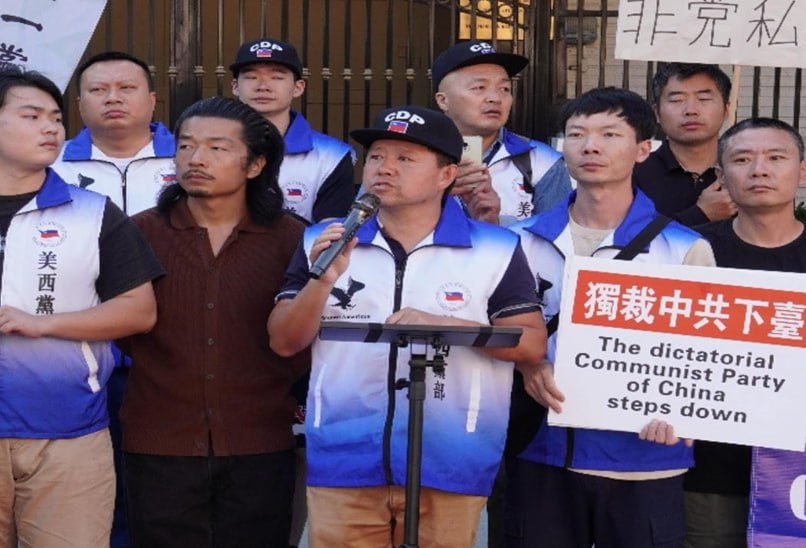
《全球覺醒》第三十三期 7月27日 抗議中共網絡暴政,捍衛言論自由!

0
《全球覺醒》第三十三期 7月27日 抗議中共網絡暴政,捍衛言論自由!

《Global Awakening》Issue No. 33
Ring the Bell of Freedom Overthrow Tyranny·


《全球覺醒》第三十三期
自由之鐘 時刻敲響 全球覺醒 民主聯盟 消滅獨裁 推翻暴政

【活動主題】:抗議中共網絡暴政,捍衛言論自由!

儘管徵求意見階段遭到廣泛質疑,中國公安部、國家網信辦等六部門以提升網絡安全為名,共同發布的《國家網絡身份認證公共服務管理辦法》,還是於 2025年7月15日起正式強行實施。中國人民的言論自由與個人隱私將受到更嚴密的監視與威脅,距離中共打造的高科技極權社會又進了一步。

什麼是「網絡身份認證」?
它要求每個上網用戶必須實名註冊、實名認證、實名發言,每一個社交帳號都與身份證、手機號碼、人臉、甚至居住地綁定。沒有“網證”,你將無法發文、評論,甚至瀏覽信息。有網民擔心:「網證若被吊銷,就等於在網絡世界被處以極刑」,可能導致社交帳號、支付工具等「一鍵封殺」。「網證一旦失效,將『死無發聲之地』。

中共常說「互聯網不是法外之地」,因此他們將暴政延伸到了互聯網。花費天量巨資打造了世界上最大的網絡防火牆,把中國的「互聯網」變成了一張巨大的局域網,以阻止中國人獲得外界信息。目前十大全球流量最大網站中,有八個在中國被全面屏蔽。現在又啟用這個管理辦法來即時追蹤每個公民的思想動態。目的就是使網民對發言後果產生恐懼,形成「寒蟬效應」。這不是為了網絡安全,而是為了它們政權的安全!

沒有信息和言論的自由就沒有學術和思想的自由,沒有學術和思想自由,談何創新與發展?該管理辦法的出台,再次證明了中共這個邪惡組織為了它們一小撮人的利益,不惜毀掉這個民族的未來!

我們的口號:
抗議「網證」成為數字枷鎖!
沒有言論自由,就沒有真正的安全!
推翻暴政,清算中共!

歡迎你加入我們的抗議行動,為中國的網絡自由發聲!
時間:2025年7月27日(星期日)2:00PM(下午)
地點:中共駐洛杉磯總領館
地址:443 Shatto Pl, Los Angeles, CA 90020
活動召集人:肖運軍/王德新
活動規劃:劉廣賢/周蘭英
活動主持:王尊福
組織者:
潘榮華6262628543
楊   光8589231588
陳鑫峰6262675196
陳文輝6263412820
史志衛8323097937
季  超2136531900
活動義工:孙晔/王付青/劉樂園/于海龍/王彪/鍾文/盧振華
攝影:Ji Luo/陳錦波
主辦單位:
中國民主黨全國聯合總部美西黨部
中國民主黨全國聯合總部美南黨部
中國民主人權聯盟


《Global Awakening》Issue No. 33
Ring the Bell of Freedom Overthrow Tyranny·

Global Awakening · Democratic Alliance · Eradicate Dictatorship ·
📢 Event Theme: Protest Against CCP’s Cyber Tyranny, Defend Freedom of Speech!

Despite widespread public opposition during the consultation phase, the Ministry of Public Security, the Cyberspace Administration of China, and four other departments have forcibly enacted the Administrative Measures for National Internet Identity Authentication Public Services, under the guise of “enhancing cybersecurity.” This new regulation came into effect on July 15, 2025, and marks yet another step toward the CCP’s construction of a high-tech totalitarian society. Chinese citizens’ freedom of speech and personal privacy are now under tighter surveillance and greater threat.

❓What is “Internet Identity Authentication”?

This policy requires all internet users to register, authenticate, and post under their real names. Every social media account must be bound to a personal ID, phone number, facial data, and even residence information. Without a “Net ID,” users will be unable to post, comment, or even browse content. Some netizens fear:

“If the Net ID is revoked, it’s equivalent to being sentenced to digital death,”
as it could result in total shutdown of social accounts, payment tools, and more—one click away from digital erasure.
“Once your Net ID is invalid, you’ll have nowhere to speak.”

The CCP often claims “The internet is not beyond the law,” but in truth, this is how it extends its tyranny into cyberspace. It has spent enormous resources building the world’s largest firewall, turning China’s internet into a closed intranet to block outside information. Now, with this new measure, they aim to track every citizen’s thoughts in real-time—not to protect cybersecurity, but to protect their regime security.

This creates a climate of fear that silences speech—a chilling effect.

There is no academic or intellectual freedom without information and speech freedom. And without that freedom, how can innovation and development thrive? This regulation once again proves that the CCP is a wicked regime willing to destroy the nation’s future for the benefit of a select few.


🚩Our Slogans:
 • Protest the “Net ID” becoming a digital shackle!
 • Without freedom of speech, there is no real safety!
 • Overthrow tyranny, hold the CCP accountable!


✊ Join us to stand up for China’s internet freedom!
 • 🕒 Date & Time: Sunday, July 27, 2025 at 2:00 PM
 • 📍Location: Chinese Consulate General in Los Angeles
 • Address: 443 Shatto Pl, Los Angeles, CA 90020


📣Organizers:
 • Initiators: Xiao Yunjun / Wang Dexin
 • Planners: Liu Guangxian / Zhou Lanying
 • Host: Wang Zunfu


📞Contact Persons:
 • Pan Ronghua: 626-262-8543
 • Yang Guang: 858-923-1588
 • Chen Xinfeng: 626-267-5196
 • Chen Wenhui: 626-341-2820
 • Shi Zhiwei: 832-309-7937
 • Ji Chao: 213-653-1900


💪 Volunteers:

Sun Ye / Wang Fuqing / Liu Leyuan / Yu Hailong / Wang Biao / Zhong Wen / Lu Zhenhua


📸 Photography:

Ji Luo / Chen Jinbo


🏛️ Hosted by:
 • China Democracy Party National Joint Headquarters – Western U.S. Branch
 • China Democracy Party National Joint Headquarters – Southern U.S. Branch
 • China Democracy & Human Rights Alliance

中共酷吏:傅政华

0
中共酷吏:傅政华
中共酷吏:傅政华

傅政华,男,1955年3月生,河北滦县人。中共党员,法律专业出身,长期在公安、政法系统任职,以强硬手段和铁腕风格著称,被视为当代中国“酷吏”代表人物之一。

傅政华早年在北京市公安局刑警系统任职,曾任刑警总队长、副局长、局长,因敢抓敢打、雷厉风行迅速崭露头角。在任北京公安局长期间,他主导多起大规模“维稳”行动,在处理访民、拆迁、群体事件中以强硬著称。

2009年起调入公安部,历任办公厅主任、一局局长(负责情报与反邪教)、副部长等职,成为政法系统核心人物。其间,他主导和推动了多项高压“维稳”行动,其中最具争议的是2015年“709大抓捕”——全国范围内对维权律师和法律人士的打压行动,数百名律师、维权者被带走、关押、酷刑甚至“被认罪”。

2018年,傅政华出任司法部部长,名义上推动“依法治国”,实则继续打压律师群体,加强律师年检管控与“政治审查”。他大力推进“扫黑除恶”专项斗争,但不少案件涉嫌刑讯逼供、程序违法,导致大量冤假错案。

2021年10月,傅政华被中纪委调查,2022年9月被判死刑缓期执行,罪名包括受贿和滥用职权。官方通报称其为“政治上的两面人”,但未触及其在司法迫害与人权打压中的深度角色。

傅政华的一生,是中共政法系统酷吏文化的集中体现。他在任时以“维稳”为名实施强力手段,在落马时则迅速被抛弃,成为权力斗争的牺牲品。他的故事揭示了酷吏的工具命运,也反映出法治在强权下的脆弱。

编辑:胡丽莉
责任编辑:罗志飞
翻译:鲁慧文

中共酷吏:傅政华

Fu Zhenghua,Male, born March 1955, native of Luan County, Hebei Province

Chinese Communist Party member; trained in law; long-serving official in China’s public security and political-legal system.

Fu Zhenghua is widely regarded as one of contemporary China’s most notorious “iron-handed enforcers” — a symbol of the “cruel official” (酷吏) culture entrenched in the CCP’s political-legal establishment. Known for his hardline tactics and authoritarian style, Fu played a central role in some of the most egregious human rights violations of the past two decades.

Fu began his career in the criminal police division of the Beijing Municipal Public Security Bureau, rising through the ranks to become chief of the Criminal Investigation Unit, deputy police chief, and eventually the Beijing Police Commissioner. During his tenure, he gained notoriety for leading massive “stability maintenance” campaigns, particularly targeting petitioners, forced eviction protesters, and participants in collective incidents — often through violent and extralegal means.

In 2009, Fu was transferred to the Ministry of Public Security, where he served as Director of the General Office, Director of the First Bureau (responsible for intelligence and anti-cult operations), and later as Vice Minister of Public Security. He became a core figure in the CCP’s political-legal apparatus.

One of the most controversial events under Fu’s leadership was the “709 Crackdown” in 2015 — a coordinated nationwide roundup of rights lawyers and legal activists. Hundreds were detained, disappeared, tortured, and forced to make televised confessions. This marked a new era of suppression against the legal profession in China.

In 2018, Fu was appointed Minister of Justice. While the government promoted his role as a champion of “rule of law,” in reality, Fu intensified political controls over lawyers, expanded the annual license review system, and enforced political loyalty checks. His campaign against organized crime (“扫黑除恶”) resulted in numerous wrongful convictions, often marred by torture, forced confessions, and violations of due process.

In October 2021, Fu was placed under investigation by the Central Commission for Discipline Inspection. In September 2022, he was sentenced to death with reprieve on charges of bribery and abuse of power. State media described him as a “political double-dealer,” yet his deep involvement in judicial persecution and human rights abuses remained unaddressed.

Fu Zhenghua’s career epitomizes the instrumental role of “cruel officials” in the CCP’s authoritarian governance. While in power, he wielded repression under the banner of “stability maintenance”; once politically expendable, he was swiftly discarded — a pawn in the Party’s internal power struggles.

His downfall reveals the fate of those who serve autocracy with violence: they too become victims of the system they once enforced. Fu’s story exposes not only the fragility of law under authoritarian rule but also the rot at the core of China’s political-legal system.

Editor: Hu Lili
Executive Editor: Luo Zhifei
Translated by: Lu Huiwen

部分因宗教被迫害致死者档案

0
部分因宗教被迫害致死者档案

Case Files: Victims Persecuted to Death for Their Religious Beliefs

编辑:胡丽莉 责任编辑:罗志飞 鲁慧文 翻译:鲁慧文

部分因宗教被迫害致死者档案

高蓉蓉,辽宁沈阳艺术学院会计师,因修炼法轮功于1999年被免职。2003年7月被送入龙山劳教所,遭长时间电击酷刑,面部和颈部严重烧伤。她曾试图逃跑,从二楼跳下致多处骨折。2004年10月从医院逃脱,2005年3月再次被捕,6月16日在羁押中去世,年仅37岁。国际特赦组织呼吁对其酷刑致死展开独立调查。

王玉霞(左)王福华(右)

2024年10月11日,61岁的全能神教会基督徒王玉霞10月11日被捕,10月17日警察声称她突发心脏病死亡,可是遗体脸部青肿,一只眼的眼眶瘀青,脖子歪向一侧像是断了,一条腿也断了。49岁的基督徒王福华与王玉霞同日被抓,在经历了9天9夜秘密审讯后,10月20日警方称她突发心梗死亡,熟悉她的人说她身体一直很健康。

高春满,原清华大学教授,1994年接触法轮功,曾将《中国法轮功》译成俄文,并于1996年在圣彼得堡建立首个法轮功炼功点。他在俄罗斯法轮功学界影响深远,2003年获联合国难民身份。因参与国际会议并发表文章,遭中共江泽民集团视为“眼中钉”。2007年,中共以40亿美元合同施压俄方将其遣返。高教授在长期精神迫害中健康恶化,最终于2011年3月14日去世,终年73岁。

吴垚,57岁,是北京海淀区北医附中英文教师,于1996年开始修炼法轮功,迫害发生后,她多次被派出所、“610”人员威胁和骚扰,曾四次被绑架、非法劳教两年。2003年6月11日,被劫持到北京劳教人员调遣处,遭到毒打。2003年6月22日,家属被告知她已“猝死”。

贺雪兆,42岁,郴州资兴市鲤鱼江电厂子弟学校教师,因练习法轮功曾被绑架7次,被非法劳教1年、判刑8年。2005年3月,贺雪兆出狱时已是皮包骨,回家后遭“610”人员24小时监控,于2006年1月13日含冤离世。

张之泉,76岁,中央美术学院毕业,河北省衡水师范学校讲师、漫画家。因修炼法轮功2001年3月19日晚,被警察绑架,后被非法判重刑7年。在河北省第四监狱他被迫害致奄奄一息,于2007年3月被抬出监狱(保外就医),回家后不断遭到当地“610”、公安国保骚扰,于2010年5月1日,含冤离世。

金丽凤,39岁,是葫芦岛市寺儿卜乡新地号村人,本科毕业的日、英文高材生,曾在渤海船舶工业学校任英语教师,于1999年3月开始修炼法轮功,迫害发生后,多次被非法拘留。2001年8月14日,被非法绑架、关押在葫芦岛市看守所,被野蛮灌食。2002年2月12日(大年初一),被迫害致死。

刘丽梅,41岁,东北农业大学副教授,硕士生导师,迫害法轮功行动开始后,她多次被抓,在万家劳教所、万家医院遭受残酷迫害。曾多次绝食抗议,身体受到严重摧残。2003年8月12日,在看守所被迫害致死。

Case Files: Victims Persecuted to Death for Their Religious Beliefs

Editor: Hu Lili | Executive Editors: Luo Zhifei, Lu Huiwen | Translated by: Lu Huiwen

部分因宗教被迫害致死者档案

Gao Rongrong

An accountant at Shenyang Art Institute in Liaoning Province. She was dismissed from her job in 1999 for practicing Falun Gong. In July 2003, she was sent to Longshan Labor Camp, where she was subjected to prolonged electric shock torture, causing severe burns on her face and neck. She once attempted to escape by jumping from the second floor, resulting in multiple fractures. After escaping from a hospital in October 2004, she was rearrested in March 2005 and died in custody on June 16 at the age of 37. Amnesty International called for an independent investigation into her death by torture.

Wang Yuxia (left) and Wang Fuhua (right)

Wang Yuxia, a 61-year-old Christian with The Church of Almighty God, was arrested on October 11, 2024. On October 17, police claimed she had died suddenly of a heart attack. However, her face was swollen and bruised, one eye had a blackened socket, her neck appeared broken, and one leg was fractured. Wang Fuhua, a 49-year-old Christian arrested on the same day, was subjected to nine days and nights of secret interrogation. On October 20, police claimed she had also died of a heart attack, despite witnesses attesting to her previously good health.

Gao Chunman

Former professor at Tsinghua University. He encountered Falun Gong in 1994 and translated Zhongguo Falun Gong into Russian. In 1996, he established the first Falun Gong practice site in St. Petersburg. A prominent figure in the Russian Falun Gong community, he was granted UN refugee status in 2003. Due to his participation in international conferences and published writings, the CCP under Jiang Zemin viewed him as a “thorn in the side.” In 2007, the Chinese government pressured Russia with a $4 billion contract to have him extradited. After prolonged psychological persecution, his health deteriorated, and he passed away on March 14, 2011, at the age of 73.

Wu Yao

A 57-year-old English teacher at Beijing Haidian District’s affiliated middle school of Peking University. She began practicing Falun Gong in 1996 and was repeatedly harassed by local police and “610 Office” agents. She was kidnapped four times and sentenced to two years of forced labor. On June 11, 2003, she was taken to the Beijing Forced Labor Personnel Transfer Center, where she was brutally beaten. On June 22, her family was notified of her sudden death.

He Xuezhao

A 42-year-old teacher at Liyujiang Power Plant Elementary School in Zixing City, Chenzhou, Hunan Province. She was abducted seven times for practicing Falun Gong and was illegally sentenced to one year of labor and eight years of imprisonment. Upon release in March 2005, she was emaciated and placed under 24-hour surveillance by “610 Office” agents. She died on January 13, 2006.

Zhang Zhiquan

A 76-year-old lecturer and cartoonist who graduated from the Central Academy of Fine Arts. He taught at Hengshui Normal School in Hebei Province. Arrested on March 19, 2001, for practicing Falun Gong, he was sentenced to seven years in prison. At the Fourth Prison of Hebei, he was tortured to the brink of death. Released on medical parole in March 2007, he continued to be harassed by the “610 Office” and public security officers. He died on May 1, 2010.

Jin Lifeng

A 39-year-old graduate fluent in Japanese and English from Xindihou Village, Sierbu Township, Huludao City. She taught English at Bohai Shipbuilding School. After she began practicing Falun Gong in March 1999, she was repeatedly detained. On August 14, 2001, she was abducted and held at the Huludao Detention Center, where she was force-fed violently. She died from mistreatment on February 12, 2002 (Lunar New Year’s Day).

Liu Limei

A 41-year-old associate professor and postgraduate advisor at Northeast Agricultural University. She was repeatedly detained after the crackdown on Falun Gong began. She was subjected to severe abuse at Wanjia Labor Camp and Wanjia Hospital. Multiple hunger strikes left her physically devastated. She died in custody on August 12, 2003.

在黑云之下(诗)

0

作者:王梦梦

我们离开了,
不是因为风,
不是因为海,
而是因为那座黑塔——
在晨昏之间张开眼睛,
在黑云之下张牙舞爪。

利爪,
撕碎童年与花朵,
撒下冷雨与毒雾,
压住每一寸回忆的呼吸,
封锁每一个真相的出口。

旧日家园在梦中远去,
童年的果树,
氤氲的黄昏,
誓言未竟的爱情,
还有我们深爱的面孔——
皆困于时间的墙后。

我们背负沉重的黑,
在废墟之外寻找光。
不是世界赐予了花园,
是我们,
在废墟上种下了希望。

新的家园在异乡结果,
言语尚未开花,带着沙砾。
但那看不见的根——
正悄悄在自由的土壤中扎深。

那黑塔仍在远方矗立,
但我们挺直身躯,
不再逃离。

编辑:罗志飞 责任编辑:鲁慧文 翻译:鲁慧文

Beneath the Black Clouds

By Wang Mengmeng

We left—
not because of the wind,
not because of the sea,
but because of that black tower—
its eyes opened between dusk and dawn,
its claws bared beneath the black clouds.

Talons,
tearing childhood and blossoms apart,
casting down cold rain and poisoned mist,
suffocating the breath of every memory,
sealing every exit where truth might escape.

The homeland of old fades in dreams—
the fruit trees of our youth,
the misty twilight,
the love whose vow was never fulfilled,
and the faces we cherished—
all trapped behind the walls of time.

We carry the weight of darkness,
seeking light beyond the ruins.

was not the world that gifted us a garden—
it was we,
who planted hope on broken ground.

new home blossoms in exile.
Our tongues have yet to bloom; our dreams still laced with grit.
Yet the unseen roots—
quietly dig deep the soil of freedom.

black tower still looms in the distance.
But we stand upright now.
We will no longer flee.

editor: Luo Zhifei executive editor: Lu Huiwen

六年过去,怒火未熄:纪念721元朗袭击六周年,矛头直指中共暴政

0
六年过去,怒火未熄:纪念721元朗袭击六周年,矛头直指中共暴政

Six Years On, the Fire Still Burns: A Vow of Defiance on the Sixth Anniversary of the Yuen Long 7.21 Attack

作者:何清风

编辑:周志刚 责任编辑:罗志飞 鲁慧文 翻译:鲁慧文

【美西时间2025年7月20日】——在“721元朗袭击事件”六周年之际,中国民主党全联总美西党部举行纪念集会,悼念这场震惊国际社会的黑暗事件,也向背后的“真正元凶”——中国共产党发出最强烈的控诉。“我们今天纪念的,不只是香港元朗的流血黑夜。”,集会组织者在演讲中直言不讳,“我们更是在控诉,藏在背后的那个真正的元凶:中国共产党!”。

六年过去,怒火未熄:纪念721元朗袭击六周年,矛头直指中共暴政

2019年7月21日晚,一群身穿白衣、手持铁棍的暴徒在香港元朗无差别袭击市民,造成至少45人受伤。然而,警方长时间缺席、甚至被指与施袭者互动“和谐”,引发了公众对“警黑勾结”的愤怒与恐惧。六年后,这起事件依旧没有彻查结果,真相被遮掩、正义无从伸张。“这不是偶发事件,”,演讲者强调,“这是中共纵容、策动的国家暴力,是极权体制对民主社会的有组织入侵!”。

在当天的纪念活动中,发言者用“红色幽灵”形容中共的扩张势力,直言其正在“渗透、破坏、操控”全球自由世界。“它随时准备洗劫香港、台湾,乃至全世界的民主制度!”,集会不只是追忆,更是一场象征“宣战”的行动。活动口号痛击中共的软肋:

•“打倒中共暴政!”

•“讨还721血债!”

•“自由不是恩赐,是我们怒吼夺回的!”

•“不低头!不退让!不原谅!”

组织者强调:“民主正在被围剿,红色幽灵正在逼近。我们已被逼到墙角,无路可退!”。集会现场群情激昂,参与者举起横幅、敲响战鼓,以“每一次发声都是子弹”、“每一次集结都是反击”为信念,呼吁国际社会勿再对中共暴行沉默、共同制衡极权政权的扩张。

这场名为《721六周年·怒吼誓言》的纪念活动,也再次唤起公众对香港议题的关注,提醒世界:香港仍未真正自由,而中共对人权的威胁亦未停止。“我们站在这里,不是为了哀悼,而是为了宣战!我们不要妥协,我们要终结它、推翻它、埋葬它!”

Six Years On, the Fire Still Burns: A Vow of Defiance on the Sixth Anniversary of the Yuen Long 7.21 Attack

By He Qingfeng

Editor: Zhou Zhigang | Executive Editors: Luo Zhifei, Lu Huiwen | Translated by: Lu Huiwen

[Pacific Time, July 20, 2025] — On the sixth anniversary of the shocking “7.21 Yuen Long Attack,” the Western U.S. Committee of the China Democracy Party held a solemn memorial rally. The event honored the victims of that night of horror and issued a direct, unflinching denunciation of the real mastermind behind the atrocity — the Chinese Communist Party (CCP).

六年过去,怒火未熄:纪念721元朗袭击六周年,矛头直指中共暴政

“What we remember today is not just the bloody night in Yuen Long,” declared the rally organizer. “We are here to indict the true culprit behind it all — the Chinese Communist Party!”

On the night of July 21, 2019, a group of white-clad thugs armed with steel rods launched a random and brutal assault on civilians at the Yuen Long MTR station in Hong Kong, injuring at least 45 people. The police were notably absent for an extended period, and some were even seen behaving in a disturbingly “harmonious” manner with the attackers. The incident ignited public outrage and fear over alleged collusion between police and triads.

Six years later, no thorough investigation has been conducted. Truth remains buried, justice denied.

“This was no isolated incident,” emphasized a speaker.

“It was state-sponsored violence, orchestrated and condoned by the CCP — a totalitarian regime waging war on democratic societies!”

At the memorial event, speakers described the CCP as a “red specter” — infiltrating, corrupting, and manipulating the free world.

“It is poised to plunder Hong Kong, Taiwan, and every democratic system on Earth!”

This gathering was not merely a memorial — it was a declaration of war. Chants from the crowd struck at the heart of tyranny:

• “Down with CCP tyranny!”

• “Justice for 7.21 bloodshed!”

• “Freedom is not a gift — it’s a roar we reclaim!”

• “No submission! No retreat! No forgiveness!”

“Democracy is under siege. The red specter is closing in. We have been cornered — there is no retreat!”

Banners were raised, drums beaten, and voices unified in defiance.

With the belief that “every outcry is a bullet” and “every gathering is a counterattack,” participants called on the international community to break the silence and resist the expansion of tyranny.

This event, titled “7.21 · A Vow of Rage”, renewed global attention on Hong Kong and its unfulfilled freedom. It also sounded an alarm:

“The threat of the CCP to human rights is far from over.

We are not here to mourn —

We are here to declare war.

We refuse to compromise.

We will end it, overthrow it, and bury it!”

2025年7月26日 孩子吃铅,大人喝粪水 洛杉矶中共领事馆抗议活动

0

孩子吃铅,大人喝粪水——中共不灭,天理难容

Children Poisoned with Lead, Adults Drinking Sewage

The CCP Must Fall — Justice Cannot Be Denied

时间:2025年7月26日(星期六)下午4:00

地点:洛杉矶中共领事馆(443 Shatto Pl, Los Angeles, CA 90020)

发起单位:全能基督灭共阵线、中国民主党罗兰岗支部

活动背景简述:

在甘肃天水,某幼儿园为“吸睛”追求利润,竟使用工业漆粉在食品中,致233名儿童血铅严重超标、201人住院,校方负责人已被拘。在杭州余杭区,自来水散发臭味被网络形容如“粪坑”,官方称为藻类问题,虽已切换水源并赔偿5吨水费,但公众恐惧持续蔓延。环境与食品安全一再失守。

代祷:

“主啊,我们为那一个个吃铅中毒的孩子,为那一个个饮污而亡的老人,为那些被噤声的科学家、被迫害的记者、失声的底层百姓呼求。愿你的义怒焚烧恶政,愿你的怜悯临到中国。中共不灭,天理难容!”

• 孩子吃铅,大人喝粪——谁为中国百姓讨公道?

• 中共治下,污水遍地;苍天有眼,天理难容!

• 抗议中国环境灾难,声援无声受害者!

 • 宁鸣而死,不默而生!

Children Poisoned with Lead, Adults Drinking Sewage

The CCP Must Fall — Justice Cannot Be Denied

📅 Date & Time: Saturday, July 26, 2025, at 4:00 PM

📍 Location: Chinese Consulate General in Los Angeles

(443 Shatto Pl, Los Angeles, CA 90020)

🕊 Organized by: Almighty Christ Anti-CCP Front & China Democracy Party Rowland Heights Branch

📣 Background:

Two recent public health disasters in China have once again exposed the regime’s utter failure to protect its people:

🔴 Lead-Poisoned Children in Gansu Province:

In Tianshui, Gansu, a private kindergarten, in pursuit of attention and profit, used industrial paint powder in food, leading to 233 children with severe lead poisoning and 201 hospitalized. Though the principal was detained, deeper systemic accountability remains absent.

🔴 Sewage-Tainted Tap Water in Hangzhou:

In Yuhang District, Hangzhou, residents reported tap water that smelled like a public toilet. The authorities blamed algae bloom and offered five tons of water bill compensation. The public, however, remains fearful and distrustful.

Environmental and food safety in China are collapsing.

🙏 Prayer:

“Lord, we cry out for the children poisoned by lead, for the elderly dying from drinking foul water, for the silenced scientists, persecuted journalists, and voiceless poor.

Let Your righteous anger burn against this wicked regime.

Let Your mercy fall upon the people of China.

The CCP must fall — for the sake of heaven’s justice.”

🕯 Protest Slogans:

• Children poisoned with lead, adults drinking sewage — who will speak for the Chinese people?

• Under CCP rule: polluted waters, poisoned lives — heaven is watching!

• Protest environmental crimes in China — stand with the silent victims!

• Better to speak and die than to live in silent slavery!

中共统治下的中国真的安全吗?从衣食住行来深度剖析

0

Is China Truly Safe Under CCP Rule? A Deep Dive into “Safety” Through Clothing, Food, Housing, and Transportation

作者:Feng Yuan 编辑:李聪玲 责任编辑:罗志飞 鲁慧文 翻译:鲁慧文

近年来,许多视频博主,包括本地中国人以及来中国旅游的外国人,在中共的喉舌媒体里经常盛赞中国的安全性。他们说夜晚出行无须担心抢劫或枪击,还打趣道:“夜晚最不安全的是钱包”,因为美食诱人,到处都在“买买买”。然而,这样的说法是否全面?常年生活在中国的人往往会发现,现实中的安全问题远比表面看到的复杂。在言论受限的大环境下,很多真实体验无法广泛传播。本文将从普通人最关心的衣食住行四个方面,来探讨中国的实际安全性。

一、衣:黑心棉与有害染料的隐患

黑心棉泛滥 “黑心棉”是指不符合国家标准的劣质絮用纤维制品,如被褥、棉服等。它经过化学漂白处理,不仅刺激皮肤,还可能引发呼吸不适。早在2010年代就曾有报道称,市场上约有10–30%的衣物都使用黑心棉,尽管官方进行了整治,但问题并未彻底解决。这种情况有消失吗?并没有。在2021年的时候,中国官方电视台CCTV就用”棉被伤身 百姓伤心——“黑心棉”“ 此篇文章来论述市场上各种乱象。正当舆论逐渐平息,大家觉得黑心棉不再存在的时候,2024年,中国再次爆出卫生巾中使用黑心面料甚至混入异物(如针头、虫卵)的事件4,官方却仅就尺寸和价格问题进行通报,对质量问题避而不谈。

染料致癌风险 早在2016年就有报道称部分衣物染料可能致癌。尽管国家曾建议消费者多清洗新衣,但在源头治理和监管方面仍然显得不足。

二、食:食品安全危机频发

养殖阶段造假 不良商家在养殖过程中添加违禁物质,如2006年的苏丹红鸭蛋与2011年的瘦肉精事件。农产品还常有农药残留、重金属污染等问题,尤其在工业污染地区更为严重。

生产过程问题重重 如2008年的三鹿奶粉事件至今让人记忆犹新。食品中非法添加防腐剂、色素、甜味剂等现象屡禁不止。2022年兴起的“科技与狠活”概念,揭示了许多食物几乎纯靠化学合成,比如羊汤里没羊,糖色不是糖炒出来的,奶茶里没奶,紫薯奶茶里没紫薯,烤肠里面没有肉,牛排里没牛肉,花生豆奶里面没花生没豆奶,夜市的辣酱里面没辣椒等等。博主辛吉飞揭露了大量此类问题,以一人之力挑战整个食品行业的人, 对提高公众认知起到了巨大作用。

卫生标准低与流通风险 一些小作坊卫生条件恶劣,容易滋生细菌。2022年的“土坑酸菜”事件就是一例。而食品运输环节也频出问题——2024年曝出的化工油罐车混运食用油 就是典型的安全隐患。

餐后再利用黑幕 地沟油和过期食品改日期问题屡见不鲜。这些原本不应再次流通的食品,仍然进入餐桌,令人忧心。

三、住:高成本与高风险并存

买房压力巨大 在中国,购房几乎倾尽整个家庭的积蓄,常常需要男女双方多代亲属共同承担首付, 6个钱包就是特指此类现象。

烂尾楼问题频发12 即使缴齐首付,也无法保证按期交房。近年来,因房地产萎靡,众多项目出现烂尾,购房者仍需继续偿还贷款,违约则被列入“失信名单”,生活受限。

四、行:表面繁荣下的隐忧

电动车安全问题在近几年,因为中共政府的鼓励,很多地方都出现了很多品牌的电动汽车,并将之宣称为弯道超了西方的车企。但是随之而来的这些电车有各种的安全隐患,有些车是本身设计的问题,还有些是造车时为了节约成本,使用的的材料就是残次品。

基础设施不稳定 中国号称“基建狂魔”,但部分高速公路与铁路存在设计不合理或施工粗糙问题。“天坑”事件、“梅大高速塌方”等事故屡屡发生,严重威胁公共安全。

从上述衣食住行的多个方面可以看出,中国的实际生活环境与政府所宣传的“安全稳定”并不完全一致。民众面临的各种风险和隐患,往往被淡化甚至掩盖。

归根究底,许多问题的产生与制度性的弊病密不可分。在中国,虽然有一系列旨在保障民众安全的法律法规,但在实际执行中,由于官员贪腐、地方政府追求短期政绩、缺乏监督机制等因素,执法往往流于形式,处罚力度不足,难以形成有效震慑。

更令人担忧的是,舆论环境受到高度控制。提出问题的人反而可能成为被“解决”的对象,而不是问题本身被公开讨论和妥善处理。这种压制声音的做法,使得社会无法在阳光下进行健康的改革与改进。

唯有改变现有的政治体制,打破专制,建设一个法治、公正、言论自由的社会,民众才有可能真正获得安全和尊严。

中国人只有推翻中共政府,才能生活在一个真正安全的国家。

引用网页

https://baike.baidu.com/item/%E9%BB%91%E5%BF%83%E6%A3%89/1348611 黑心棉

http://finance.people.com.cn/BIG5/n1/2018/0810/c1004-30222003.html 國家市場監管總局發布“黑心棉”、家紡類打假典型案例 2018年08月10日11:45

https://news.cctv.com/lm/365/-1/32609.html 棉被伤身 百姓伤心——“黑心棉” 2021年

https://www.voachinese.com/a/china-s-sanitary-napkin-quality-controversy-sparks-criticism-20241202/7884211.html 中国“卫生巾之乱” 消费者信任度崩跌引发“全民测评”2024年12月3日 03:50

https://www.thepaper.cn/newsDetail_forward_24325620 这种衣服致癌物超标20几倍,尤其这种颜色,千万别再买了2023-08-23 12:18

https://news.cctv.com/society/20090115/107648.shtml “三鹿奶粉事件”始末 2009年01月15日

https://www.sohu.com/a/590629844_121119368 海天酱油翻车,海克斯科技食品什么梗?2022-10-06

https://www.yicai.com/news/101349631.html 康师傅回应土坑酸菜:取消与插旗菜业一切合作,配合调查与检测 2022-03-16 01:01

https://cn.nytimes.com/china/20240712/china-cooking-oil/ 化工油罐车混运食用油,中国再爆食品安全丑闻 2024年7月12日

https://baike.baidu.com/item/%E5%9C%B0%E6%B2%9F%E6%B2%B9%E4%BA%8B%E4%BB%B6/10927272 地沟油事件

https://baike.baidu.com/item/%E5%85%AD%E4%B8%AA%E9%92%B1%E5%8C%85/22528523 六个钱包

https://cn.nytimes.com/china/20230130/china-unfinished-apartments/ 无法完工的家:他们掏空积蓄买房,却等来烂尾噩梦 2023年1月30日

https://m.yicai.com/news/102545197.html 小米SU7高速碰撞事故:是什么困住了3条生命 2025-04-01

https://www.gd.gov.cn/zwgk/zdlyxxgkzl/zhsgjy/content/post_4659608.html 梅大高速茶阳路段“5·1”塌方灾害调查评估报告公布 2025-01-23 08:50:00

Is China Truly Safe Under CCP Rule? A Deep Dive into “Safety” Through Clothing, Food, Housing, and Transportation

By: Feng Yuan | Edited by: Li Congling | Executive Editors: Luo Zhifei, Lu Huiwen | Translated by: Lu Huiwen

In recent years, many video bloggers — both local Chinese and foreign tourists — have frequently praised China’s “safety” in state-controlled media. They say people can walk the streets at night without fear of robbery or shootings, even joking that “the most unsafe thing at night is your wallet,” due to the irresistible food and shopping. But is this perception truly comprehensive?

People who live in China year-round often find that the reality is far more complex than the surface suggests. Under a heavily censored environment, many genuine experiences cannot be widely shared. This article will examine the actual safety conditions in China through the four aspects of daily life that concern ordinary citizens most: clothing, food, housing, and transportation.

1. Clothing: Hidden Dangers of Substandard Materials and Toxic Dyes

● The Prevalence of “Black Heart Cotton”

“Black heart cotton” refers to substandard fiber fillings used in quilts, padded coats, etc., often chemically bleached. These can irritate the skin and cause respiratory issues. Reports from the 2010s indicated that 10–30% of garments contained such materials. Although authorities claimed to crack down on the issue, it persists. In 2021, CCTV published a report titled “Harmful Quilts Hurt the People — Black Heart Cotton,” revealing that the problem had not gone away. Just as public concern subsided, another scandal emerged in 2024 involving sanitary pads made with substandard materials — some even containing foreign objects like needles and insect eggs. Official response, however, only addressed pricing and sizing, ignoring the quality concerns.

● Cancer Risks from Fabric Dyes

As early as 2016, there were reports of some textile dyes being carcinogenic. While authorities advised consumers to wash new clothes multiple times, they failed to regulate or monitor production sources effectively.

2. Food: A Crisis of Safety at Every Stage

● Fraud in the Farming Process

Some unscrupulous producers add banned substances during farming. Notable cases include the Sudan Red egg scandal in 2006 and the clenbuterol-tainted pork in 2011. Pesticide residues and heavy metal contamination are also common, especially in regions with industrial pollution.

● Alarming Production Practices

The 2008 Sanlu milk powder scandal remains fresh in memory. Illegal additives — preservatives, colorants, and artificial sweeteners — are still widespread. In 2022, the phrase “technology and ruthless tricks” went viral, referring to how food is almost entirely chemically synthesized. For example, lamb soup with no lamb, caramel made without sugar, milk tea with no milk, purple yam drinks with no yams, sausages without meat, steaks without beef, peanut soy milk without peanuts or soy — even chili sauce in night markets contained no chili. A lone whistleblower named Xin Jifei exposed countless such cases, raising public awareness while taking on the food industry almost single-handedly.

● Poor Sanitation and Transportation Hazards

Some small workshops operate under horrific sanitary conditions, making bacterial contamination common. The 2022 “Pit-Fermented Sauerkraut” scandal is one example. And in 2024, it was revealed that chemical tankers were being used to transport edible oil — an alarming food safety hazard.

● Reuse of Dangerous Waste

Reused gutter oil and relabeled expired food remain common. These should never return to consumers’ tables but continue to circulate.

3. Housing: High Costs, High Risk

● Homeownership as a Family Burden

Buying property in China often means draining an entire family’s savings, frequently requiring contributions from both sides of a couple’s extended families. This phenomenon is called “six wallets,” reflecting the financial strain.

● The Epidemic of Unfinished Buildings

Even after paying down payments, there’s no guarantee of delivery. In recent years, due to a real estate market slump, numerous projects have been abandoned. Buyers are still expected to repay loans, and defaults result in blacklisting and restrictions on daily life.

4. Transportation: Behind the Façade of Prosperity

● Safety Issues with Electric Vehicles

Encouraged by the CCP, domestic electric vehicle production has surged, with some claiming China has “overtaken the West in a corner.” However, safety hazards abound. Some vehicles suffer from poor design, while others use cheap, defective materials to cut costs.

● Fragile Infrastructure

China boasts of being a “superpower in infrastructure,” yet many highways and railways suffer from poor design or shoddy construction. Incidents like “sinkholes” and the tragic Meida Highway collapse repeatedly expose serious public safety risks.

From the above analysis of clothing, food, housing, and transportation, it’s evident that the real living conditions in China do not match the government’s portrayal of “safety and stability.” Risks and hidden dangers that ordinary people face are often downplayed or concealed.

At the root of these problems lie systemic flaws. Although China has laws and regulations meant to ensure public safety, implementation is weak. Corruption, local government obsession with short-term performance, and lack of oversight render these regulations ineffective.

More worrying is the highly censored media environment. Those who raise concerns often become targets of suppression, while the actual problems are left unresolved. This stifling of public discourse blocks meaningful reforms and improvements from taking place under public scrutiny.

True safety is not a propaganda slogan; it must be built upon a foundation of rule of law, justice, and freedom of speech. Only by dismantling the current autocratic system and establishing a democratic society can Chinese citizens finally achieve genuine safety and dignity.

Only when the Chinese people overthrow the CCP regime will they be able to live in a truly safe nation.

References:

[1] https://baike.baidu.com/item/黑心棉/1348611

[2] http://finance.people.com.cn/BIG5/n1/2018/0810/c1004-30222003.html

[3] https://news.cctv.com/lm/365/-1/32609.html

[4] https://www.voachinese.com/a/china-s-sanitary-napkin-quality-controversy-sparks-criticism-20241202/7884211.html

[5] https://www.thepaper.cn/newsDetail_forward_24325620

[6] https://news.cctv.com/society/20090115/107648.shtml

[7] https://www.sohu.com/a/590629844_121119368

[8] https://www.yicai.com/news/101349631.html

[9] https://cn.nytimes.com/china/20240712/china-cooking-oil/

[10] https://baike.baidu.com/item/地沟油事件/10927272

[11] https://baike.baidu.com/item/六个钱包/22528523

[12] https://cn.nytimes.com/china/20230130/china-unfinished-apartments/

[13] https://m.yicai.com/news/102545197.html

[14] https://www.gd.gov.cn/zwgk/zdlyxxgkzl/zhsgjy/content/post_4659608.html

守护台湾,守护未来!

0

参加第747期茉莉花行动,支持台湾人民大罢免行动有感

Defend Taiwan, Defend Our Future!

Reflections on Participating in the 747th Jasmine Action and Supporting the Taiwanese People’s Recall Movement

作者:王成果

编辑:冯仍 责任编辑:罗志飞 翻译:鲁慧文

台湾虽疆域有限,却撑起了华人世界民主自由宪政的天空,成为民主的灯塔,更是整个华人社会的制度典范!

中共自夺取政权之初,便以暴力与恐吓威逼台湾人民。发展至今,其对台湾的渗透无孔不入,妄图污名乃至妖魔化台湾人民追求民主自由的意志。然而台湾不仅未曾退缩,反而在压力下愈加坚韧,展现出民主制度的强大生命力

我们支持台湾人民的大罢免行动,是以行动捍卫民主自由的制度!我们要告诉全世界:凡是有正义感、追求自由民主的人,都会与台湾并肩同行。台湾是文明与进步的象征,是自由世界的坚强堡垒,也绝不会沦为中共专制的附庸!

台湾人民不会屈服于中共的任何威胁与利诱!尝过自由果实的民族,怎会容许极权染指?!

守护台湾,就是守护我们的未来!也是守护整个华人世界的光荣与骄傲。台湾必将继续成为华人乃至全球文明世界的民主灯塔与制度典范。台湾属于一切热爱自由、追求宪政的人民。中共的伎俩终究只是水中月、镜中花,虚幻不实。终有一日,自由民主之花将盛开在神州大地,而台湾正是我们的榜样。愿台湾平安,自由永存!

2025年7月19日写于洛杉矶!

Defend Taiwan, Defend Our Future!

Reflections on Participating in the 747th Jasmine Action and Supporting the Taiwanese People’s Recall Movement

By: Wang Chengguo

Edited by: Feng Reng Chief Editor: Luo Zhifei Translated by: Lu Huiwen

Though small in territory, Taiwan upholds the sky of democracy, freedom, and constitutionalism for the entire Chinese-speaking world. It has become a beacon of democracy and a model of governance for all Chinese societies.

From the moment the Chinese Communist Party seized power, it has sought to intimidate and coerce the people of Taiwan through violence and threats. Over the years, the CCP’s infiltration has grown more insidious, attempting to smear and demonize Taiwan’s pursuit of democracy and freedom.

Yet Taiwan has never backed down—on the contrary, under pressure, it has grown more resilient, demonstrating the enduring strength of its democratic institutions.

By supporting the Taiwanese people’s recall movement, we are actively defending the values of democracy and liberty.

We send a message to the world: all people of conscience who cherish democracy and freedom will stand with Taiwan.

Taiwan is a symbol of civilization and progress, a stronghold of the free world, and it will never become a vassal of CCP tyranny!

The people of Taiwan will never yield to Beijing’s threats or temptations.

A people who have tasted freedom will never permit tyranny to take root!

To defend Taiwan is to defend our own future—and to safeguard the dignity and pride of the global Chinese community.

Taiwan will remain a lighthouse of democracy and a constitutional model not only for Chinese communities but for all of civilization.

Taiwan belongs to all who love liberty and aspire to constitutional government.

The CCP’s schemes are but illusions—moonlight on water, flowers in a mirror.

One day, the flower of democracy shall bloom across the land of China, and Taiwan is our guiding light.

May Taiwan remain safe.

May freedom endure forever!

Written in Los Angeles, July 19, 2025

藻类背锅,真相缺席:杭州自来水污染事件

0
藻类背锅,真相缺席:杭州自来水污染事件

Algae as the Scapegoat, Truth in Absence: A Rational Inquiry into Hangzhou’s Tap Water Contamination

— The “Fecal Water Incident” in Hangzhou and What It Reveals

作者:周志刚

编辑:胡丽莉 责任编辑:罗志飞 翻译:鲁慧文

7月中旬,一场突如其来的“自来水异味事件”在杭州余杭区爆发,引发全国关注。自来水出现浓烈“粪臭”或“死老鼠”气味,有市民家中水呈黄褐色带明显杂质,饮水系统的安全性遭遇质疑,而随后官方给出的解释是:“在特定自然气候条件下藻类厌氧降解,释放硫醚类物质。”

藻类背锅,真相缺席:杭州自来水污染事件

然而,作为一名关心公共卫生安全的普通百姓,我想提出以下六个问题,愿听者有心

一:“藻类厌氧”足以解释如此恶臭与混浊吗?

硫醚类气体(如甲硫醇、二甲硫醚)确实具有强烈气味,但一般为“腥臭”“沼气味”,而非市民普遍描述的“粪臭”“下水道臭”。更重要的是,藻类气体的释放一般不导致水体变色或肉眼可见杂质——而这恰恰是大量居民拍摄视频所呈现的事实。是否还有其他污染源被刻意隐瞒?我们需要更具体、完整的水质检测数据,而不仅是“初步查明”。

二:为何“自然现象”仅在特定片区集中爆发?

余杭仁和一带遭遇异味最重,而毗邻街道甚至同一区域的不同小区却无感。若是气候引发的藻类变化,应该是系统性、渐进性的污染,为什么会呈现“集中爆发”而非“广泛漫延”?

这是否说明污染有更具体的源头,比如供水管道交叉污染、回流事故、排污口倒灌等?是否排查过建设施工破坏供水系统的可能?

三:为何没有预警机制?水厂何时知情?

一场能引发万人抢购矿泉水的危机,市政与水务部门竟无任何预警。居民先发现臭味,再轮到媒体报道,最后才有政府通报。这一应急链条严重滞后,这暴露的不仅是技术问题,更是公共治理能力长年累积的欠账。

我们想知道:水厂在何时首次检测到异味?为何没有提前切换水源或发布临时停供通知?既然“异味可疑但无毒”,为何不主动解释透明?

事实上,在官方的“辟谣“当中,表明了是16号上午就已经检测到了水质问题。这说明水质检测部门其实早就知道了事情,但是却觉得并不重要,没必要第一时间断水并通告。这完全不把民众的安危当一回事,简直丧尽天良。

四:补偿机制是否合理?谁来负责健康损害?

对居民减免5吨水费,大约14元。这笔钱远远无法覆盖居民因饮水污染产生的成本:包括抢购饮用水、餐馆用水损失、工业产线停滞,更重要的是——对孩子、老人等脆弱人群的健康影响可能是不可逆的。

更令人愤怒的是,作为世界第二大经济体、对外援助出手阔绰的“强国”,在面对本国公民遭遇公共危机时,却只给出这样一笔微不足道的赔偿。至今也未见任何“免费体检”“疾病监测”或“后续医学观察”的安排。如果异味水体中真含有毒物或重金属,后果将由谁承担?

作为参照,在美国发生的水危机俄亥俄州弗林特(Flint)水危机(2014–2021年)

2020年达成初步诉讼和解,约 6亿美元赔款,其中80%分配给受影响儿童家庭。

随后,2021年批准的总体和解金额增加至 6.26亿美元,并展开大规模管线更换和医疗支持。与美国弗林特水危机中对受害者所做出的巨额赔偿、医疗支持和公共问责相比,中国的做法显得冷漠而轻率。一个自称“为人民服务”的政权,却连最基本的健康体检和病因调查都不愿承担,仅以14元水费打发群众,这是对公民的极度轻视。

五:在“打谣”之前,是否先要“公开”?

事件曝光后,官方最先处理的不是污染,而是谣言。有多个账号因“传播粪水论”被公安通报。固然网络不能无底线造谣,但“粪臭”的直观体验是千百市民共同感知,远非凭空杜撰。普通人发声是出于恐惧、焦虑与无助,而不是恶意编造。

相比打压言论,我们更希望看到完整水质检测报告、责任主体调查、整改时间表与第三方独立监督机制

六、民众的无知与麻木

在社交媒体上,喝了污水的人自嘲“现在吃屎都要走表了”,甚至有人说“找几个杭州生活的外国人去告他们”。因为他们知道,在中国国有企业的信息都是不需要对民众公开的,即使是被迫公开那也是政府单方面给出的信息,民众没有权力也没有渠道去监督和问责。人们甚至害怕,自己只是试图寻找真相、要求赔偿,就可能成为被“整顿”的对象。所以,在自嘲一番之后,最终也只能沉默收场。

追究其根本原因,用一句话概括:权力凌驾于公民权益之上,信息封锁替代透明公开,局部利益肆意践踏公共安全!

杭州的居民喝了几天粪水,供水部门最初“毫不知情”。直到有人投诉,才发现水质异常。而当真相曝光,事件爆发后中共维稳机器全面启动,短短几天热度迅速下降,舆论关注点迅速被引导为“不造谣 不传谣”。

令人愤怒的是:没有哪位官员因此引咎辞职;没有官方向居民致歉;只有象征性的“5吨水费补偿”

相比之下,美国弗林特水危机相关官员被刑事起诉,政府承担巨额赔偿;韩国世越号沉船事故导致总统辞职、多名官员司法追责和制度调整;日本福岛核事故引发高层辞职及全面核安全调查和监管强化。为什么在中国,官员永远不用为公共灾难负责?因为:权力被高度垄断,言论被严密控制,监督被彻底掐断,问责形同虚设,法律赔偿不过是空中楼阁。

城市治理的虚假繁荣,官僚体系对人民基本尊重的缺失,“无毒无害论”式洗地言论的荒谬,民众“逆来顺受”心态的可悲,这些才是造成整个粪水事件的根本原因。

今天是杭州,明天也可能是你的城市。喝下一杯污水,脏的只是身体;若选择沉默,污染的则是灵魂。一个真正健康的社会,不应让人把不公归咎于“我运气不好”,而应让人敢于追问:“这是谁的责任?谁该承担后果?”

藻类只是替罪羊,真正的毒瘤是失责的权力和封闭的信息。只有揭开真相、追究责任,才能守护每个人的生命安全与尊严。沉默只会助长腐败,唯有发声才能唤醒良知。

Algae as the Scapegoat, Truth in Absence: A Rational Inquiry into Hangzhou’s Tap Water Contamination

— The “Fecal Water Incident” in Hangzhou and What It Reveals

By: Zhou Zhigang

Editor: Hu Lili Chief Editor: Luo Zhifei Translated by: Lu Huiwen

In mid-July, a sudden outbreak of “foul-smelling tap water” in the Yuhang District of Hangzhou triggered national concern. Residents reported their tap water smelling strongly of feces or dead rats, with some households observing brownish, murky water with visible impurities. Public confidence in water safety plummeted. The official explanation?

藻类背锅,真相缺席:杭州自来水污染事件

“Anaerobic decomposition of algae under specific natural climatic conditions, releasing sulfur-containing compounds.”

As an ordinary citizen concerned about public health, I feel compelled to ask six serious questions. May those with a conscience take heed:

1. Can “anaerobic algae” really explain the stench and turbidity?

Yes, sulfur compounds like methanethiol and dimethyl sulfide are known for their strong odor—but typically they smell fishy or swampy, not fecal or like sewage, as widely reported. More importantly, algae decomposition rarely causes visible discoloration or particulate contamination, which contradicts the video evidence presented by many residents.

Is it possible that other pollution sources are being deliberately concealed? We demand detailed, transparent water quality data, not vague statements like “preliminarily identified cause.”

2. Why did this “natural phenomenon” affect only certain neighborhoods?

The worst-hit areas were in Renhe Town, Yuhang, while adjacent streets or even nearby communities remained unaffected. If the cause were truly climatic and algal in nature, the contamination should have spread gradually and systemically, not explosively and locally.

Could the real cause involve pipe cross-contamination, backflow incidents, or illegal discharges? Was the possibility of construction damage to water infrastructure investigated?

3. Where was the early warning system? When did the water plant know?

The public was the first to detect the issue, followed by media coverage, and only last came the government response. This broken emergency chain reveals not just technical failure, but long-standing governance incompetence.

We ask:

• When did the water plant first detect the abnormality?

• Why didn’t they switch water sources or issue a temporary shutdown warning?

• If “the water is unpleasant but not toxic,” why not communicate openly?

Ironically, official statements admitted that water quality anomalies were detected as early as July 16. That means the authorities knew early but chose not to act, leaving residents unknowingly exposed. This is an utter disregard for public safety—a moral collapse.

4. Is the compensation mechanism fair? Who will take responsibility for health impacts?

The local government offered a 5-ton water bill deduction—about 14 yuan (~$2). This is a mockery, given the real losses:

• Bottled water panic-buying

• Restaurant and business closures

• Manufacturing disruptions

• Most importantly: Potential irreversible health risks, especially for children and the elderly.

This is outrageous, especially from a country that boasts of foreign aid generosity. Where is the support for its own citizens during a public crisis?

No free health screenings, no medical surveillance, no toxicology reports. If the water contained harmful chemicals or heavy metals, who bears the consequences?

Consider the Flint water crisis in the U.S. (2014–2021):

• A $600 million settlement in 2020, 80% allocated to affected children

• Expanded to $626 million in 2021

• Massive pipeline replacements and medical programs followed

Compared to this, China’s token compensation is cold and dismissive—a national disgrace.

5. Before fighting “rumors,” shouldn’t transparency come first?

After the issue surfaced, authorities acted not to solve the problem, but to suppress dissent. Multiple social media users were penalized for “spreading fecal water rumors.”

While fabricated rumors must be discouraged, the foul smell was real, experienced by thousands, not imagined.

Citizens spoke out from fear and helplessness, not malice.

Rather than muzzling the public, what’s needed are:

• Complete lab reports

• Accountability investigations

• Timelines for fixes

• Third-party oversight

6. Public Ignorance and Apathy

Online, some affected residents resorted to dark humor:

“Even drinking shit water needs to be metered now.”

Others quipped, “Let’s get some foreign residents to sue them.”

This bleak sarcasm reflects a tragic reality:

In China, state-run utilities have no legal obligation to disclose full information. Even forced disclosures are one-sided, non-negotiable.

People fear that simply seeking the truth or demanding compensation may result in state retaliation.

And so, after a round of self-mockery, the people fall silent again.

The Root of It All: Power Above Accountability

In summary:

• Power overrides citizen rights

• Information blackout replaces transparency

• Local interests trample public safety

Residents drank contaminated water for days, while the supply company claimed ignorance.

Once exposed, the government’s stability-maintenance machinery went into overdrive: in just days, public attention was redirected to “don’t spread rumors.”

Not a single official resigned.

No formal apologies issued.

Just a symbolic refund of 5 tons of water.

Contrast this with:

• Flint (USA): Officials criminally prosecuted, government paid hundreds of millions

• Sewol Ferry (South Korea): President resigned, criminal trials, policy reforms

• Fukushima (Japan): Senior officials stepped down, national safety overhaul

Why does no Chinese official ever take responsibility?

Because:

• Power is centralized and unaccountable

• Speech is controlled

• Oversight is suppressed

• Legal remedy is a mirage

The root causes of this “fecal water” crisis are:

• Illusory governance

• Arrogant bureaucracy

• Absurd narratives of “no harm detected”

• And the people’s resigned compliance

Today it’s Hangzhou; tomorrow it could be your city.

Drinking contaminated water harms the body; staying silent pollutes the soul.

A healthy society should never make people say,

“I was just unlucky.”

It should empower them to ask,

“Who is responsible? Who must be held accountable?”

Algae is just a scapegoat.

The true cancer lies in neglectful power and opaque systems.

Only by uncovering the truth and demanding accountability can we protect the lives and dignity of every citizen.

Silence nurtures corruption; only by speaking out can conscience awaken.

从来不需要想起,也永远不会忘记

0

Never Needed to Be Remembered, Yet Never Forgotten

作者:林养正

编辑:赵杰 责任编辑:罗志飞 翻译:鲁慧文

7月13日,中国民主党在圣莫尼卡海滩举行的刘晓波八周年海祭活动。

这一次,是民主党员郑伟耗时一年之久准备的活动。

这一次,我们的活动全程没有一句口号,只有强大的公民精神,请愿民主宪政的《零八宪章》展板。

我们的活动平和、理性,只为向世界传播诺贝尔和平奖得主刘晓波以及我们所有人的民主理念,我们的自由精神。致力于把刘晓波的“我没有敌人,也没有仇恨”“从来不需要想起,也永远不会忘记”的精神传递给包括我们自己在内的,每一个人。

除了我们的主题活动,这次我们还存在两个意外的收获。一是,我们收获了一位白人世界人权活动家的关注,已经互相加了联系方式,未来我们将会长期保持联系,可以更好的把中国民主党的精神理念和对自由人权的追求呈现给美国的主流社会。

二是,在我和我母亲负责的“自由小天使”组别,带领儿童团体向世界展现出刘晓波的自由精神的任务中,收获了一位非常勇敢坚定,思辨力和理解能力满分的11岁小朋友。他在我们设计的PBL项目制课程中问的第一个问题,就是非常有深度的“为什么共产党这么坏”。在内容的呈现阶段,他用稚嫩的字迹,写出了非常出彩的一段刘晓波祝福语。

公民教育特地被刘晓波写入了《零八宪章》第三段话“我们的基本主张”的第十三条,是一个从小培养拥有普世价值思想和公民精神,建立民主社会的一个非常重要的社会基础。这也是我们从在中国开始长期想要做的一个项目,致力于培养下一代成为一个思想坚定、勇敢坚韧、公民精神强大无法被中共洗脑的人。

当然,这也是一个艰巨而又重要的的使命,这不仅需要家长或教育工作者本人对普世价值有足够的理解,还需要知道如何用孩子们能够理解的语言表达出来。在目前的中国大环境下,这也注定只能在小范围内传播而无法成为一个全国性项目。

但我依旧要呼吁,每一个看到这篇推文的家长,不管你身处何处,是海外还是墙内,都站起来,向下一代介绍包括刘晓波和《零八宪章》在内的一切益于让孩子们理解自由、民主、人权等概念的资料。

不需要灌输仇恨,不需要传播中共有多么坏,只需要传播独裁和民主的对比,奴役和人权的对比即可。等到了解越来越多后,孩子们自然而然就会诞生强大的公民精神,自发抵制来自于中国全方面的红色思想洗脑,并且未来成为建立民主中国的一股时代潮流。待到中共倒台时,中国人也能积累足够的公民教育经验,用这种培养成一个正直公民的教育取代目前的思想政治课程。如此,方能彻底终结中国的三千年历史专制轮回,不至于在未来革命者成为下一个共产党,将民主宪政固定为中华大地永恒的唯一制度,在未来走向星辰大海。

这是一个艰巨的使命,但我们,一直在践行着。

我没有敌人,

也不把黑暗当作宿命。

真话可以被囚禁,

但说真话的人会生长。

一把空椅子留给世界,

一句真话留给孩子。

等到风吹散铁幕的夜,

我们还会自由相见。

Never Needed to Be Remembered, Yet Never Forgotten

By: Lin Yangzheng

Editor: Zhao Jie Chief Editor: Luo Zhifei Translated by: Lu Huiwen

On July 13, the China Democracy Party held a sea memorial for Liu Xiaobo on the eighth anniversary of his passing, at Santa Monica Beach.

This event was the result of a full year of preparation by party member Zheng Wei.

This time, there were no slogans throughout the entire event—only powerful displays of civic spirit and poster boards featuring the Charter 08, which called for democracy and constitutional government.

Our gathering was peaceful and rational, aiming to communicate to the world the democratic ideals and free spirit of Nobel Peace Prize laureate Liu Xiaobo, as well as of all of us involved. We sought to pass on Liu Xiaobo’s spirit—summed up in his words, “I have no enemies and no hatred,” and “Never needed to be remembered, yet never forgotten”—to everyone, including ourselves.

Beyond the planned theme, two unexpected yet meaningful outcomes emerged from the event:

First, we gained the attention of a white American human rights advocate. After exchanging contact information, we plan to maintain a long-term connection, which will help bring the values and vision of the China Democracy Party, along with our pursuit of liberty and human rights, to the attention of mainstream American society.

Second, in the “Little Angels of Freedom” group led by me and my mother—aimed at helping children embody Liu Xiaobo’s spirit of freedom—we encountered an incredibly brave, thoughtful, and articulate 11-year-old. The first question he asked during our PBL (Project-Based Learning) session was profound:

“Why is the Communist Party so evil?”

Later, during the expression phase, he wrote a heartfelt blessing for Liu Xiaobo in his youthful handwriting that deeply moved us all.

Civic education was specifically written into Article 13 of the third section, “Our Basic Propositions,” in Liu Xiaobo’s Charter 08. It is a crucial social foundation for building a democratic society—nurturing universal values and civic spirit from a young age. This has long been one of our goals, even while we were still in China: to help shape a new generation of citizens who are ideologically grounded, courageous, resilient, and immune to CCP brainwashing.

This mission is both immense and essential. It requires not only parents or educators to have a deep understanding of universal values, but also the ability to communicate these ideas in language children can understand. Given China’s current political environment, such efforts can only take place on a limited scale and are far from becoming a nationwide initiative.

Nonetheless, I urge every parent reading this—regardless of where you are, whether abroad or inside the Great Firewall—to stand up and begin introducing your children to materials that help them understand the concepts of freedom, democracy, and human rights, including Liu Xiaobo and Charter 08.

There is no need to instill hatred, nor to dwell on how evil the CCP is. It is enough to contrast dictatorship with democracy, slavery with human rights. As children learn more, a natural civic spirit will emerge. They will instinctively resist the red indoctrination that permeates every aspect of life in China. In time, they will become part of the wave that helps build a democratic China.

When the CCP finally falls, Chinese society must already have accumulated enough experience in civic education—so that a new generation of upright citizens replaces today’s ideological indoctrination system. Only then can we truly break China’s 3,000-year cycle of authoritarianism. Only then can we ensure that future revolutionaries do not become the next Communist Party. Only then can we secure democracy and constitutionalism as the eternal foundation of Chinese governance—and, ultimately, set our sights on the stars and the sea.

It is a daunting mission.

But we are walking this path, always.

I have no enemies,

Nor do I accept darkness as destiny.

Truth can be imprisoned,

But truth-tellers will grow.

An empty chair for the world,

One honest word for the children.

When the wind tears through the iron curtain night,

We will meet again—in freedom.